
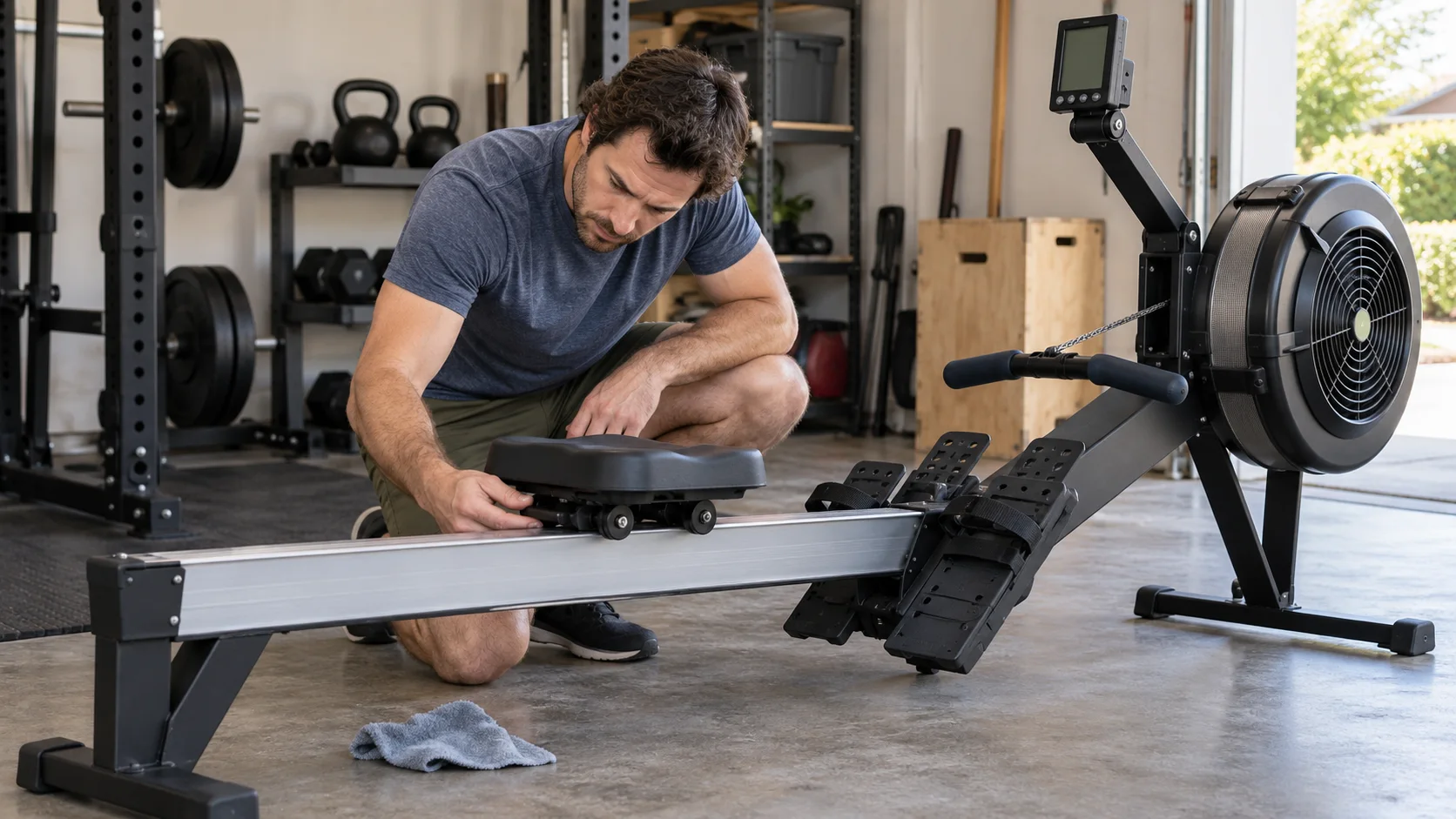
Compare the actual condition, not just the label
A new, refurbished or used rower may meet the same training need. Compare what you will receive, what you can inspect and the cost of having a usable machine at home. A lower price only helps if the condition and services meet your expectations.
Identify the exact model and generation first. Machines from the same brand can have different monitors, resistance systems and spare parts. This information lets you find the appropriate manual and parts.
What should the seller document?
For a new machine, confirm the supplied configuration: monitor, any power supply, accessories and assembly. For a refurbished one, request a written account of checks and work: replaced parts, cleaning, testing, remaining cosmetic defects and included accessories. A description such as “serviced” does not explain what happened.
For a used rower, ask about the available history: home or gym use, storage, maintenance and repairs. Recent photographs of the complete machine and monitor are more useful than catalogue images. Confirm the sale, return and support conditions applicable to the offer, separately from mechanical condition.
| Option | Document | Add to the advertised price |
|---|---|---|
| New | Configuration, assembly and after-sales contact | Delivery, installation and required accessories |
| Refurbished | Checks, repairs and remaining defects | Missing items and transport |
| Used | Condition, available history and a trial | Collection, parts and possible remedial work |
Try the complete machine
With the seller’s permission and the machine set up according to its instructions, inspect the frame, fixings, feet and footrests. Examine the rail and move the seat. During a few controlled strokes, observe whether the seat rolls smoothly, the pull is consistent and the handle returns normally.
On a chain-driven rower, check visible condition and ask about maintenance. On a belt-driven model, inspect the accessible belt without dismantling the machine. For a water rower, examine the tank for signs of leakage. These observations do not replace diagnosis when a part appears defective.
Concept2’s RowErg support distinguishes seat-roller, chain and sprocket problems. These are model-specific examples: do not transfer their maintenance procedure to a different rower design. A skipping pull or damaged component needs attention before use.
Check the monitor and the connections you need
Switch on the monitor and test its controls. Check that readings respond while rowing and that your required features are present: free rowing, intervals, recording or connection to an application. A screen powering up does not establish that every sensor works.
Ask whether the monitor is original or a compatible replacement. Displayed counters may help interpret documented use, but do not alone prove the machine’s complete history. Check replacement-monitor costs and any paid services.
Check spare parts and transport before paying
Look for the model’s documentation and availability of wear parts. Ask who would perform repairs and how the machine would be transported if required. Compare packaging, access to your room, stored dimensions and rowing clearance too.
Read Rowing at home: space, noise and budget for installation considerations. Use our rowing-machine buying guide to compare equipment types.
Calculate the ready-to-use cost
Illustrative example, not a current offer: a used rower costing €550 plus €100 transport and €80 in identified parts totals €730. A refurbished machine at €750 delivered then costs only €20 more. Compare the documented work, condition and sale terms too; the price gap does not decide everything.
New may be simpler when you want a clearly defined configuration and installation support. Refurbished can be useful when the work is documented. Used equipment deserves consideration when you can inspect it and price any missing items. Walk away if essential information remains unavailable.
Your checklist before committing
Keep the model details, photographs, advertised accessories, documented work and delivered cost. Record unresolved questions before paying. For several home-training purchases, see our home-gym budget priorities guide.
Sources
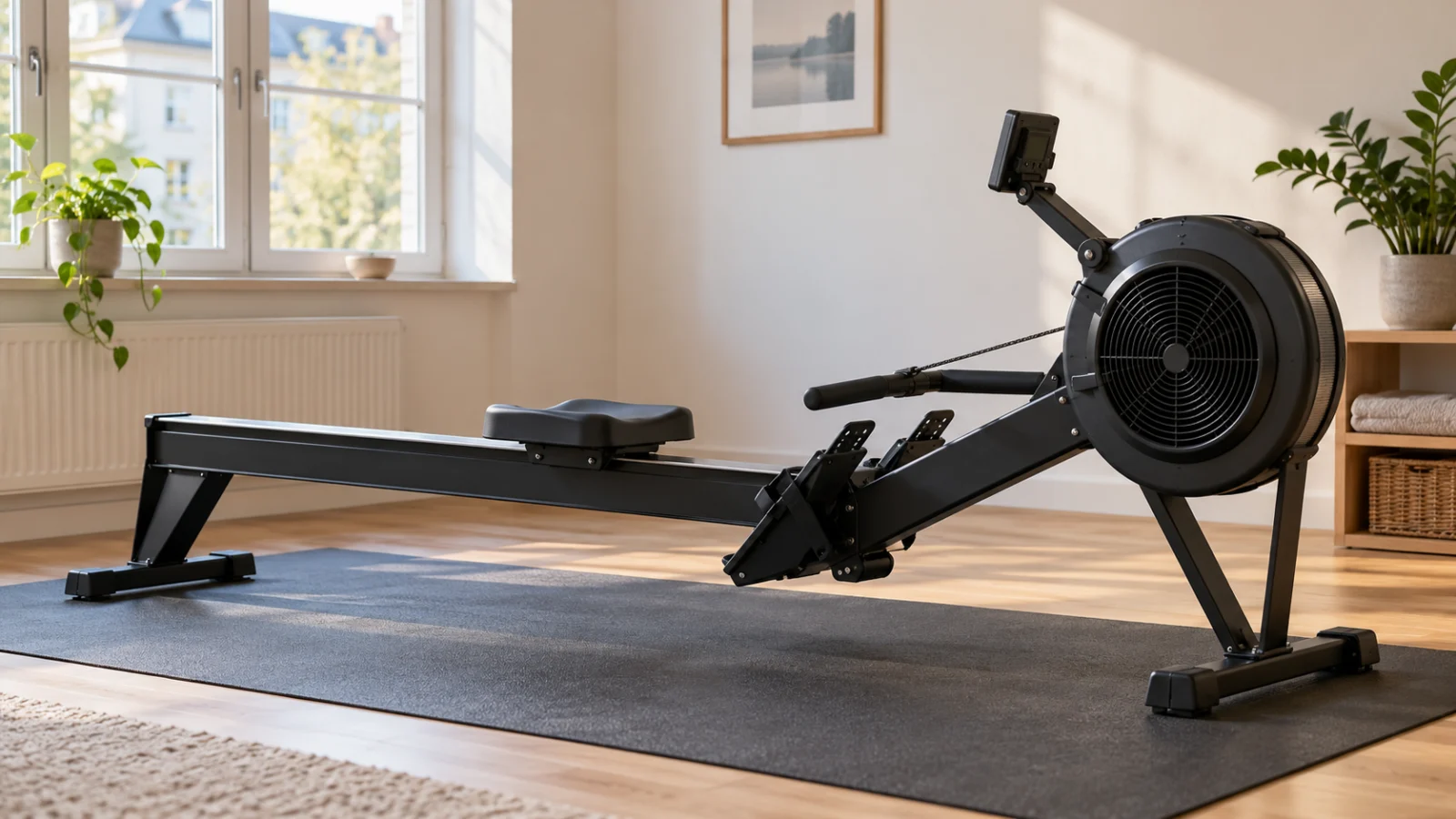 Rameur à la maison : place, bruit et budget à prévoir
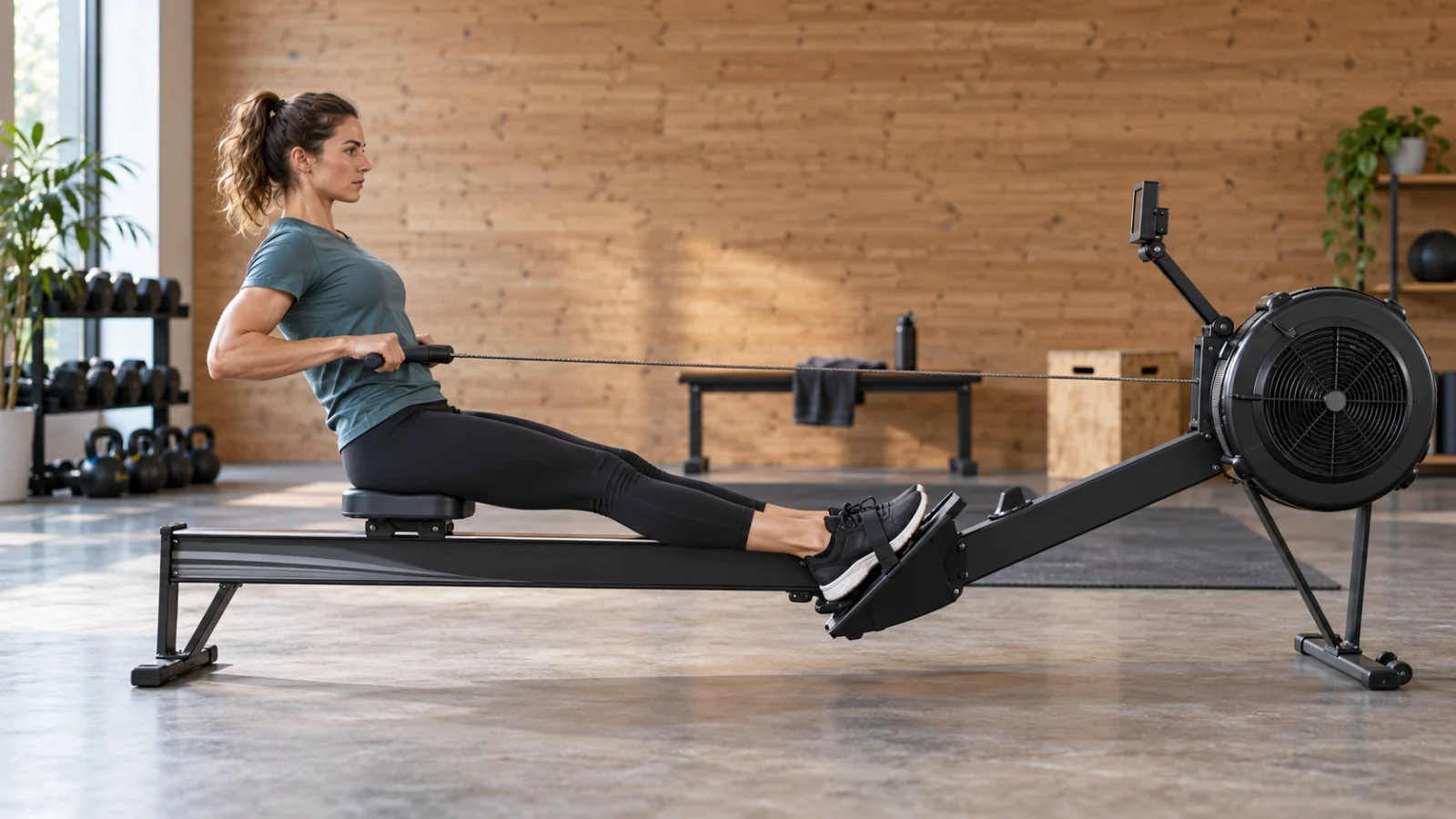 Quel rameur choisir pour le CrossFit et le HYROX à la maison ?