
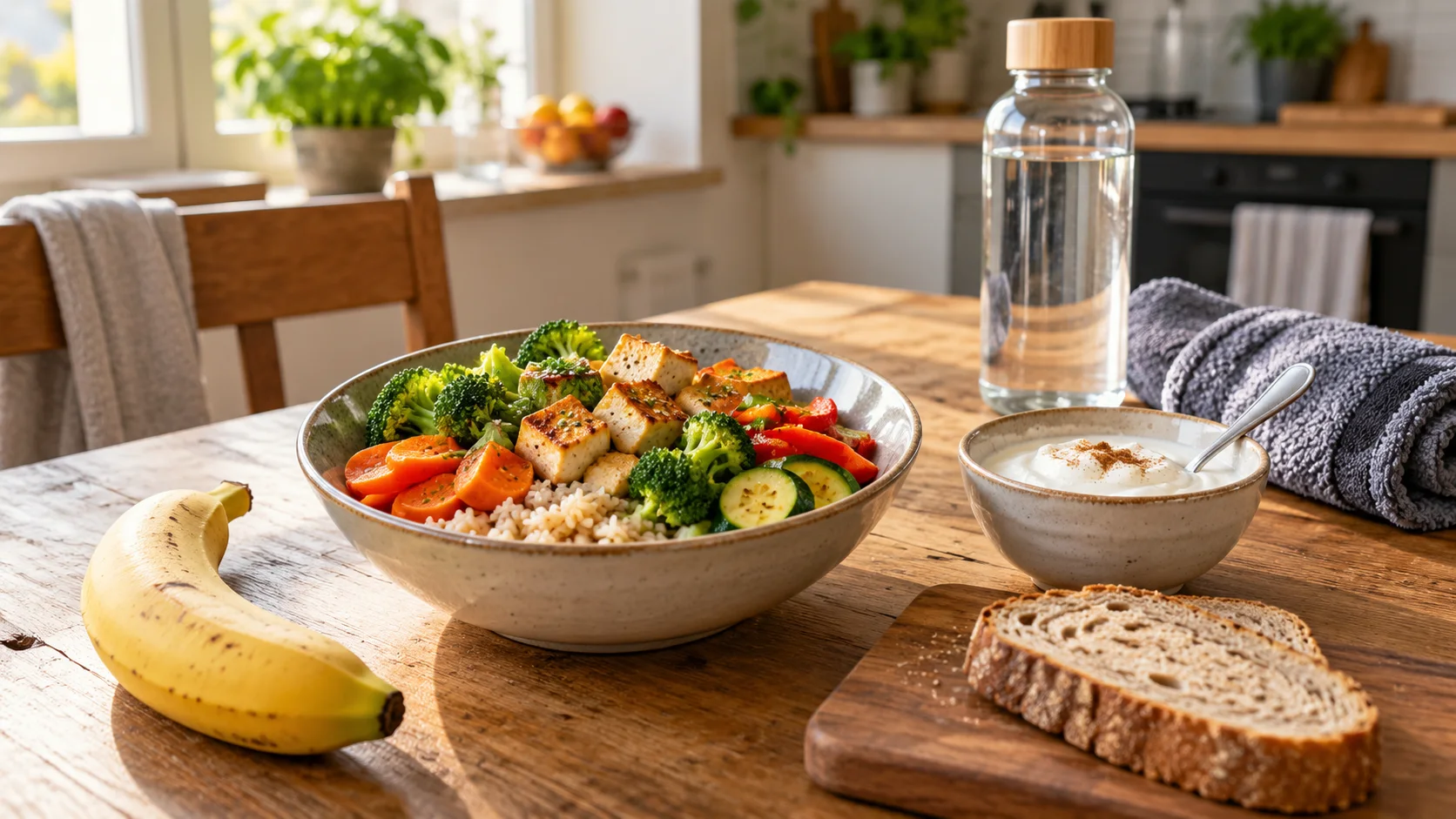
Start with your last meal
Planning starts with when you last ate and what the session contains. A short skills session and a long circuit of running and lifting create different practical needs. A recent, familiar meal does not automatically require another snack before the clock starts.
Match food to the time available
With several hours available, an ordinary meal can combine a starchy food, a protein source and foods you tolerate. Closer to training, a smaller familiar option such as a banana, toast or fruit purée can be more practical. Large, fatty or high-fibre meals shortly beforehand may feel uncomfortable for some people; test your tolerance instead of banning foods universally.
Three practical situations
For a lunchtime WOD, plan lunch timing or pack a snack if breakfast was much earlier. For evening training, check the gap after lunch and bring a simple option to work. For an early WOD, practise a small tolerable option rather than forcing a large last-minute breakfast. These examples do not prescribe portions or calories for everyone.
Test before settling on a routine
Note timing, food, digestive comfort and hunger during the session. Change one factor at a time across comparable workouts. A gel, pre-workout product or energy drink does not replace planning. For competitions with several WODs, include the breaks between events in the plan.
Continue planning
What should you eat after a WOD? · Hydration before training: how should you prepare?
Sources
 Hydratis, waterdrop, SiS : quel produit d’hydratation choisir ?