
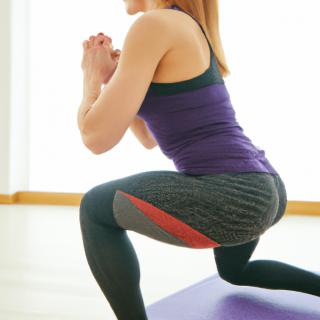
Start with movements you know
A home session can combine bodyweight exercises, conditioning and suitable loaded movements. Variety does not require learning a new skill under time pressure. Choose tasks you can perform confidently in the space available.
WOD means workout of the day. It is not a separate scoring format alongside AMRAP or EMOM: a WOD can use either of those structures, a fixed task for time or another arrangement. See the format guide before selecting a session.
A fixed task for time
The French article gives this editorial example: 50 burpees, 100 squats, 50 push-ups and 100 sit-ups, completed in order. That is substantial volume, not a beginner prescription.
Choose a lower-volume version with appropriate variations where needed. Agree a time cap and record unfinished work if you reach it. You do not need to complete the full example to make home training worthwhile.
A fifteen-minute AMRAP
The source's second example repeats 50 rope jumps, 20 jumping lunges and 30 mountain climbers for fifteen minutes. Define whether alternating movements are counted per side or in total. Record complete rounds and extra repetitions.
Replace jumping movements if they do not suit your experience, surface or noise constraints. A modified circuit needs its own record rather than being compared directly with the original.
A twelve-minute EMOM
The third example cycles through three minutes four times: 10 pull-ups, 20 kettlebell swings and 15 burpees. Each exercise belongs to its own minute, with any remaining time available for rest.
These tasks may leave little recovery for many people. Scale repetitions before starting. A pulling substitute changes the session; do not improvise a hanging support or use an arbitrary heavy object for a ballistic lift.
Prepare the training area
Clear enough floor and overhead space for the chosen movements. Check the surface, nearby furniture and other people. Use equipment designed and installed for its intended exercise, particularly hanging or overhead work.
A mat may improve floor comfort. Dumbbells, a kettlebell or a jump rope can provide options, but none is compulsory for every session. Our home-equipment article explains the setup questions.
Build a repeatable routine
Warm up, rehearse the chosen variations and keep a log of the programme, loads and scoring. Use coaching feedback to learn unfamiliar movements rather than relying only on a workout list.
For simpler starting points, explore beginner WODs, no-equipment workouts and hotel sessions. Choose one suitable session rather than combining all the examples above.
 Rameur à la maison : place, bruit et budget à prévoir
 Haltères réglables ou fixes : lesquels choisir à la maison ?
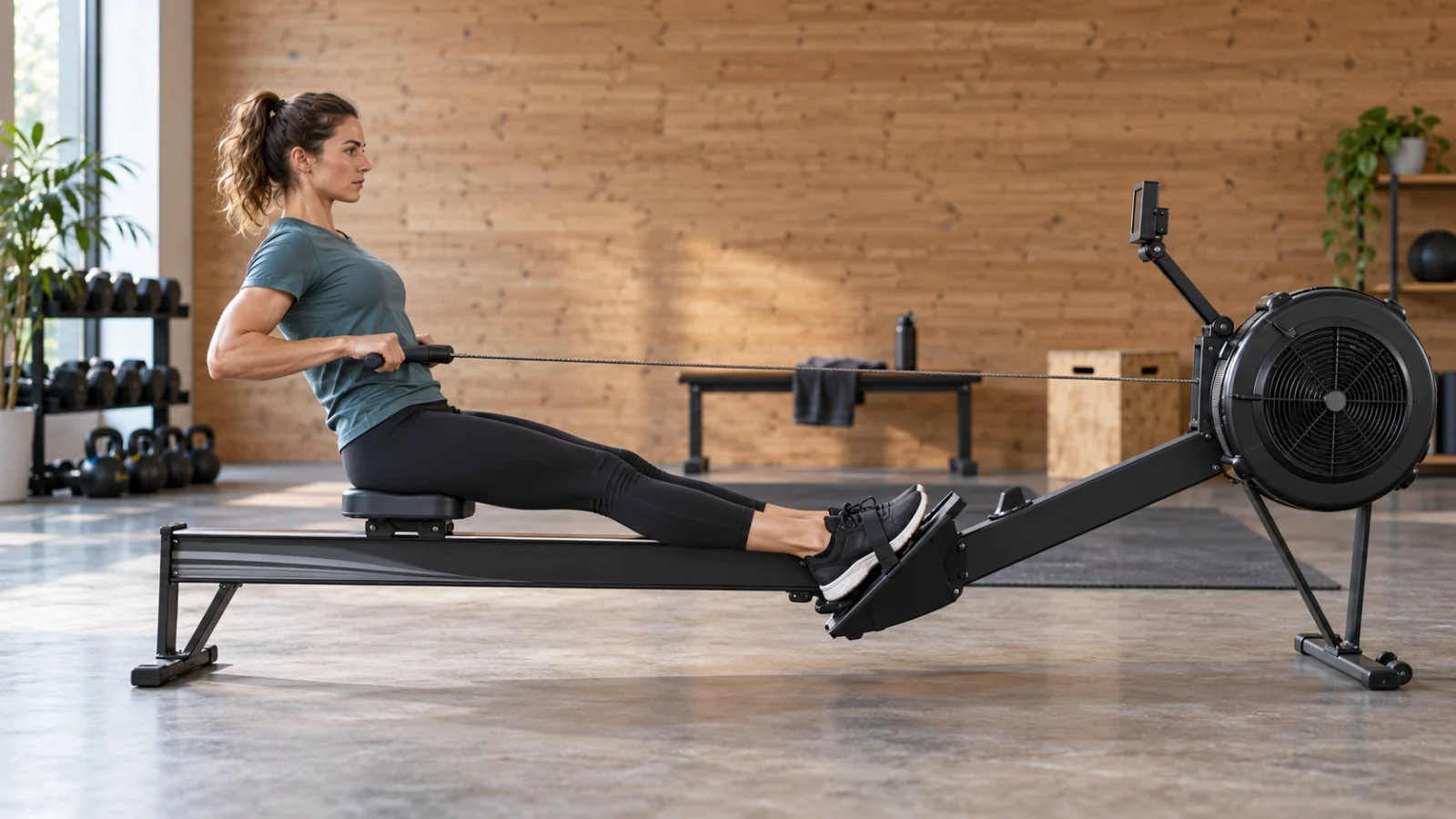 Quel rameur choisir pour le CrossFit et le HYROX à la maison ?