
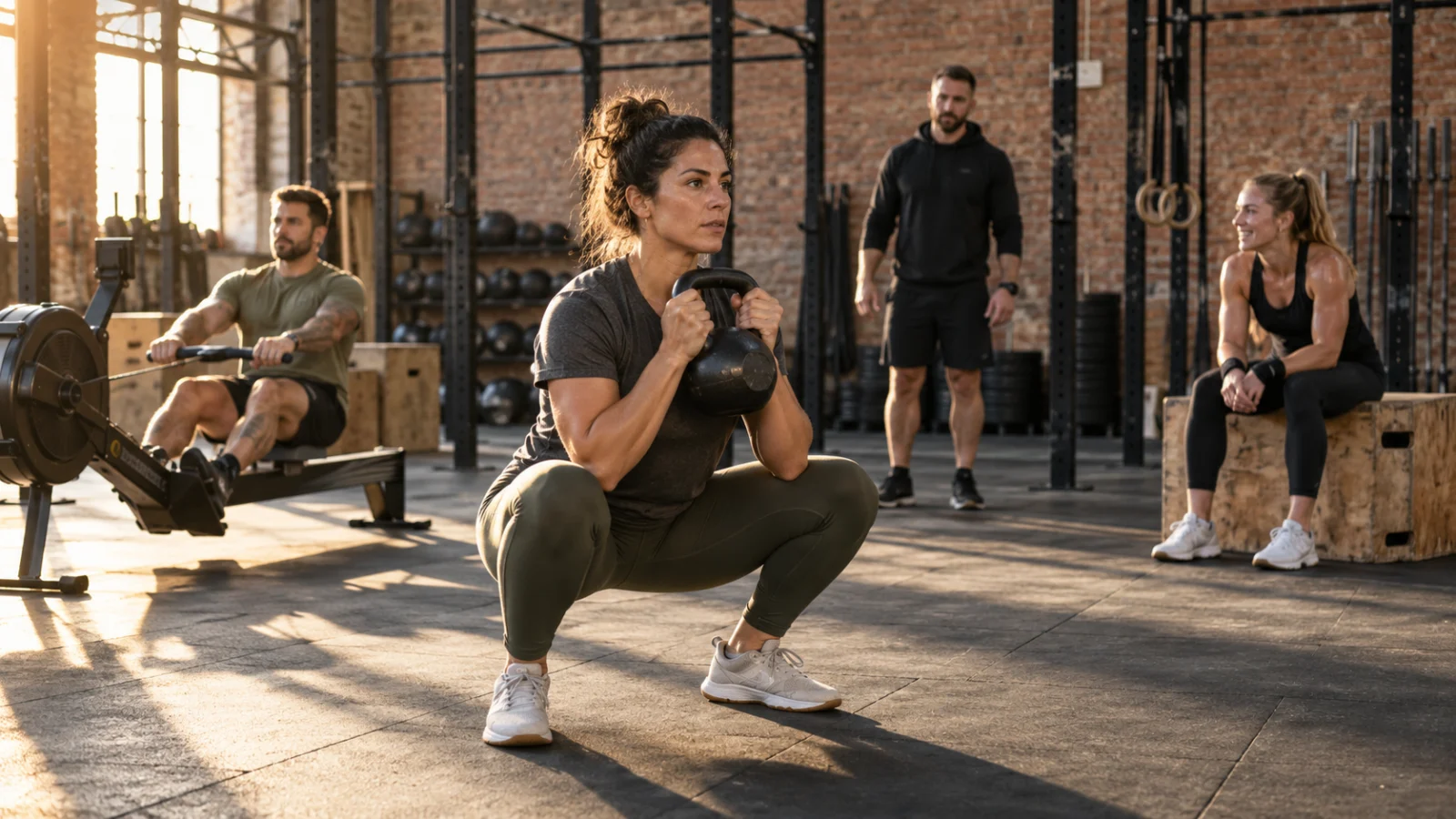
What is CrossFit?
CrossFit is a training method combining varied functional movements at an intensity suited to the individual. Sessions bring together weightlifting, gymnastics and endurance activities in different combinations.
The name also identifies a brand and a network of affiliated gyms, often called boxes. Everyday training and competitive CrossFit share movements, but have different aims and demands. You can practise without pursuing competition.
Cross-training is a broader term for combining training activities. A circuit containing several exercises is not automatically CrossFit.
The principles: variety, functional movements and relative intensity
Vary the task
Movements, loads, durations and formats change to develop different capabilities. This variety belongs within a programme: changing sessions does not mean choosing randomly or testing your limits every day.
Coordinate the whole movement
A squat, deadlift or pull-up involves several joints and requires coordination. Technique is part of learning, rather than simply moving a weight or finishing repetitions.
Match intensity to your current ability
Intensity is relative to the person and the task. Learn the movement, repeat it consistently and then develop the effort while retaining control.
What happens in a CrossFit class?
The structure depends on the gym and programme. A class may include a briefing, warm-up, technical instruction, strength or skill work and the main workout. The balance changes from day to day.
WOD means Workout of the Day and often refers to the main training piece. Formats include AMRAP, EMOM and For Time. The clock and score describe the performance; they do not replace the purpose of the session.
Before starting, clarify the movements, repetitions, loads, rest periods and adaptations. Ask how to record your result. A technique session can also take place without chasing a record.
The movements: weightlifting, gymnastics and endurance
| Movement family | Examples | Explore |
|---|---|---|
| Gymnastics | Pull-ups, handstands, muscle-ups, toes-to-bar | Gymnastics and body control |
These families organise learning; they are not prerequisites to complete before your first class. An exercise can be adapted to preserve the session’s intended task.
Getting started: choose a gym and prepare for your first class
Ask about beginner sessions, coaching, group size and times you can realistically attend. A trial class lets you see how movements are explained and how adaptations are selected.
Tell the coach about your experience and relevant constraints. Ask when an instruction is unclear. You do not need to know every abbreviation, copy a neighbour’s load or perform advanced movements.
Look at the quality of the coaching: do you understand your version of the movement, and can you start and finish the set with control? These observations tell you more than the score board alone.
Making progress: technique, scaling and consistency
Choose the right version
RX means following the stated prescription. Scaled means that elements have been adapted: load, movement, assistance, volume or time frame. Choose according to the workout’s purpose and your starting point.
Scaling is not a permanent category for beginners. You may follow one session as written and adapt the next. The aim is coherent training, rather than getting stuck on one difficult element.
Track more than the score
Record movements, variants, assistance, loads and conditions. Better control, less assistance or more consistent sets can show progress without a faster time.
Your training frequency should fit your experience, recovery and other activities. Build a schedule you can maintain and adjust it with your coach.
Equipment, clothing and training at home
For a first class, check the gym’s instructions. Clothing you can move in, footwear suited to the activity and a water bottle are usually the starting point. Choose accessories later according to the movements you practise.
A gym normally provides the class equipment. At home, match your programme to the equipment, space and skills available. Bodyweight training is an option, but movements still need to be learned.
Community and competition
Group classes can provide a regular setting, shared learning and social support. The score is one piece of information: people can work with different adaptations and goals.
For those who want to compete, events include local competitions, team events and individual contests. The Open is an international event in which participants perform workouts and submit scores under that edition’s rules.
Dates, categories, standards and qualification stages can change. Read the official documents for the relevant year before entering or interpreting a ranking.
Frequently asked questions
Do I need to be fit before starting?
Start with sessions and movements suited to your starting point. Look for coaching that explains and adapts the work.
Do I need pull-ups and Olympic lifts already?
No. These skills are learned progressively. Appropriate variants let you practise the underlying tasks.
Do I have to compete?
No. You can train to learn movements, develop fitness or maintain a regular activity without pursuing rankings.
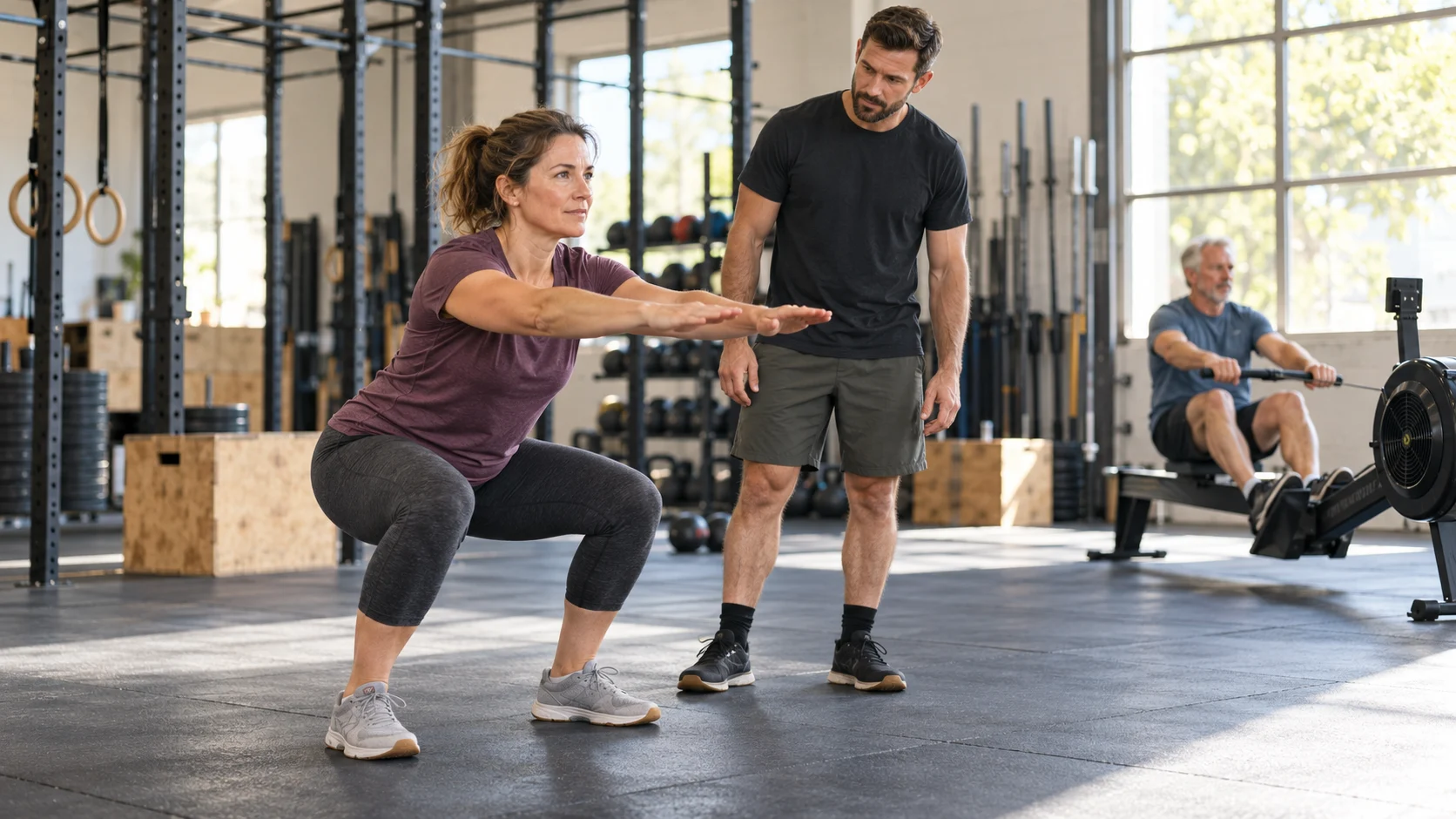 CrossFit for beginners: preparing for your first classes
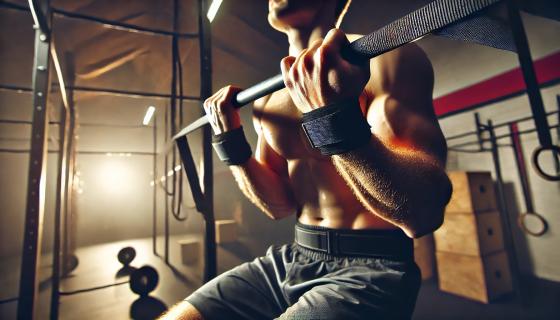 Scaling CrossFit workouts: match the task to your training
 The CrossFit Open: workouts, participation and score preparation