
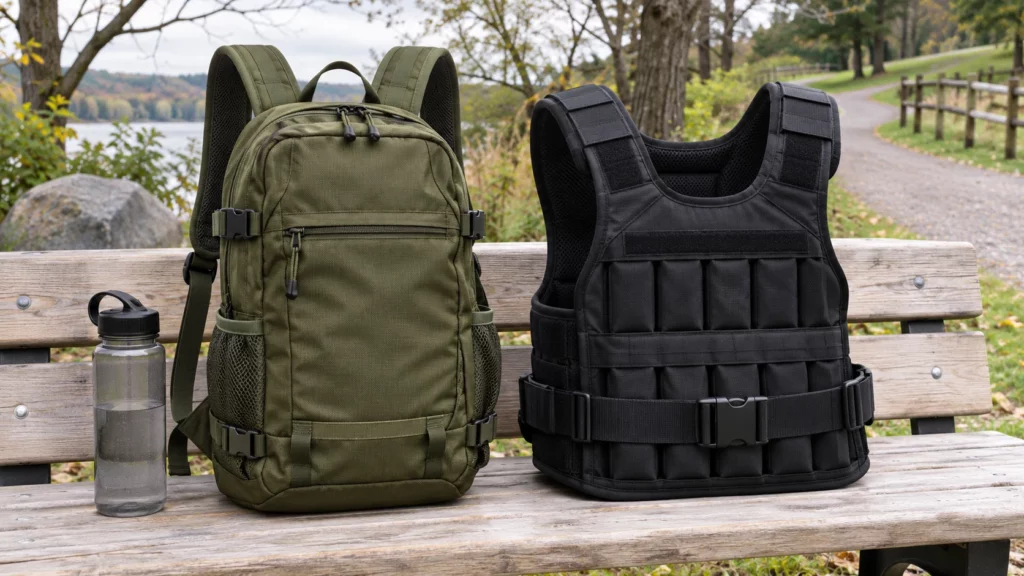
Backpack or vest: start with the walk
A backpack often makes practical sense when you need water, spare clothing and a securely held load. A fitted vest can suit a short walk with little to carry. Neither is automatically more comfortable for everyone.
Compare stability in motion, the option to reduce weight and how warm it feels. Equipment that seems comfortable while standing may rub, bounce or press when walking. Try it in conditions resembling your actual outing.
| Criterion | Rucking backpack | Weighted vest |
|---|---|---|
| Load position | Mainly behind you; fitting and securing the weight matter. | Around the torso; front/rear balance depends on design. |
| Personal items | May carry water and clothing. | Storage is often limited; water may need another solution. |
| Stability | Depends on weight compartment and straps. | Depends on sizing, adjustment and weight retention. |
| Other uses | Load carriage and hiking where appropriate. | Some exercises, only where the model permits them. |
| Check before buying | Load rating, seams, weight access and straps. | Adjustment range, breathing, rubbing and minimum load. |
When does a backpack make sense?
Choose a pack if carrying water, a jacket or personal items is part of the outing, or if load carriage itself is your focus. Check that the weight stays secured rather than slipping to the bottom or shifting with every step.
Large capacity does not automatically mean a bag is designed for dense loads. Check its load rating and retention system. Weight plates must fit the intended compartment; a loose metal object is not an adequate setup.
When can a vest be useful?
A vest can suit a short local loop or a mix of walking and exercises approved for that model. It places the load around your torso, but must allow natural arm movement and unrestricted breathing.
A vest designed for a WOD may not suit a long walk. Check heat, neck and underarm edges, and the minimum usable load. Removing small amounts of weight can be more useful than a high maximum capacity.
Five checks before paying
Walk for several minutes with the intended load. Look for bounce, pressure points and accessible adjustments. Use the manufacturer’s torso or chest measurements where specified, rather than guessing from a clothing size.
Compare the ready-to-use cost. Some packs and vests exclude weights: include compatible plates, delivery and return conditions. Check cleaning instructions and the availability of replaceable parts.
If your existing equipment is stable and comfortable, a first outing may require no purchase. Upgrade to solve a specific problem you have identified, rather than to acquire unused features.
The load matters as much as the carrier
Switching from a pack to a vest does not make an identical weight automatically easy. Reduce the load while learning a different distribution, and keep the route straightforward. Do not add hills, time and weight together to justify the purchase.
No carrier guarantees pain-free walking. Stop and adjust for numbness, restricted breathing or an altered gait. Fit and recovery matter more than carrying the maximum advertised load.
Which should you choose?
Choose the pack for carrying supplies and practising load carriage; consider a vest for short walks or genuinely compatible mixed use. With either, prioritise adjustable weight and a fit you can check. A brand ranking cannot replace trying the equipment.
Sources
 Rucking et HYROX : des objectifs différents, une préparation complémentaire ?
 Courir de nuit en automne : visibilité, parcours et équipement