
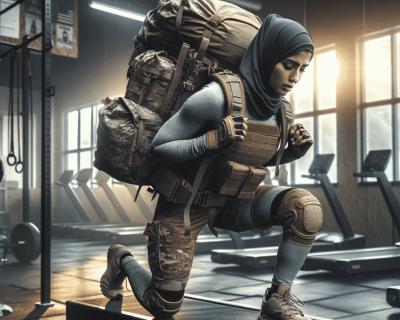
Start from your current walking experience
Rucking adds a carried load to walking. Choose your first load according to the walking you already do, the pack and the planned route. Being experienced in the gym does not automatically mean that a heavy pack will suit a long walk.
Start light enough to assess comfort and movement. A bodyweight percentage can describe a load, but it is not a universal prescription. The same percentage can represent very different tasks on different terrain or over different durations.
Define the session before selecting the weight
A short familiar route, a long outing and a hilly trail are different demands. Decide the purpose and route first. Do not use the largest weight you can fit in the pack as the measure of a successful session.
For a first attempt, a route with an easy option to shorten the walk gives you room to evaluate the setup. Read our beginner guide before planning a more demanding outing.
Count the complete carried load
Include the pack, training weight, water and other supplies when recording what you carry. A plate's marked weight is not the same as the total loaded pack.
Use a pack suitable for the load and secure its contents so that they cannot shift freely. Keep the load close to the back using the pack's intended compartments or attachments. Follow its instructions rather than assuming that every ordinary bag is designed for heavy plates.
Test the setup before leaving
Adjust the straps, walk a short distance and check for movement, pressure points or rubbing. You should be able to walk naturally without continually rearranging the pack. If the setup is uncomfortable, reassess fit and load rather than simply tightening every strap harder.
Our posture guide covers positioning and practical checks.
Progress one part of the task at a time
Load, speed, duration and terrain can all change the session. Keep most of these stable when evaluating an increase. There is no need to follow a fixed weekly weight increase regardless of how the previous walk went.
Record total load, duration, route and perceived effort. Repeat a manageable session before making it harder. GORUCK's getting-started guide offers a manufacturer's introduction; its equipment examples are not mandatory purchases.
Use feedback rather than a target number
If you cannot maintain the intended pace or the pack repeatedly changes your gait, reduce the task and review the setup. Persistent pain calls for individual advice rather than a generic heavier-or-lighter rule.
Choose a load that serves the session you want to complete. A useful log and repeatable route can tell you more than comparing pack weights with another person.
 Rucking brands to compare for Black Friday
 Rucking posture: pack fit and walking under load
 Rucking precautions: pack fit, progression and recovery