
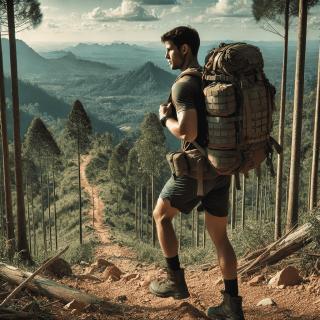
Weighted walking, not a rugby ruck
Here, rucking means walking with a loaded backpack. It does not mean contesting possession in rugby. Your objective is a controlled walking pattern with a suitable pack, not a crouched contact position or a forward drive against another person.
Posture depends on the load, pack fit, terrain and how you move. Avoid treating one rigid pose as a guarantee of comfort or safety.
Fit the pack before focusing on posture
Check that the pack is suitable for the intended weight and follow its fitting instructions. Secure the load in the intended compartment or attachment system so that it stays close to your back rather than shifting freely.
Adjust shoulder straps and any supported chest or hip belt according to the pack's design. Not every pack distributes weight in the same way. A strap that exists on one model is not necessarily required on another.
Use a natural walking pattern
Stand comfortably and begin with short, ordinary steps. Keep your gaze available for the route ahead instead of staring at your feet throughout the walk. Let the arms move where the pack allows, without forcing a rugby-style hand position or holding the straps constantly to compensate for poor fit.
A small change in body angle can occur under load or on a slope. Avoid deliberately exaggerating a forward lean or forcing the shoulders backwards. If you cannot walk comfortably, reassess the weight and fit rather than trying to hold a strained position.
Check the setup in motion
Walk a short familiar section and notice whether the pack bounces, slides or creates pressure points. Pause somewhere appropriate to adjust it. Increasing strap tension is not always the answer to every problem.
Consider the full task: a load that feels manageable while standing may feel different after a longer walk. Our weight guide explains how to record load, route and duration together.
Respond to terrain
Slow down and choose deliberate steps when the surface becomes uneven. Uphill and downhill walking change the demand even at the same distance. Do not assume that a familiar load means every route is appropriate.
Choose a route that matches your experience and offers a way to shorten the outing. Extra weight should not prevent you from negotiating the planned terrain with control.
Build consistency before adding more
Record comfort, pack fit and the session details. Keep conditions similar when deciding whether the setup works. Increase one part of the task at a time rather than chasing a heavier pack immediately.
Stop if the activity causes pain and seek individual advice for persistent symptoms. The beginner guide provides a broader starting framework, while rucking and CrossFit discusses combining activities.
 Les marques de rucking à suivre pour Black Friday
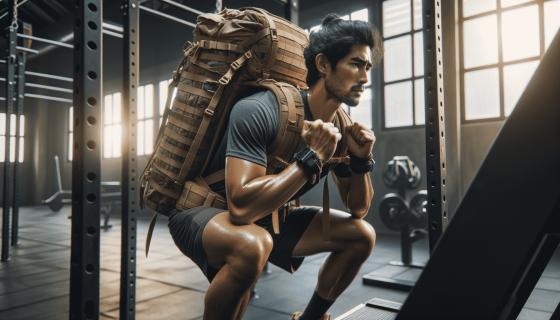 Comment éviter les blessures lors de vos séances de rucking