

Why combine the activities?
Rucking adds a loaded walk to your routine, often outdoors. CrossFit classes may include strength work, bodyweight skills and conditioning. You might enjoy both, but a loaded walk is not automatically recovery or a substitute for every other endurance task.
Decide whether you want an independent walking session, preparation for a rucking event or a mixed workout. Each requires a different plan.
Learn the loaded walk first
If rucking is new to you, begin with a manageable load and familiar route before adding exercises or time pressure. Check pack fit and how the load is secured. Gym experience does not automatically establish how much weight you should carry over distance.
Use the beginner guide, weight guide and posture article to prepare.
A mixed-session example from the French article
The original editorial example begins with 20 minutes of brisk rucking using a listed pack load of 10–20 kg, then continues with five rounds:
- 10 Burpees
- 15 Kettlebell Swings
- 20 Backpack Squats
- 400 m Run without the pack
This is an example, not a beginner prescription or named official benchmark. The kettlebell weight and squat loading details are not fully specified. Agree them with your coach, and reduce or replace the task where needed. Equipment suitable for carrying is not automatically suitable for repeated loaded exercise.
Define the scoring
The source labels the example for time while giving a fixed twenty-minute opening section. Make the convention clear before starting: record that opening duration and the subsequent circuit time separately, or explicitly include both in the total.
Note loads, movement standards and any substitutions. Results from differently defined versions cannot be compared as one benchmark.
Keep an easier walk genuinely easier
A comfortable walk can provide a change of setting. Adding weight, distance, hills or pace increases the task, so a thirty- to sixty-minute loaded outing should not be assumed to improve recovery after a hard class.
Choose the actual workload according to your plan. An unloaded walk or time away from training may be more appropriate than adding another demanding session.
Review the whole week
Account for gym work, walking and other activity together. If the combination makes priority sessions difficult to complete, adjust the amount or timing rather than adding more to compensate.
Our routine planning guide explains how to establish a priority. The scaling guide can help you discuss the mixed-session example with your coach.
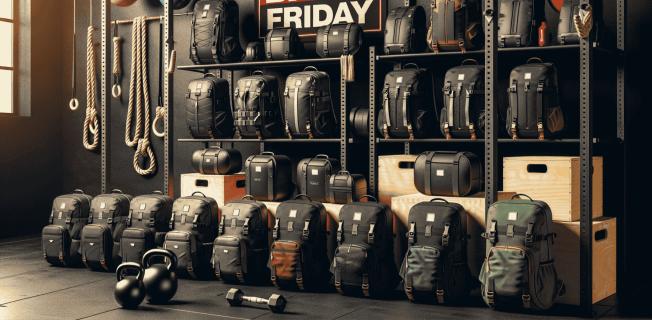 Rucking brands to compare for Black Friday
 Rucking posture: pack fit and walking under load
 Rucking precautions: pack fit, progression and recovery