
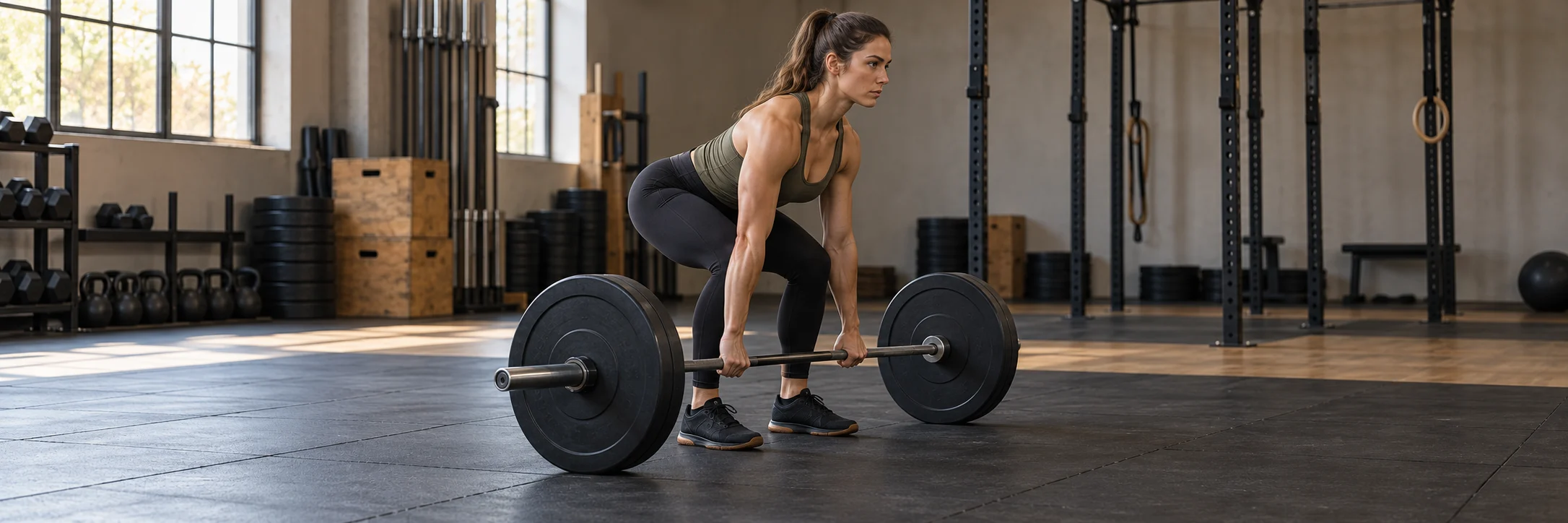
How to do a conventional deadlift correctly
- Stand with the bar over the middle of your feet. Hinge at the hips, bend your knees and grip the bar just outside your legs with straight arms.
- Take a breath, brace your trunk and take the slack out of the bar. Push into the floor to lift it smoothly. Keep the bar close and let your hips and shoulders rise together.
- Finish standing tall with your hips and knees extended. Keep your ribs over your pelvis instead of leaning back.
- Send your hips back to lower the bar. Once it passes your knees, bend them to return the bar to the floor. Reset your position before the next rep.
How to deadlift at home
Use two dumbbells if you don’t have a barbell. If the smaller weights start too low for a controlled setup, raise them on low, stable supports. For a hip-hinge variation, the Romanian deadlift starts from standing. Lower only as far as you can control.
Lift a load from the floor
A conventional barbell deadlift raises the bar to a standing position with straight arms and the hands outside the legs. Hip and knee extension move the load while the trunk maintains its position.
Set up deliberately
Place the bar close to the shins over the midfoot. Use an appropriate starting height; small plates should not accidentally force a lower start. Bend hips and knees to grip the bar, brace and establish tension before lifting.
Hip position depends on proportions. The setup is neither a deep squat nor a completely stiff-legged position.
Stand and lower with control
Push through the floor while hips and torso rise in coordination. Keep the bar close and elbows straight. Finish with hips and knees extended without exaggerated backward leaning.
To lower, move the hips back, keep the bar close and bend the knees further as it clears them. Reset the start when required.
Conventional, Romanian and sumo
A conventional deadlift starts from the floor. The Romanian deadlift starts standing and emphasises moving the hips back with slightly bent knees; depth follows controlled positioning rather than a requirement to reach the floor. Sumo uses a wider stance with hands inside the legs.
Grip and common difficulties
Double overhand is a simple starting grip; mixed grip and hook grip serve other needs and require practice. Grip changes do not correct a distant bar or poorly organised start. If hips rise before the bar or the bar travels around the knees, review setup and coordination.
Progression and WODs
Record variation, starting height, load and repetitions. Timed sets differ from maximal attempts. Touch-and-go requires control of the return and transition; bouncing is not a substitute for consistent positioning. Choose load for the whole workout and explore training organisation.
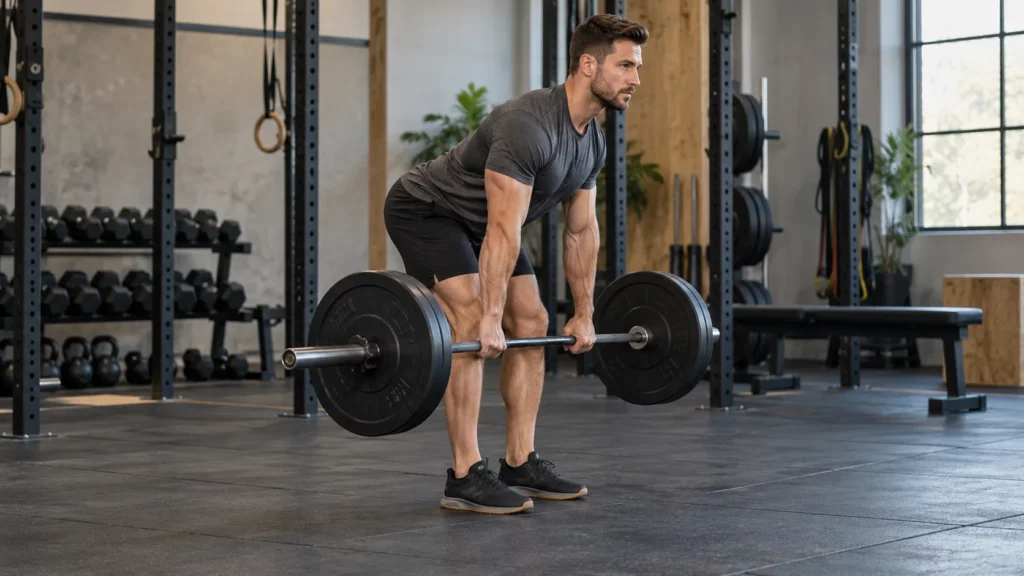 Romanian deadlift: technique, range and progression
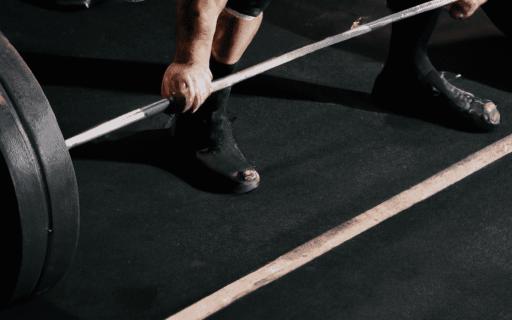 Conventional vs Romanian deadlift: five practical differences
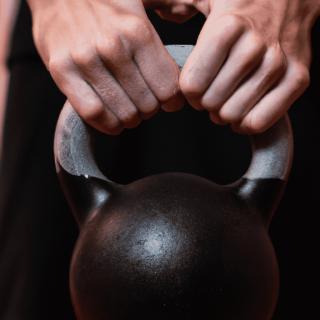 Dumbbell deadlift: setup, movement and practical adaptations