
Running connects the stations
Running is repeated throughout the race rather than completed as one warm-up. Practise returning to a controlled running rhythm after station work. The course and transition arrangements must be checked for the event.
1. SkiErg
Coordinate the trunk, hips and arms rather than pulling only with the arms. Practise a repeatable stroke and pacing before combining it with running. See SkiErg technique.
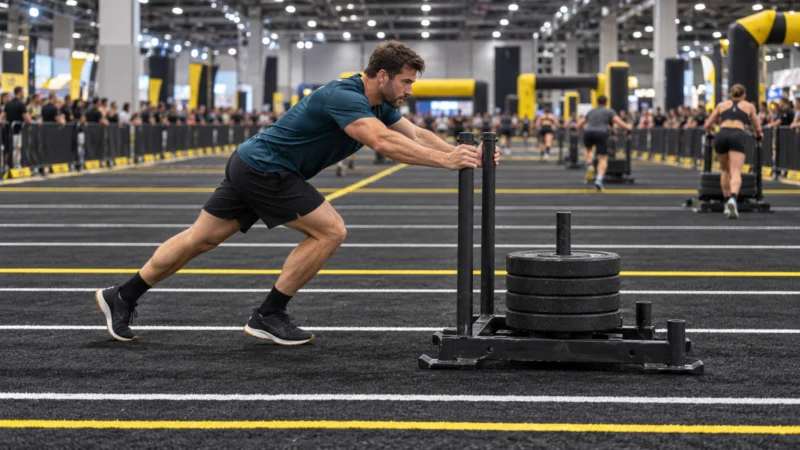
2. Sled push
Prepare a stable position and apply leg drive through the handles. Surface friction and equipment affect how a sled feels, so load alone does not describe every training setup. Follow the race’s lane and completion rules.
3. Sled pull
Practise rope handling and a stable pulling position in the available space. Keep the rope organised and understand where you may stand or move under the event’s rules. Avoid assuming any gym pulling drill reproduces the race task.
4. Burpee broad jumps
Link the floor movement and forward jump with repeatable control. Check the start, finish and permitted foot movement in the applicable standard. Practise manageable sections before attempting the full task under fatigue.
5. Rowing
Coordinate the drive and recovery rather than relying on rapid arm pulling. Choose pace with the subsequent work in mind. Read the rowing guide for stroke order and monitor information.
6. Farmer’s carry
Use a controlled pickup and stable walking pace. Grip, turns and load placement all affect the task. Practise the equipment and route, and check where implements must be collected and returned.
7. Sandbag lunges
Maintain control of the sandbag position while alternating steps. Practise the required depth and finish, route turns and how to resume after a break. Walking-lunge technique provides background; race rules define the valid repetition.
8. Wall-ball shots
Coordinate the squat and throw, then receive the ball for the next repetition. Choose repeatable sets during training and check the ball, target and depth requirements for your division. See wall-ball technique.
Prepare the whole sequence
Learning the stations separately and linking them with running are complementary tasks. Simulations can help test transitions, but they do not replace technical practice or recovery. Read the training guide.
Check the current prescription
Distances, loads, repetitions and judging conditions must come from the applicable official HYROX rulebook. Use the division guide to understand participation formats.
 ATHX : format, catégories et différences avec le HYROX
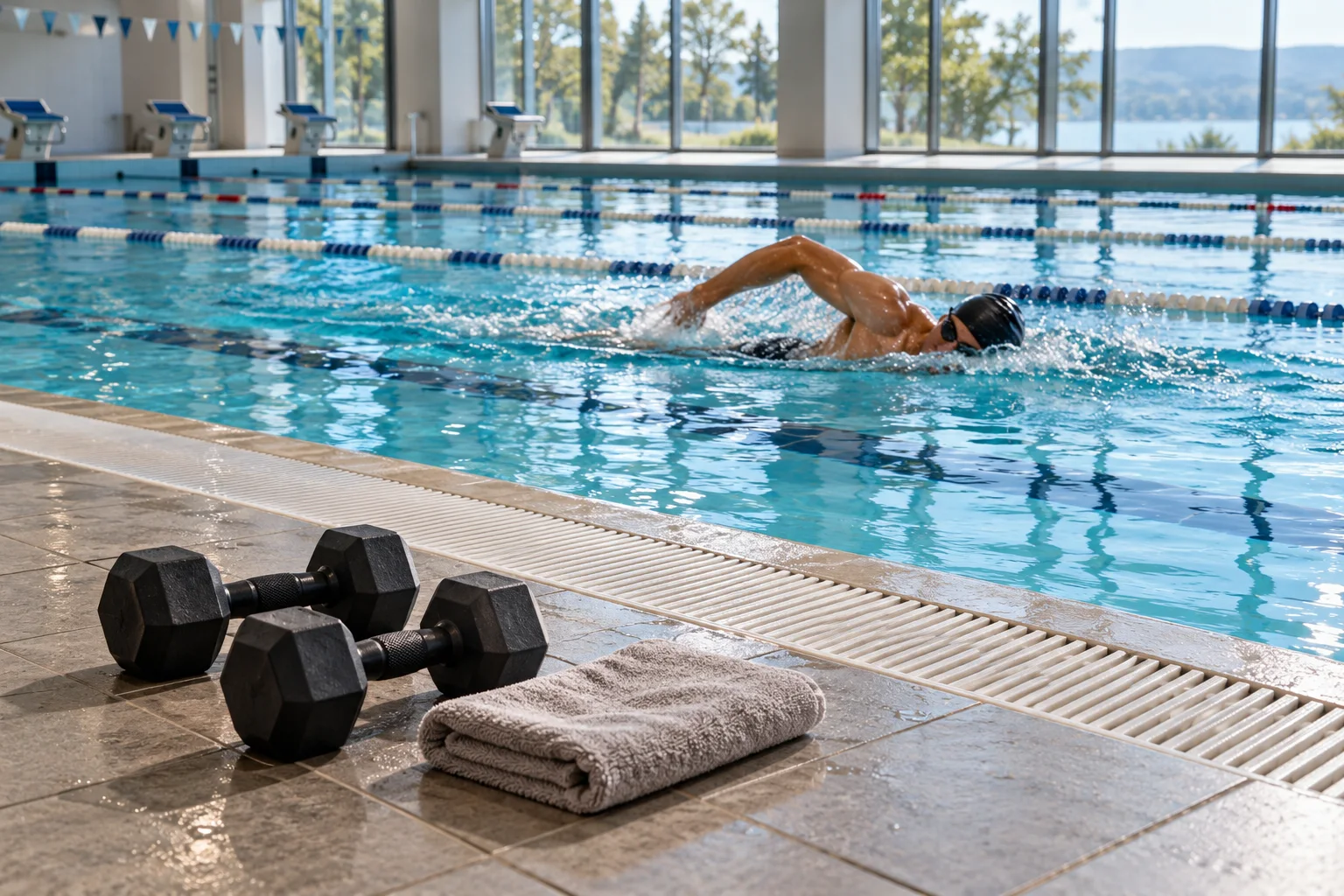 Swimrox : le format hybride qui associe natation et fitness
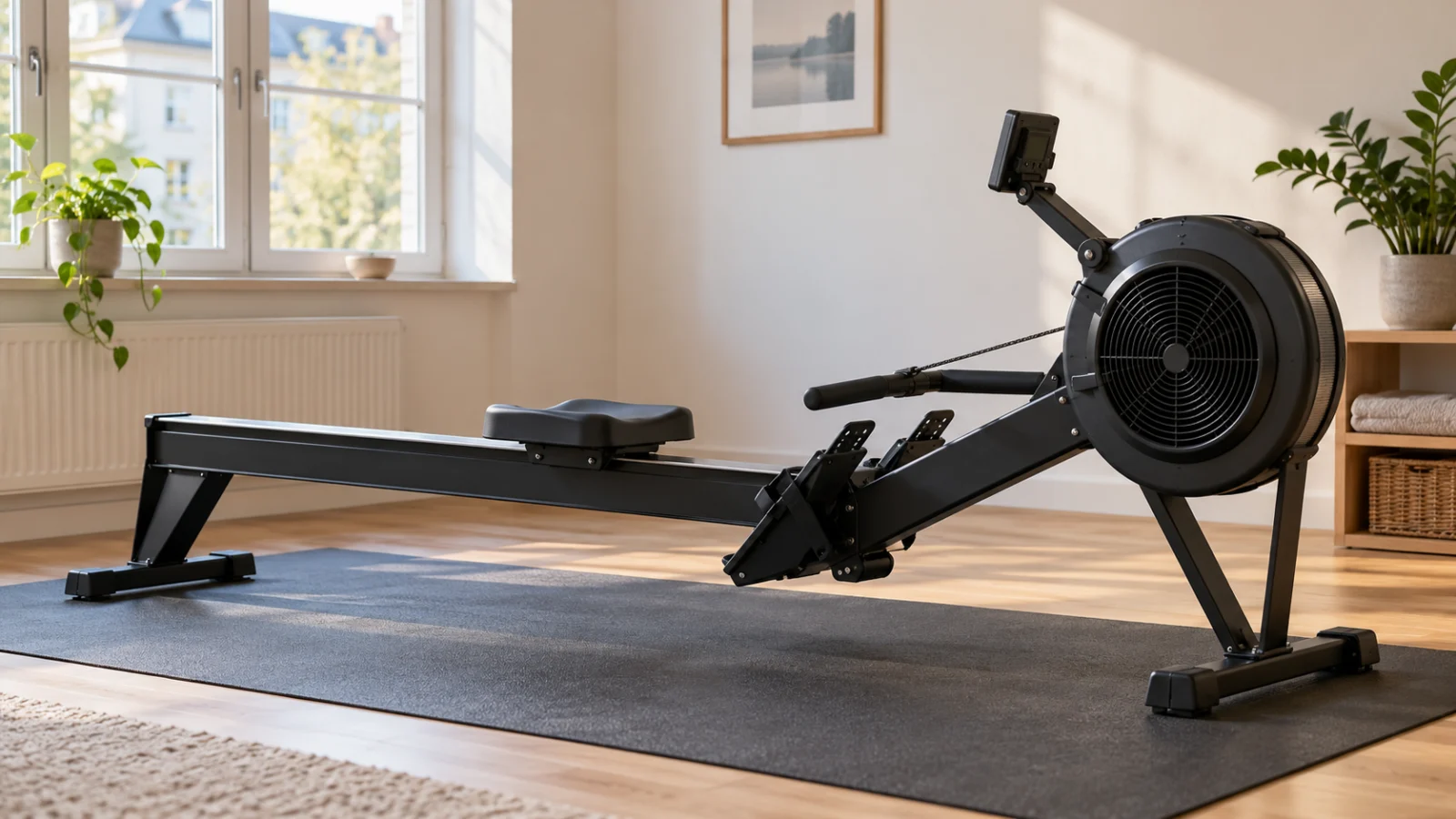 Rameur à la maison : place, bruit et budget à prévoir