
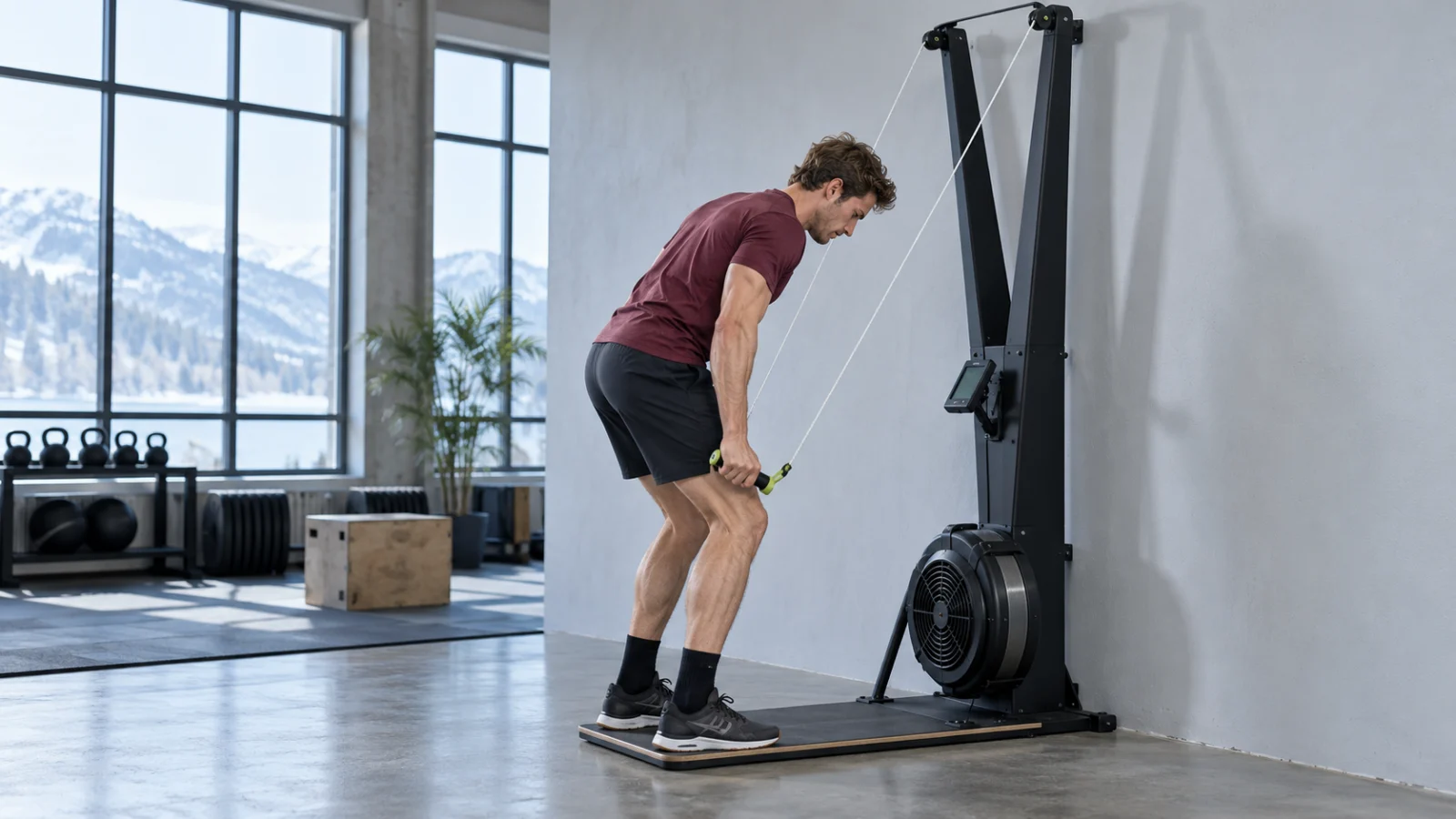
What is the SkiErg?
The SkiErg uses two handles to simulate a double-poling action while standing. The arms, trunk and legs coordinate; treating it as an isolated arm pull can limit the effort.
Prepare the setup
Check the machine, handle movement and clear standing space. Where mounting is required, follow installation instructions. Damper numbers affect airflow and are not a universal fitness rating.
Coordinate the pull and return
Begin with the hands high and organise the downward pull with trunk and leg contribution. Allow the handles to return smoothly into the next repetition. Seek a repeatable movement rather than a deep uncontrolled fold or a rushed arm-only cycle.
Read pace and rate
The monitor’s pace, time, distance and calories describe the machine’s output. Observe consistency across efforts. A higher repetition rate is not automatically more effective.
Progress and mixed workouts
Begin with manageable efforts and enough recovery to observe technique. In Hyrox preparation or WODs, practise returning to the next task after the SkiErg. There is no universal conversion between its calories and another machine’s work.
Explore the wider topic
Read the pillar guide · Choose a suitable workout version
Coordinate the double-pole movement
Stand in a stable position facing the machine, with the handles slightly above eye level and soft elbows. Begin the downward action with the trunk, allowing the hips and knees to contribute. Finish with the hands beside the thighs rather than extending the pull far behind you. Return upright and let the handles rise under control. First aim for smooth coordination and stable foot contact, before chasing a faster monitor number.
Read the monitor for your task
Pace per 500 m describes virtual speed; remaining distance tracks a task in metres. Watts show displayed power, while time or calories may be the unit prescribed by the session. Select a useful screen before starting and observe several strokes rather than your best instantaneous reading. Keep the original unit in your training record.
Common errors to observe
Reaching unnecessarily high, pulling too far behind the thighs, moving the hips far back, standing too far from the machine or reaching the ends of the cords can disrupt a repeatable stroke. Choose one point to observe during a short easy effort. Several simultaneous cues make it harder to know which change helped.
An introductory session
One example to adapt is five easy one-minute efforts, each followed by one minute of rest. First take time to set up and try several strokes. Compare distance across efforts with the aim of repeating a controlled rhythm. Record settings and how the task felt; an improved next session may mean smoother coordination rather than a higher speed.
In a circuit or race
Choose pace with the following work in mind. A fresh standalone machine test differs from a station after running. Learn the stroke separately from practising transitions under fatigue. Consult the current official HYROX rules for race-specific distance, positioning and completion requirements.
SkiErg and rowing
The rower uses a seated stroke and sliding seat; the standing SkiErg action uses cords and a different sequence. Learning one does not replace learning the other. Choose the machine relevant to the task, and define the purpose when making a substitution. Equal displayed distance does not establish an identical workout.
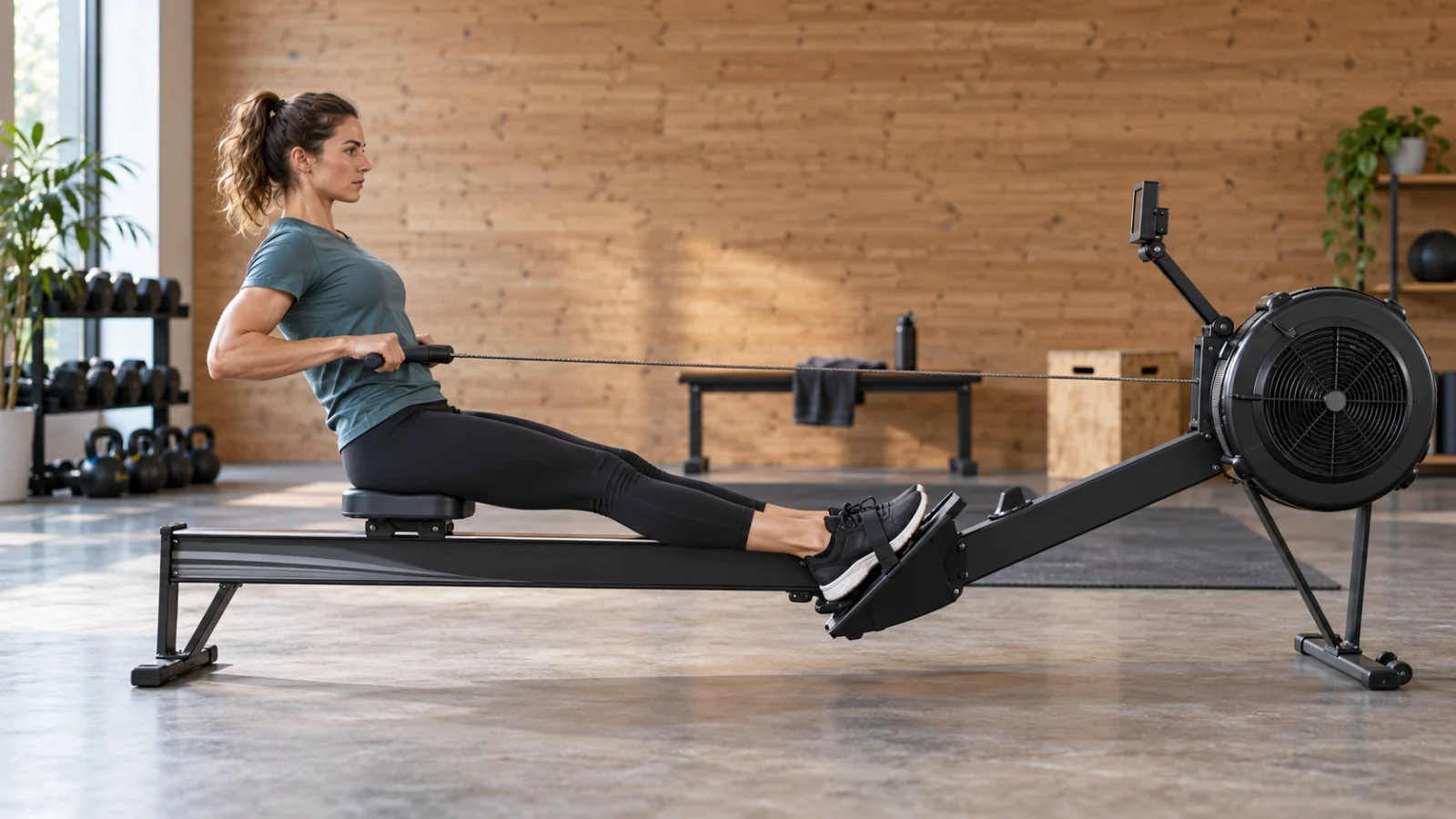 Rowing: technique, settings and progression
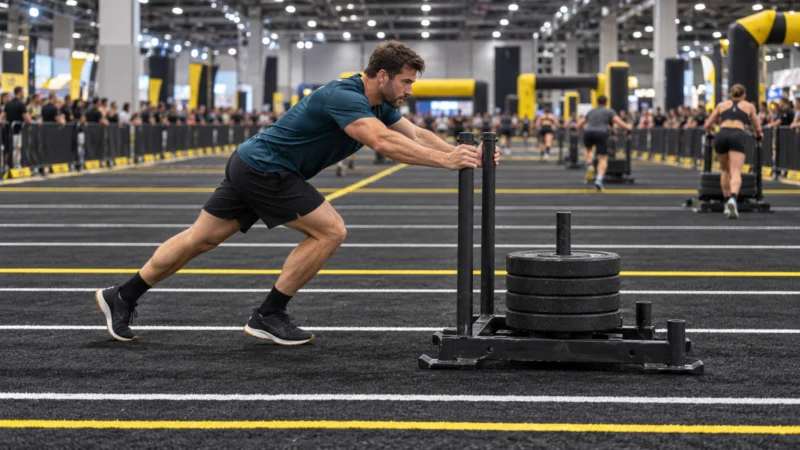 The eight HYROX stations: movements, preparation and running transitions
 HYROX training: running, strength, stations and recovery