
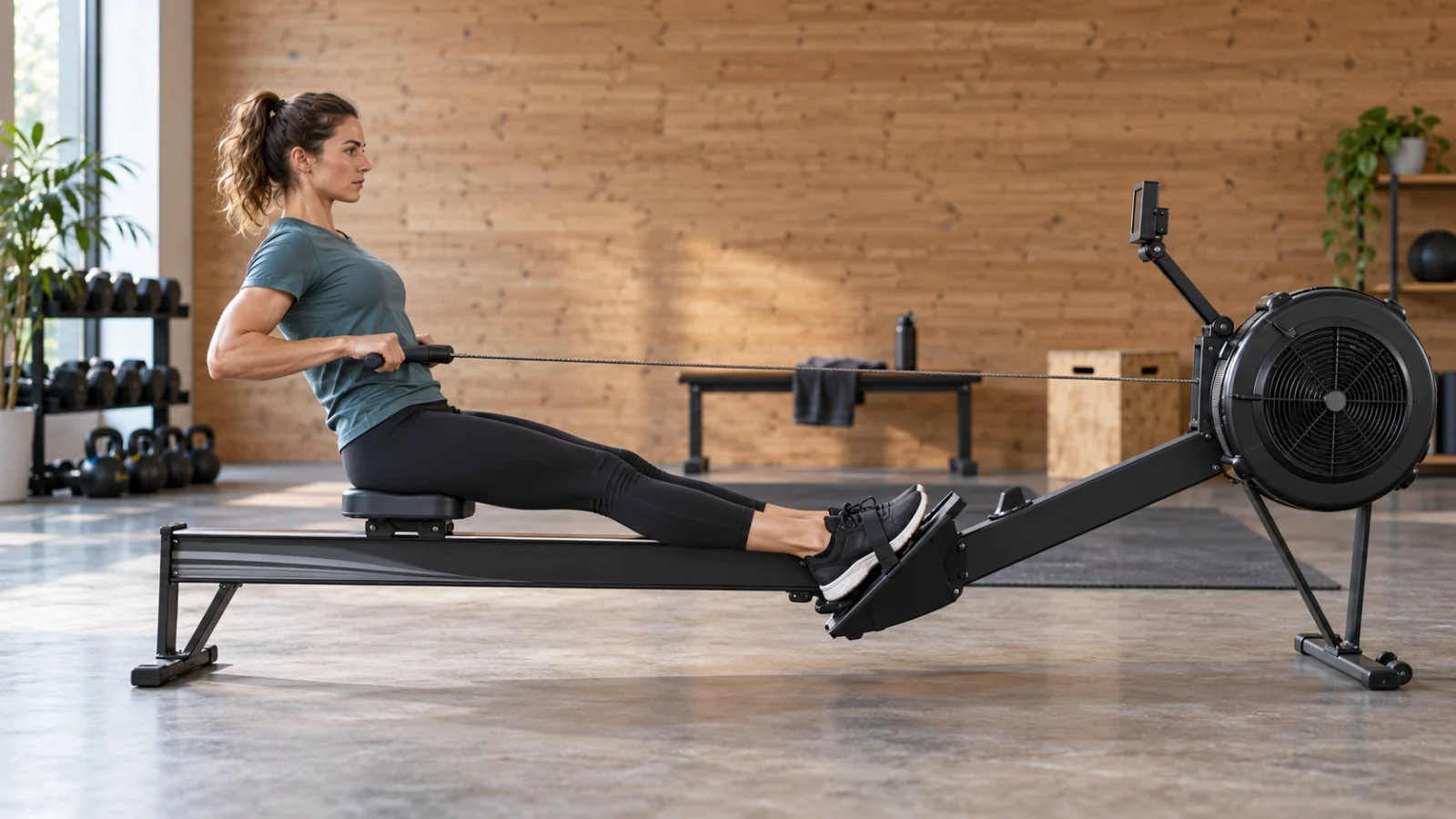
The rowing stroke
Indoor rowing combines leg drive, trunk movement and an arm finish. It is not simply pulling the handle quickly. The recovery returns the body to the next stroke without reversing all actions at once.
Set up before rowing
Adjust foot supports and straps for secure contact. Check the machine and available space. The damper affects airflow; its number is not a universal difficulty level or a requirement to use the maximum setting.
Drive and recover
From the catch, push with the legs, then open the body and finish with the arms. On recovery, extend the arms, bring the body forward and bend the knees once the hands have cleared them. Seek a smooth sequence rather than maximal stroke rate.
Read the monitor
Pace, distance, time, stroke rate and calories describe different aspects. A faster stroke rate does not guarantee a better pace. Compare results on the same type of machine under similar conditions.
Progress and use in WODs
Establish consistent controlled strokes before adding intensity. In mixed workouts, choose an effort that lets you begin the next movement. Machine distances and calories are not universal equivalents when substituting exercises.
Explore the wider topic
Read the pillar guide · Choose a suitable workout version
Damper setting and drag factor
On a Concept2 air rower, the damper changes airflow into the flywheel. Drag factor describes the measured deceleration of that flywheel. The same lever position can therefore feel different on two machines.
Concept2 suggests starting between 3 and 5 on its rower and adjusting to your stroke and feel. This is not a competition requirement or a number to keep increasing. Record settings when comparing sessions.
The catch, finish and recovery
At the catch, keep the arms long, shoulders relaxed and torso inclined from the hips, with shins near vertical rather than compressing against the knees. Drive legs first, then trunk, then arms.
Finish with legs extended, a slight backward torso inclination and the handle below the ribs. Keep wrists aligned with forearms. Return arms and trunk before bending the knees. With practice, the sequence becomes continuous rather than a series of pauses.
Pace, stroke rate, watts and calories
Pace per 500 m describes the time needed at the displayed speed. Stroke rate counts cycles per minute. Watts express displayed power, while calories are a monitor-calculated unit used by some workouts.
Holding exactly 2:15 per 500 m mathematically corresponds to 4:30 over 1,000 m. That calculation excludes transitions and does not predict your race result. Check average pace as well as the fluctuating instantaneous value.
A first session to establish reference points
One introductory example to adapt to your experience is a few easy minutes followed by three comfortable three-minute efforts with a minute of rest between them. Finish easily if you continue.
Observe one point per effort: stroke order, steady pace, then seat recovery. Record distance and settings. Try repeating the effort before extending duration or accelerating.
Common difficulties and workout context
If the handle must travel around the knees on recovery, slow down and restore the sequence. If you pull mainly with the arms, practise easy leg-led strokes. Concept2’s pause and segmented drills help distinguish the phases.
Change one variable at a time. A coach’s side view can be more useful than several simultaneous corrections. WODs may prescribe metres, calories or time; choose a pace with the remaining exercises in mind. For Hyrox participation, verify the applicable official station rules.
Frequently asked questions
Should the damper be on 10? No. This is an airflow position on the relevant machines, not a rating of workout quality.
Is there a universal good 1,000 m time? Context matters: machine, experience, task and previous fatigue. A fresh test and a race station differ.
Can the SkiErg replace rowing? It changes the movement and effort distribution. Define the training purpose rather than assuming equal distance means equal work.
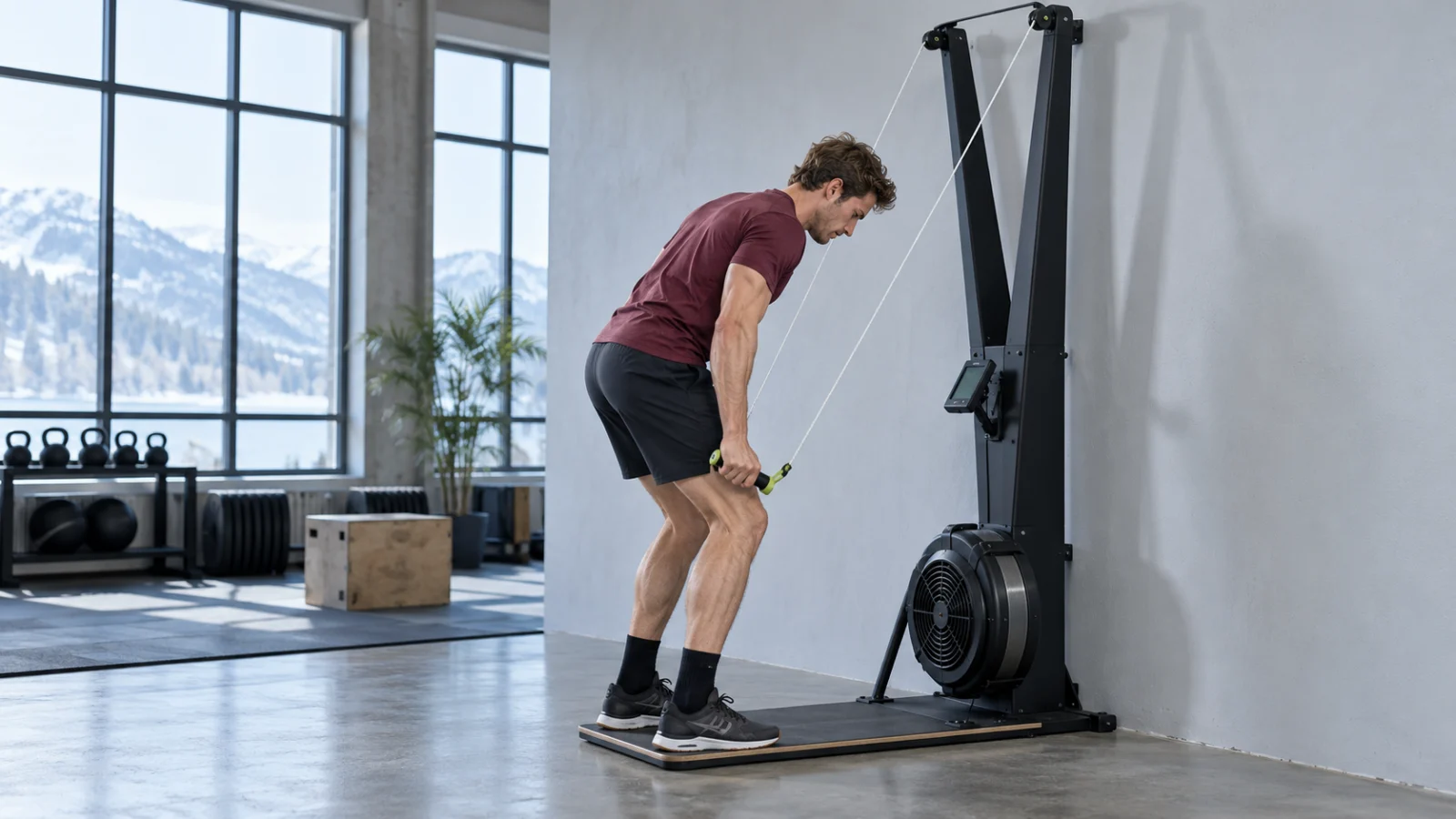 SkiErg: technique, settings and getting started
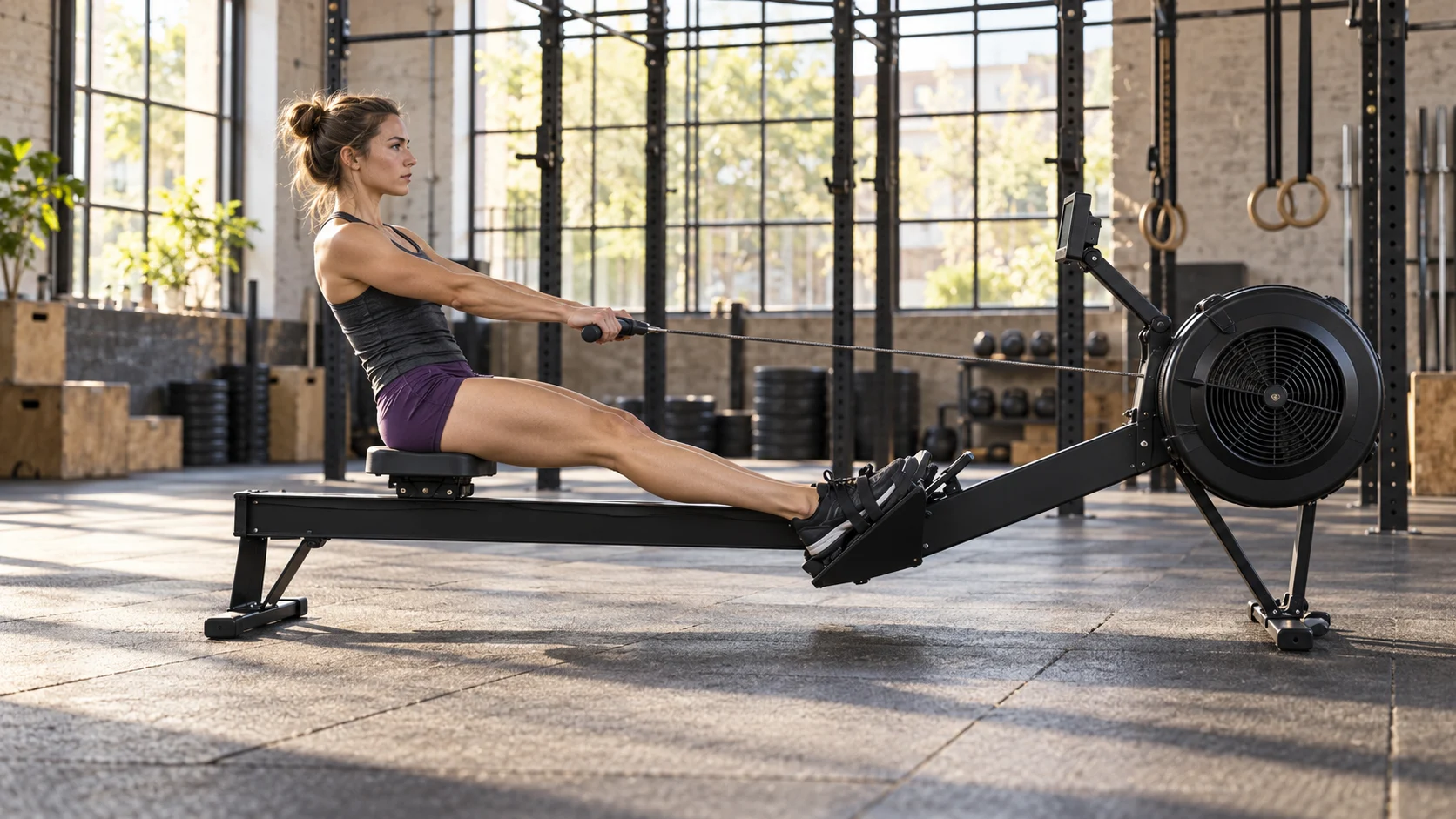 Cardio vs muscular endurance: understand the training task
 HYROX training: running, strength, stations and recovery