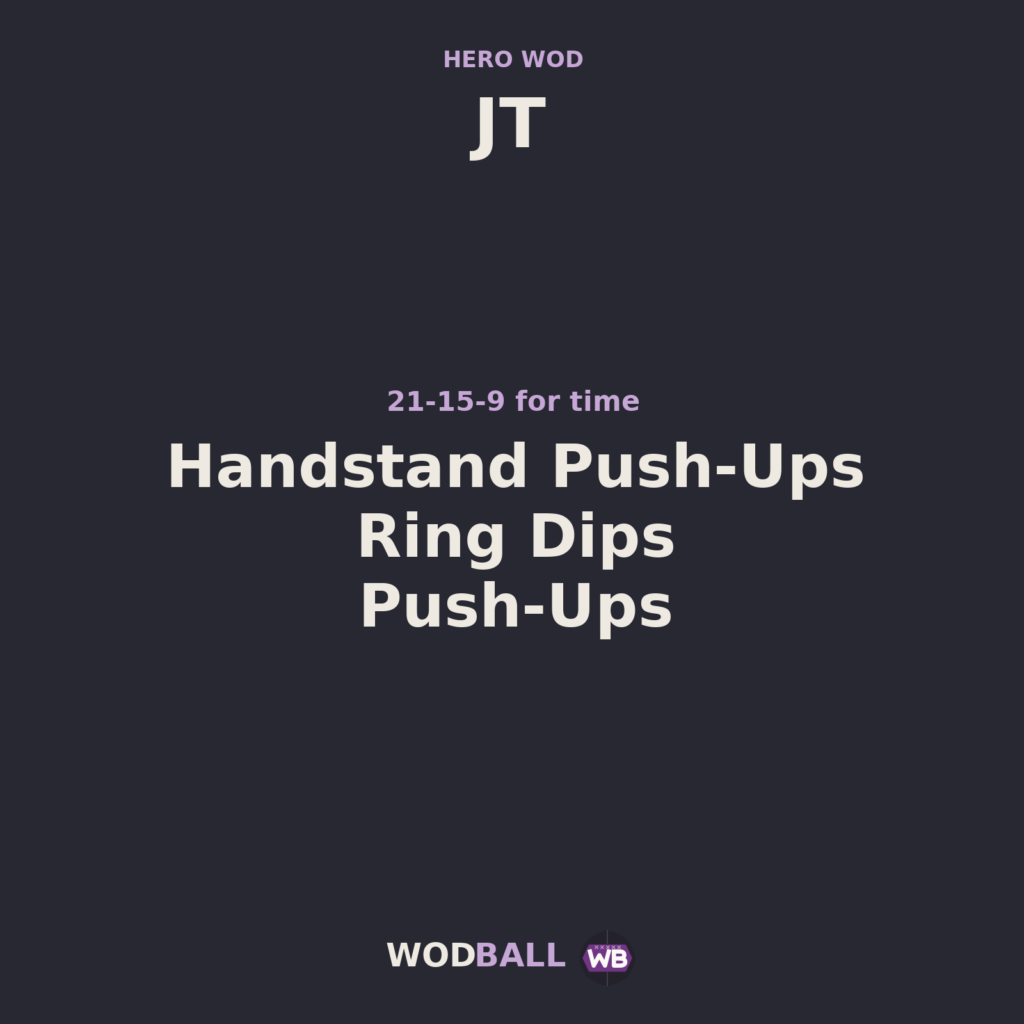
Understand the task
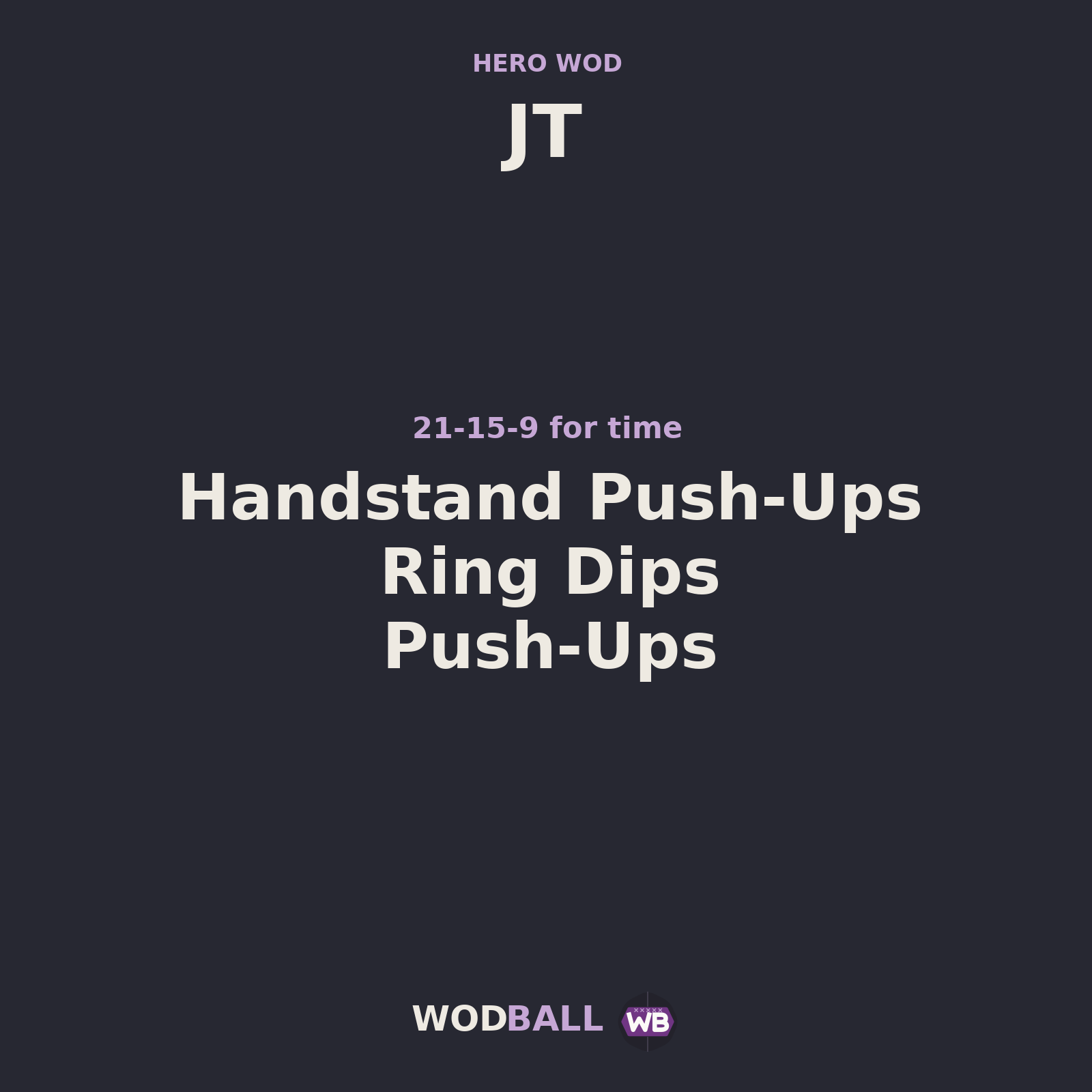
Perform 21 repetitions of each movement, then 15 of each and nine of each. All three are pressing movements, which makes local fatigue a major pacing factor.
Pacing and setup
Choose suitable pressing variations before starting. Use small planned sets and consistent ranges of motion, rather than waiting for failed repetitions to dictate every break.
Score your session
Record elapsed time from the start to the final completed repetition, including transitions and prescribed rest. If you stop at a training cap, record the work completed instead of a finishing time. Keep the stated movement order and any special rules shown in the programme.
Prepare and adapt
Warm up progressively, then rehearse the listed movements and transitions with lighter loads or easier variations. Choose scaling before the clock starts: adjust load, repetitions, distance or movement difficulty to create a task you can complete with control. These adaptations change the prescription, so record them beside your score.
For a useful retest, repeat the same equipment, distances, loads and movement standards. A result from a scaled version is a training record in its own right; it is not directly interchangeable with the full prescribed task.
Explore further
June workout selection · Rx and scaled workouts · Find another WOD