
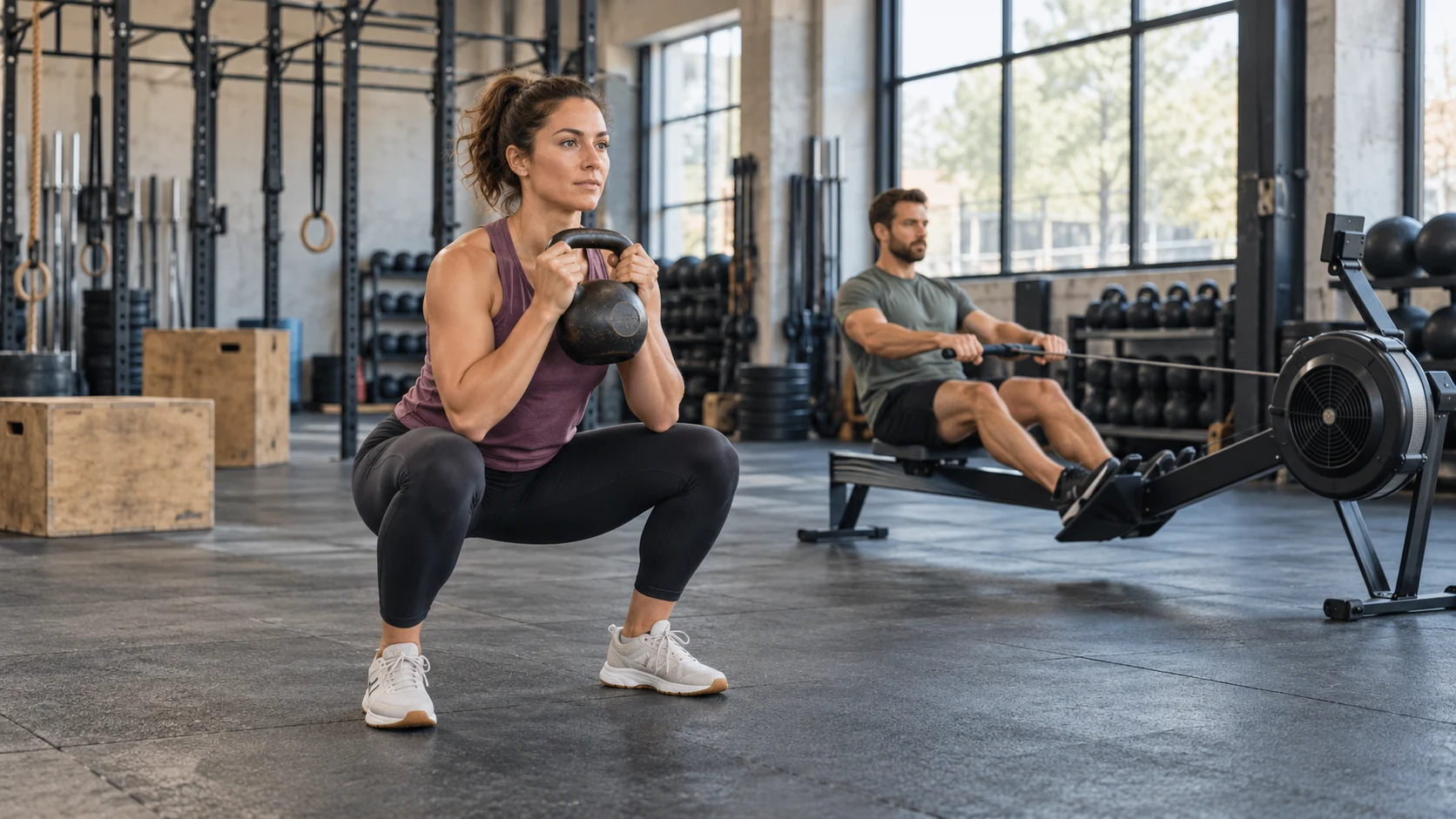
What is a goblet squat?
A goblet squat uses a single weight held close to the front of the chest while you squat. A dumbbell or kettlebell can be used, with a secure hold appropriate to its shape.
It provides a way to explore loaded squatting without a barbell rack. The front-held load changes balance and support demands, but it does not automatically provide the right position for every athlete.
Choose a secure hold
With a kettlebell, a common option is holding the sides of the handle so the body of the weight stays close. With a dumbbell, use a secure two-handed hold suitable for its construction. Check that adjustable components are locked as instructed by the manufacturer.
Choose a load you can lift into position and put down under control. Grip and arm endurance may limit the task before the legs, so consider the whole setup rather than only the squat itself.
Squat and return to standing
Establish a comfortable stance and brace while keeping the weight close. Bend the hips and knees to descend with stable foot contact, then stand by extending them. Avoid rushing the change of direction just to complete more repetitions.
Use a range you can control and the standard appropriate to the session. Stance, body proportions and load position influence the shape of the movement; not everyone must look identical.
Use it to explore loaded squatting
A manageable front-held load can be useful when practising stance and balance. It may also appear in strength work or a circuit. Those settings call for different choices of repetition count, pace and load.
A goblet squat is related to barbell squats but does not reproduce their exact support positions. See front squat vs back squat for those differences.
Review difficulties before adding weight
If the weight moves away from the chest, reduce load or shorten the set and check the hold. If balance changes during descent, compare stance and range before assuming that stretching alone will fix it.
A coach’s observation or a useful video angle can help show where the change starts. Work on one point and repeat the original task to see whether it becomes more consistent.
Variations and equipment choices
A wider stance changes the squat and should be chosen for a reason, not automatically described as better. A pause or slower lowering creates another task that should be recorded.
Dumbbells and kettlebells differ in handle and mass distribution. Compare kettlebells and dumbbells for practical equipment considerations, then test the load on your intended exercise.
Include it in the programme
Account for other squat, lunge and lower-body work in the week. Progress can mean the same controlled range with more repeatable repetitions, not only a heavier weight.
Record implement, weight, stance, range and any pause or tempo. If a WOD specifies a different squat version, agree the substitution and do not treat the result as an identical prescribed score.
Frequently asked questions
Is it only for beginners? No. Its use depends on the task, load and programme rather than a fixed experience category.
Is it suitable for a back injury? The name of an exercise cannot establish personal suitability. Seek individual guidance rather than assuming a front-held load makes it a treatment.
Must every repetition reach the same depth? Use the agreed controlled range for the training task; an official competition standard must be checked separately.
Explore further
Squat guide · Mobility and positions · Choosing a scaled workout
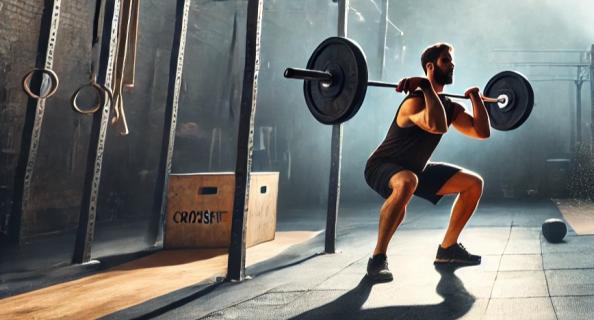 Comparatif front squat vs back squat
 Le muscle snatch ou arraché en puissance
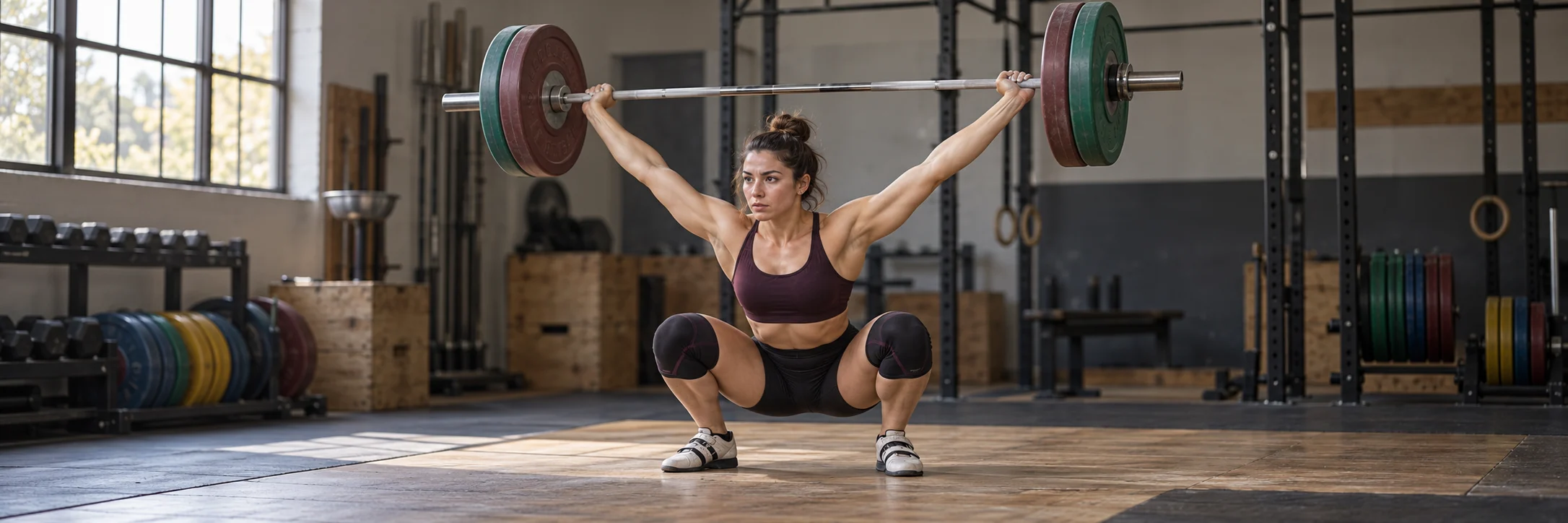 Le squat snatch ou arraché en squat