
Class and score terminology
- Box: an informal name for a CrossFit gym.
- WOD: workout of the day.
- Skill: practice focused on a particular movement or ability.
- Rep: one repetition; a set is a group of repetitions.
- PR or PB: personal record or personal best for a defined task.
- RM: repetition maximum, such as a 1RM single or a 5RM set of five.
- RX: performed as prescribed for that workout.
- Scaled: an adapted version, which may change movement, load, repetitions or duration.
- Open: the named CrossFit competition; check the relevant season's rules for its structure.
Read about rep max, personal records and RX and scaled for more context.
Workout formats and families
- AMRAP: as many rounds or repetitions as possible in the specified time.
- EMOM: start the prescribed task every minute on the minute.
- For time: complete the assigned work, with elapsed time as the score.
- Tabata: commonly eight intervals of 20 seconds of work and 10 seconds of rest.
- Metcon: metabolic conditioning; a broad session description rather than one fixed scoring system.
- Benchmark: a reference workout repeated under consistent standards.
- Girl WODs: a named collection of benchmark workouts.
- Hero or memorial WOD: a programme with a dedication; read its individual context.
Explore the format collection before comparing scores.
Weightlifting and barbell terms
- Clean and jerk: bring the bar to the shoulders, then overhead with a jerk.
- Snatch: take the bar overhead in one continuous lift.
- Squat clean or squat snatch: a version involving a full squat receiving position.
- Power clean or power snatch: receive above a full squat, rather than a compulsory exact quarter-squat depth.
- Front squat: squat with the bar supported in the front rack.
- Back squat: squat with the bar supported across the upper back.
- OHS: overhead squat.
- Strict press: press overhead without leg drive.
- Push press: use a dip and drive to assist the press.
- Push jerk: drive the bar and receive it with the knees re-bent.
- Thruster: combine a front squat and overhead press in a continuous action.
- STOH: shoulder to overhead, using the methods the workout allows.
- GTOH: ground to overhead, again subject to the permitted technique.
- Deadlift: lift the load from the floor to standing.
- Sumo deadlift: a wide stance, generally with hands inside the legs.
- Hang: begin a lift from a position above the floor rather than from the ground.
The weightlifting hub contains detailed movement guides.
Gymnastics and bodyweight movements
- Pull-up: pull from a hanging position to the required finish.
- C2B: chest-to-bar pull-up.
- MU: muscle-up on a bar or rings.
- T2B: toes-to-bar.
- HSPU: handstand push-up.
- HS walk: handstand walk.
- Kipping: a coordinated swinging action used in specified variations.
- Wall walk: walk the feet up a wall and hands towards it, then return under control.
- Pistol: a single-leg squat.
- Dip: lower and press from a supported arm position.
- Hollow rock: rock while maintaining a hollow-body shape.
See the gymnastics hub for progressions.
Conditioning and other movements
- SU or single-under: one rope pass per jump.
- DU or double-under: two rope passes per jump.
- Crossover: a rope variation with crossed arms.
- Burpee: a floor-to-standing movement with the finish specified by the workout.
- Box jump: jump onto a box; box-jump-over rules differ.
- Wall ball: a squat and ball throw to a specified target.
- Lunge: a forward, reverse or walking variation.
- Farmer's carry: walk with a load in each hand.
- Devil press: a dumbbell burpee-to-overhead combination.
- Cal row or bike: the machine monitor's calorie score, not a precise measurement of your body's energy expenditure.
Equipment names
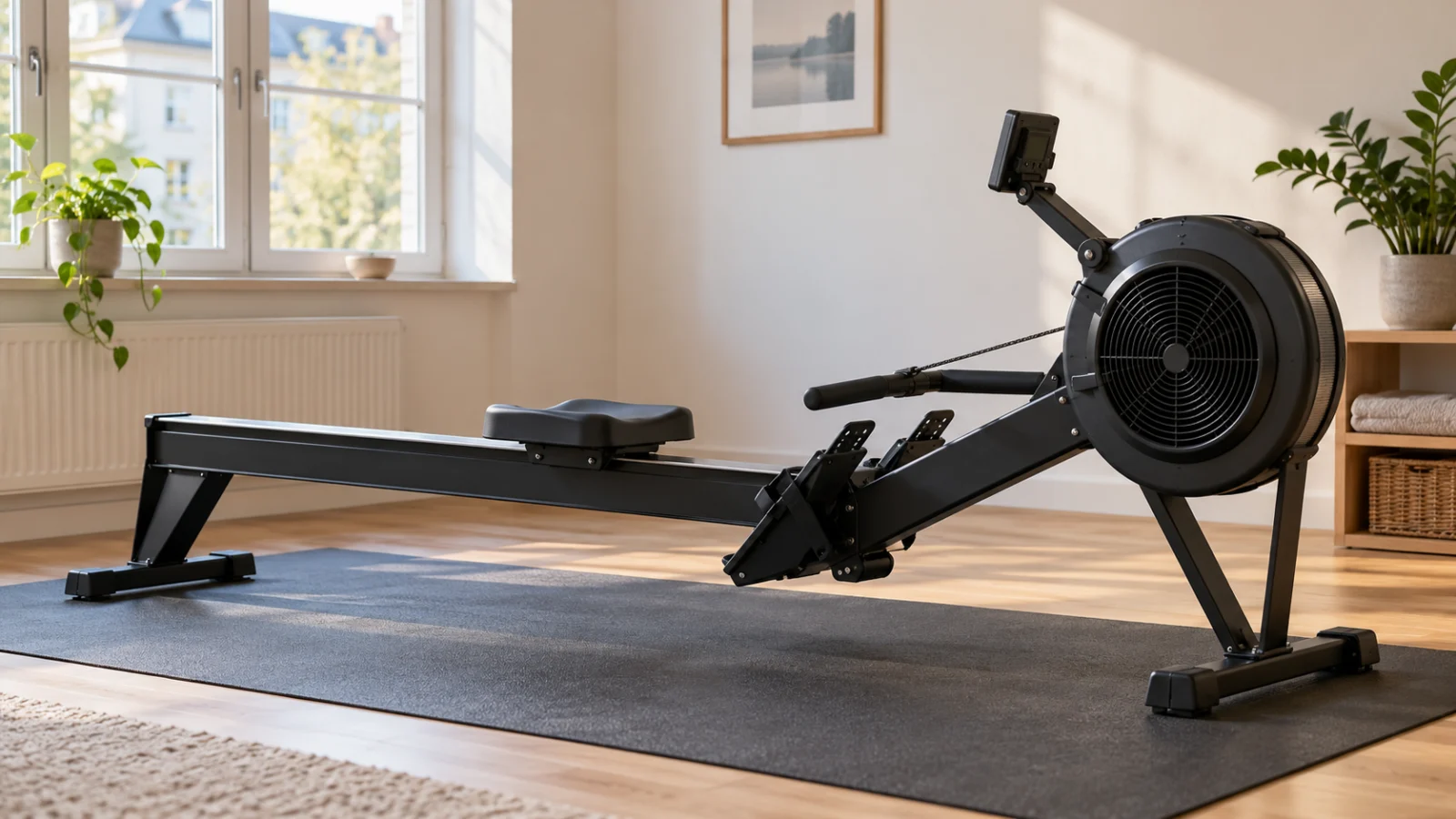
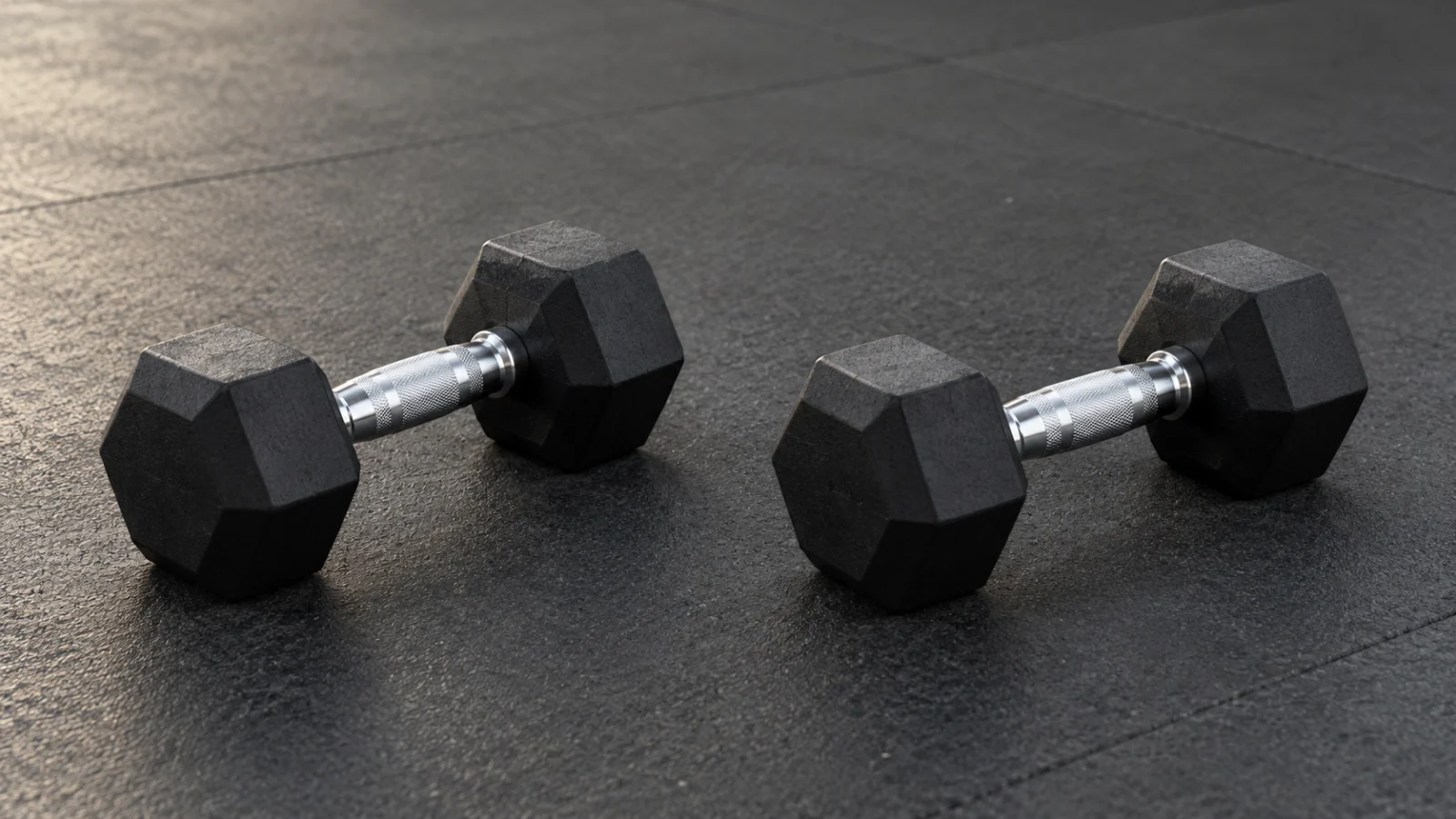
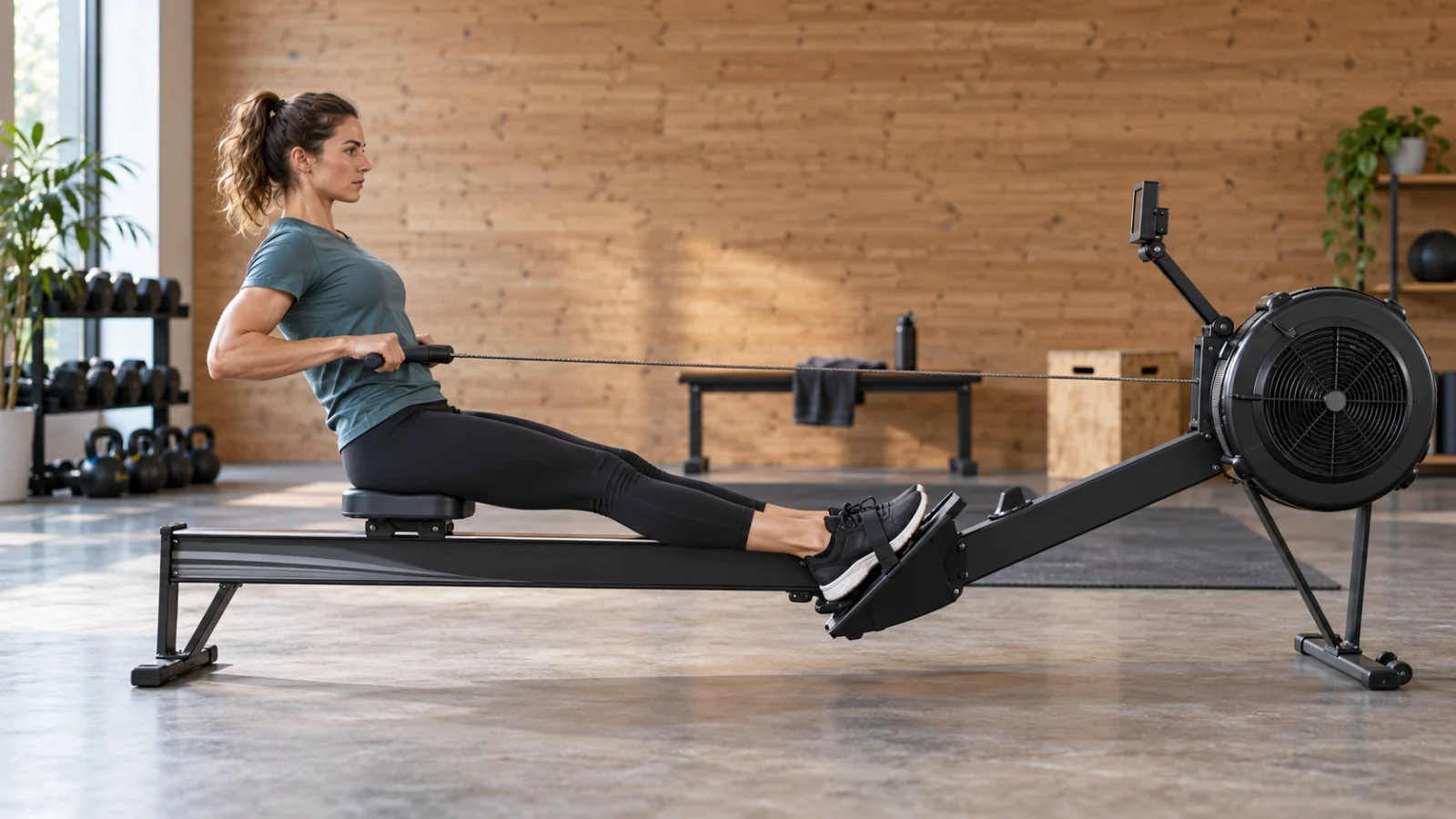
A barbell takes plates secured with collars. A rack supports a bar for appropriate lifts. Dumbbells and kettlebells are different free-weight implements. Rings and pull-up bars need suitable installations. A rower, SkiErg, air bike and sled provide distinct tasks; monitor units and scores are not automatically interchangeable.
Other equipment includes jump ropes, medicine balls, exercise mats and abdominal pads. Check what the written workout requires and ask the coach when a shorthand label is unclear. A glossary helps you read the briefing; it does not replace the exact movement standards.
 Rameur à la maison : place, bruit et budget à prévoir
 Haltères réglables ou fixes : lesquels choisir à la maison ?
 Quel rameur choisir pour le CrossFit et le HYROX à la maison ?