
Weightlifting, strength training and powerlifting: what is the difference?
Olympic weightlifting takes a barbell from the floor to overhead using the snatch or the clean & jerk. It combines strength, speed, coordination and technical precision. Powerlifting is based on the squat, bench press and deadlift. Strength training is a broader practice that may use these exercises to develop strength or muscle mass.
These movement families overlap in CrossFit workouts. This guide distinguishes the two Olympic lifts, supporting strength exercises and combined movements used in WODs.
The two Olympic lifts
The snatch
The snatch moves the bar from the floor to overhead in one continuous movement. The lifter moves underneath to receive the bar, then stands with the arms extended. It combines a pull, a movement under the bar and a stable receiving position, rather than simply lifting with the arms.
Power and squat snatches differ in receiving height. A hang start changes the starting position.
The clean & jerk
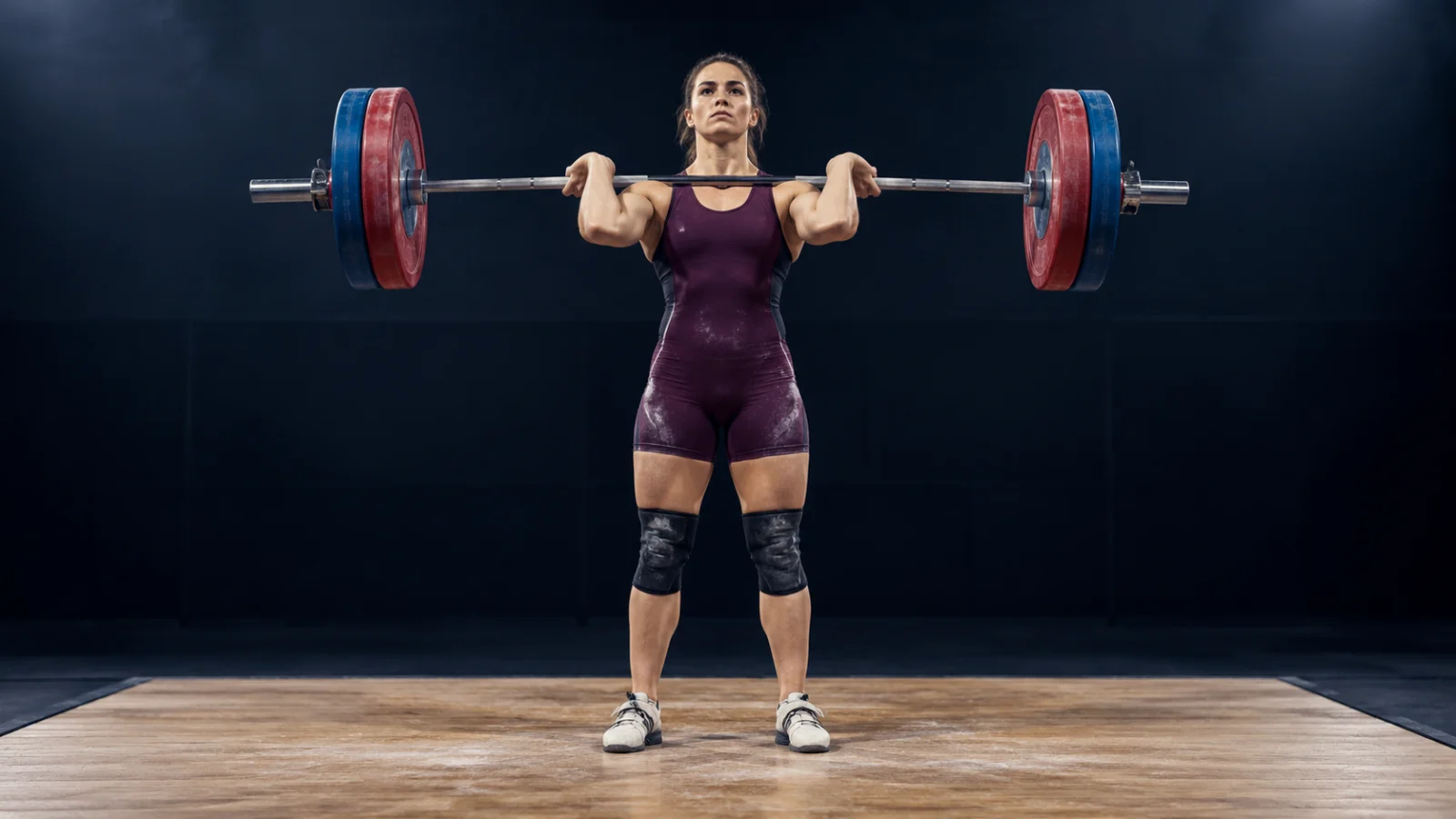
The clean brings the bar from the floor to the front of the shoulders. The jerk then uses leg drive and movement under the bar to stabilise it overhead. The two phases can be practised separately before being combined.
The clean is received in a front-rack position, with the bar supported on the shoulders; the jerk finishes with the arms extended. This intermediate position distinguishes the clean & jerk from the snatch.
Weightlifting in CrossFit
The snatch and clean & jerk involve leg strength, force transfer through the trunk and whole-body coordination. Learning also means controlling the start, receiving positions and overhead stabilisation.
In a WOD, load, repetition count and fatigue change the demands. Technical practice and timed work therefore have different purposes. Choose a variant and load you can control within the session.
Getting started
- Understand the lift. Use the snatch and clean & jerk guides to identify the phases and positions.
- Learn the positions. Practise with a technique bar or light load and a coach who can observe your movement.
- Address one difficulty at a time. Work on a specific position, bar path or variation according to your needs.
- Apply the skill. Choose training loads and volume that match your current control.
Strength exercises supporting the Olympic lifts
The squat and deadlift are not the competition lifts in Olympic weightlifting. They can develop the legs, hips and trunk alongside technical practice, but do not replace practising the snatch and clean & jerk.
Squats: front, back and overhead
A squat bends the hips and knees to lower the body before standing again. Load placement distinguishes front and back squats. A front squat holds the bar on the front of the shoulders, as in a clean reception. A back squat places it across the upper back. The overhead squat adds overhead bar control, as in the snatch receiving position.
The deadlift
A deadlift raises a load from the floor to a standing position, including hip and knee extension. A snatch or clean pull also prepares movement under the bar; its intention and execution are not identical to a deadlift.
Related movements in WODs
A thruster combines a front squat with an overhead press. It is a functional training movement, not a third Olympic lift.
Shoulder to Overhead and Ground to Overhead describe starting and finishing positions. The techniques permitted depend on the workout’s instructions. Clarify those instructions rather than treating the terms as synonyms for a particular lift.
Mobility and useful positions
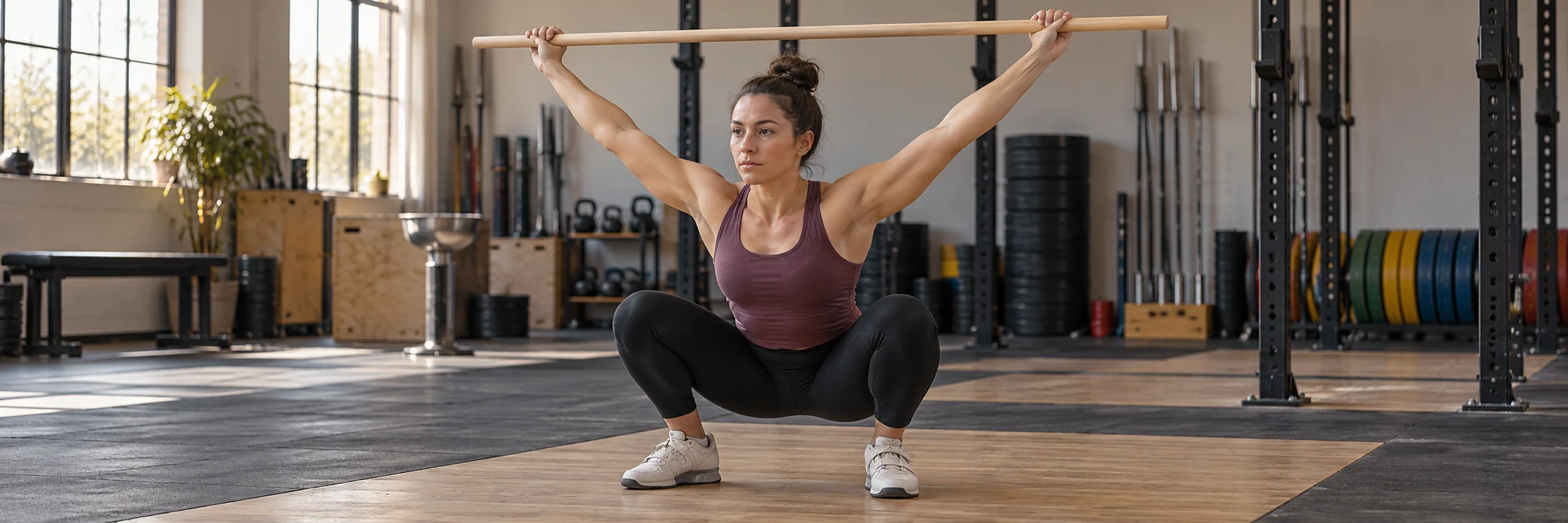
The snatch reception, clean front rack and overhead jerk involve different positions. Mobility includes available range and the ability to control it. Difficulty may also come from balance, timing or bar placement.
Ankle and hip flexion contribute to a squat reception. The front rack requires positioning the bar on the shoulders; overhead support combines shoulder range, trunk control and balance. Identify the specific position that is difficult rather than assuming a general lack of flexibility.
Learning and technical progression
Progress is not only extra weight. A more consistent bar path, a controlled reception and repeatable movements are useful indicators. Variations can target one phase without replacing an understanding of the full lift.
A hang start reduces the part of the pull to coordinate; a pause lets you observe a position. Compare repetition quality and receiving stability at the same load to follow progress.
Keep technical practice, strength work and barbell WODs distinct when organising training. Record loads, volume and execution quality while accounting for the rest of the week.
Equipment and the training environment
The bar, plates, platform and supports form the basic setup. Shoes and accessories address particular needs but do not replace learning the positions. Choose equipment according to your training space, movements and what is already available.
A weightlifting bar’s rotating sleeves allow rotation during the lifts. Plates let you adjust load, while the platform and clear space must suit the intended use. A rack supports work from the shoulders or back, such as squats.
Competition: snatch, clean & jerk and total
In Olympic weightlifting competition, lifters have three attempts at the snatch followed by three at the clean & jerk. The total adds the best successful result in each lift. Categories, judging and procedures are governed by the applicable rules.
Finishing a movement in training does not automatically make it a valid competition attempt. Consult the federation and event rules for the standards that apply.
Frequently asked questions
Which lifts are Olympic lifts?
The snatch and clean & jerk. Squats, deadlifts and thrusters appear here as supporting or related movements.
Should I learn the snatch or clean & jerk first?
There is no single order for everyone. The choice depends on your current positions and programme. Discuss a suitable starting point with your coach.
Where can I explore specific variations?
The individual movement guides link to more detailed articles. You can also use the resource search to explore a subject.
 Weightlifting mobility: squat, front rack and overhead
 Learning weightlifting: technique and progression