
What is gymnastics?
Gymnastics develops control over body positions and movement: supporting yourself, hanging, turning, balancing and linking skills. Strength, mobility and coordination take different forms depending on the discipline and exercise.
Competitive gymnastics includes disciplines such as artistic, rhythmic and trampoline gymnastics. An artistic gymnastics routine has its own apparatus and requirements; it is not the same task as a set of pull-ups in a fitness gym.
In functional training and CrossFit, gymnastics commonly refers more broadly to bodyweight work. This guide focuses on hand support, pulling, transitions, pushing and trunk control, with separate movement guides for technique and variations.
The main movement families
Hand support and balance: handstands
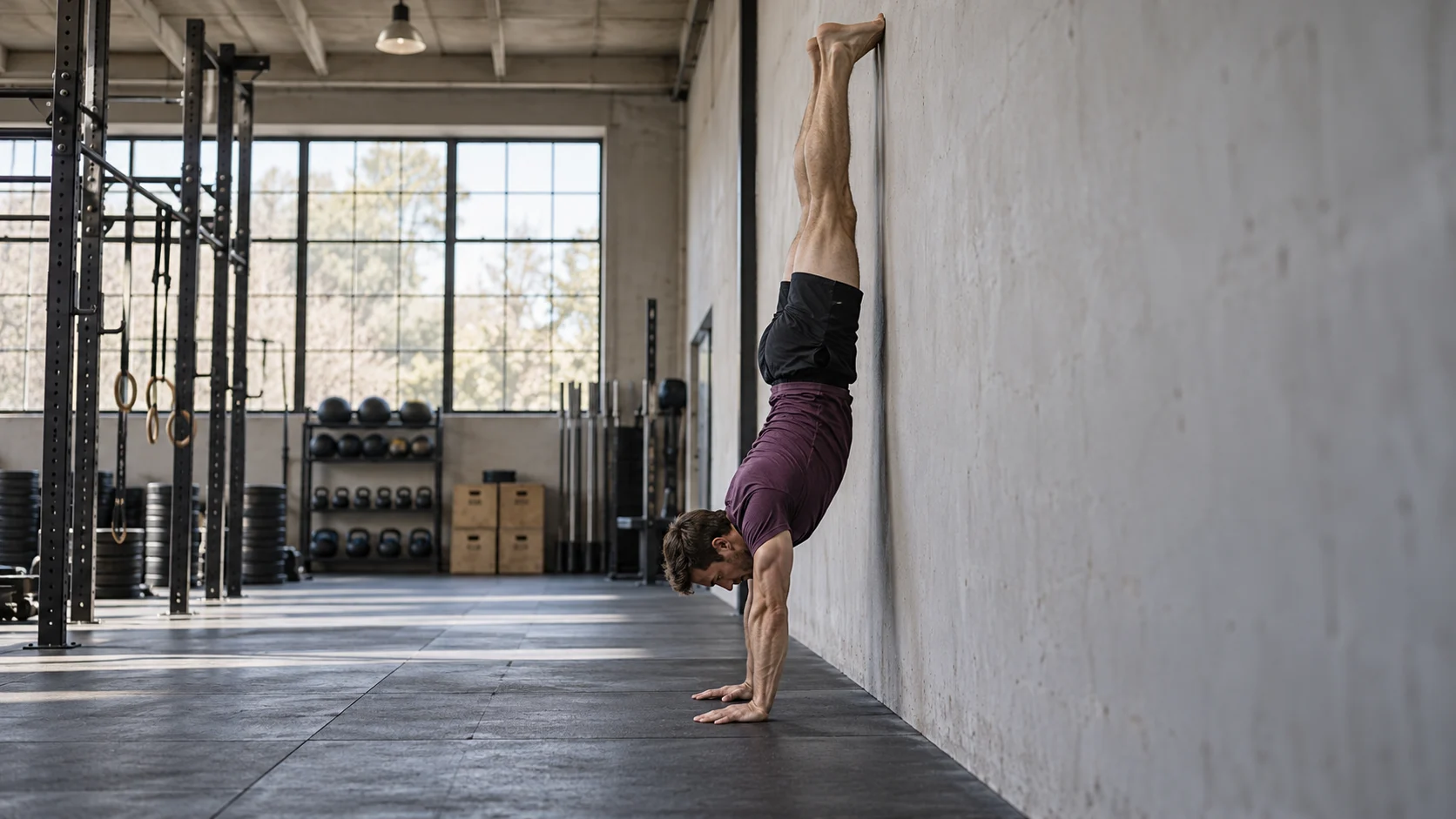
A handstand balances the body on the hands. Wall support provides assistance, while a freestanding hold adds balance control. Handstand walking involves shifting weight; a handstand push-up adds pressing. These skills share an inverted position but require separate preparation.
Pulling and hanging: pull-ups
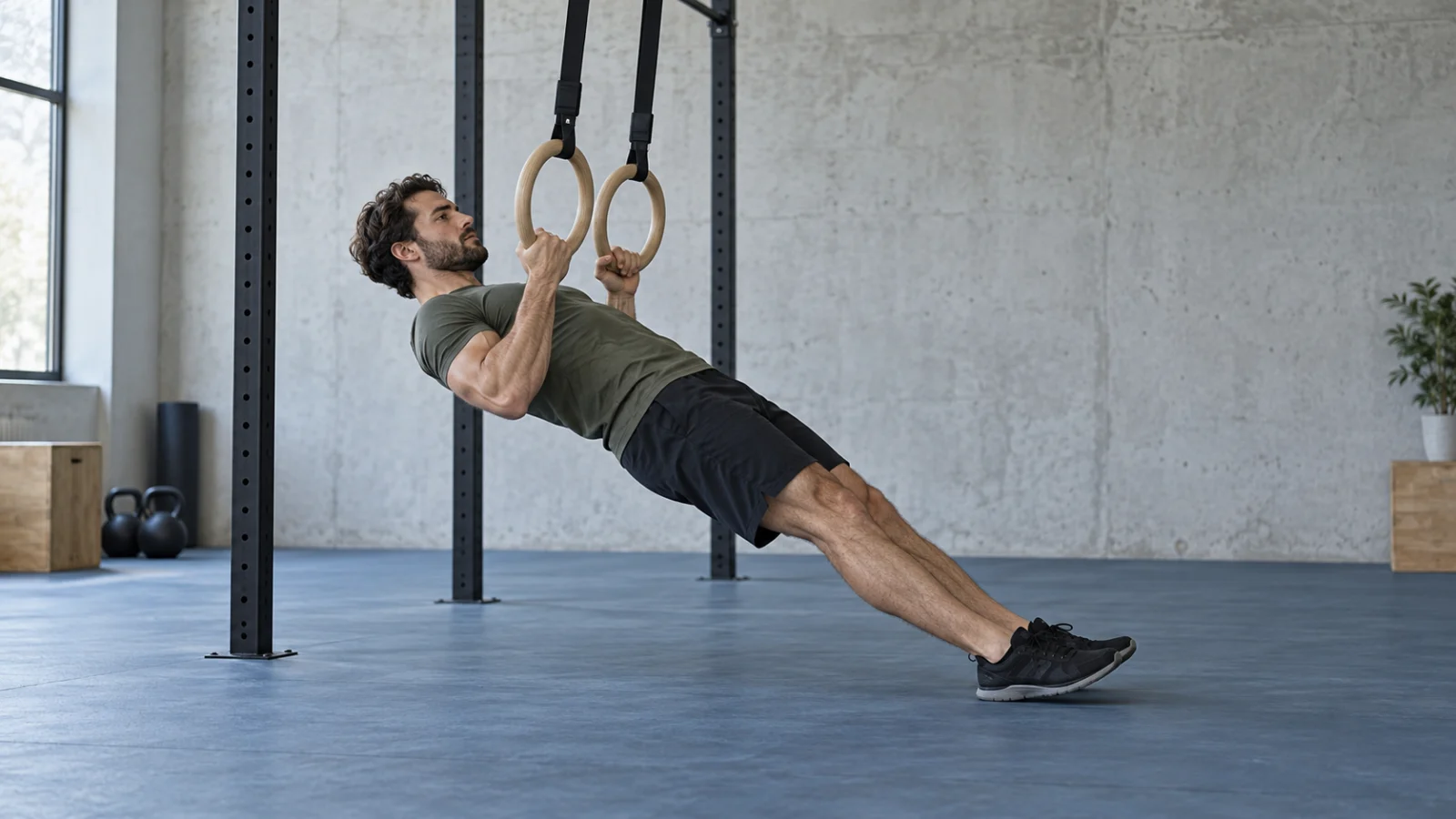
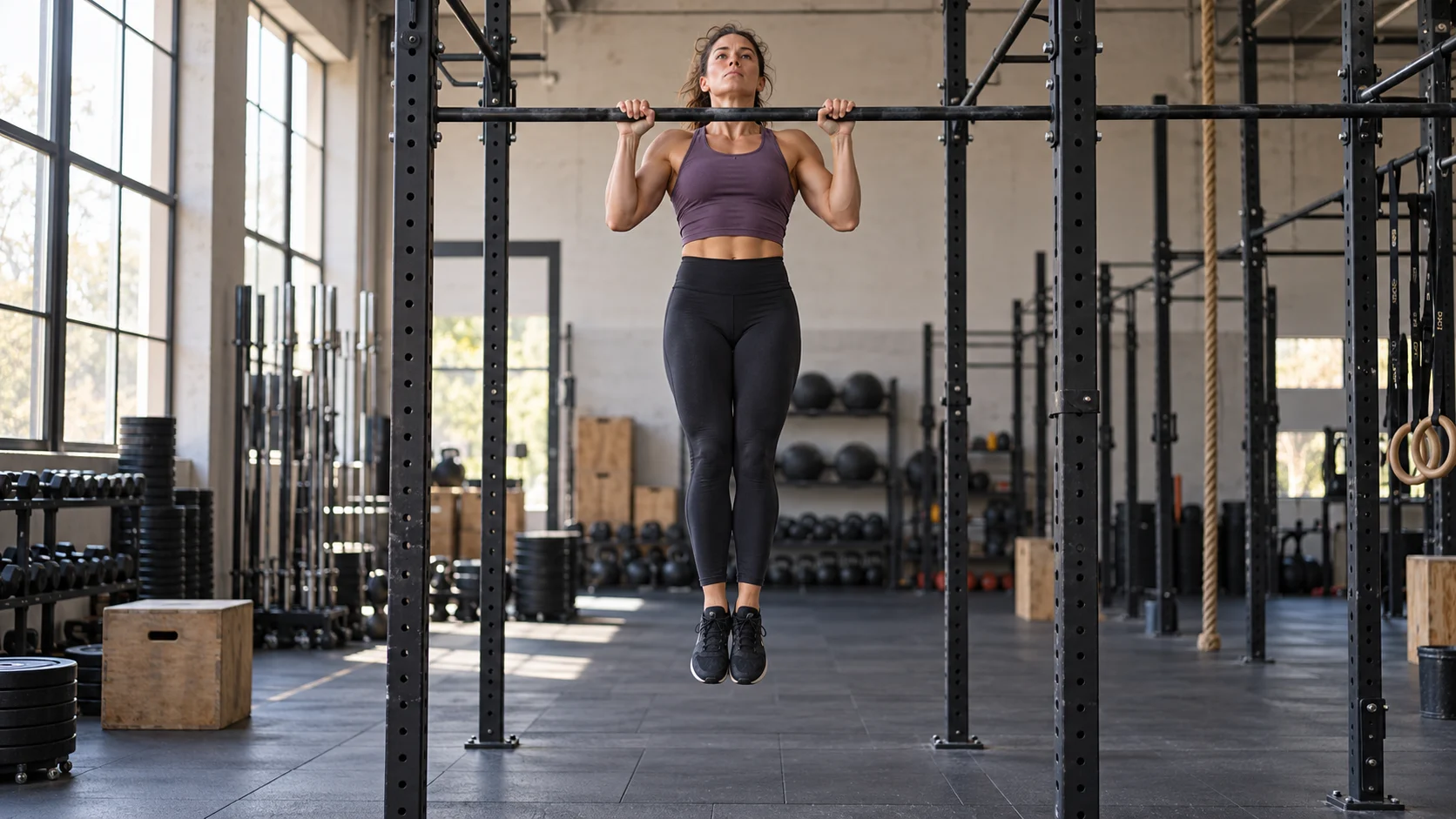
A pull-up raises the body towards a support. Assistance, grip and range of motion can change the task. Ring rows offer another pulling situation with the feet on the floor. Controlled hanging and lowering are also skills to observe.
Transitions and combined skills: muscle-ups
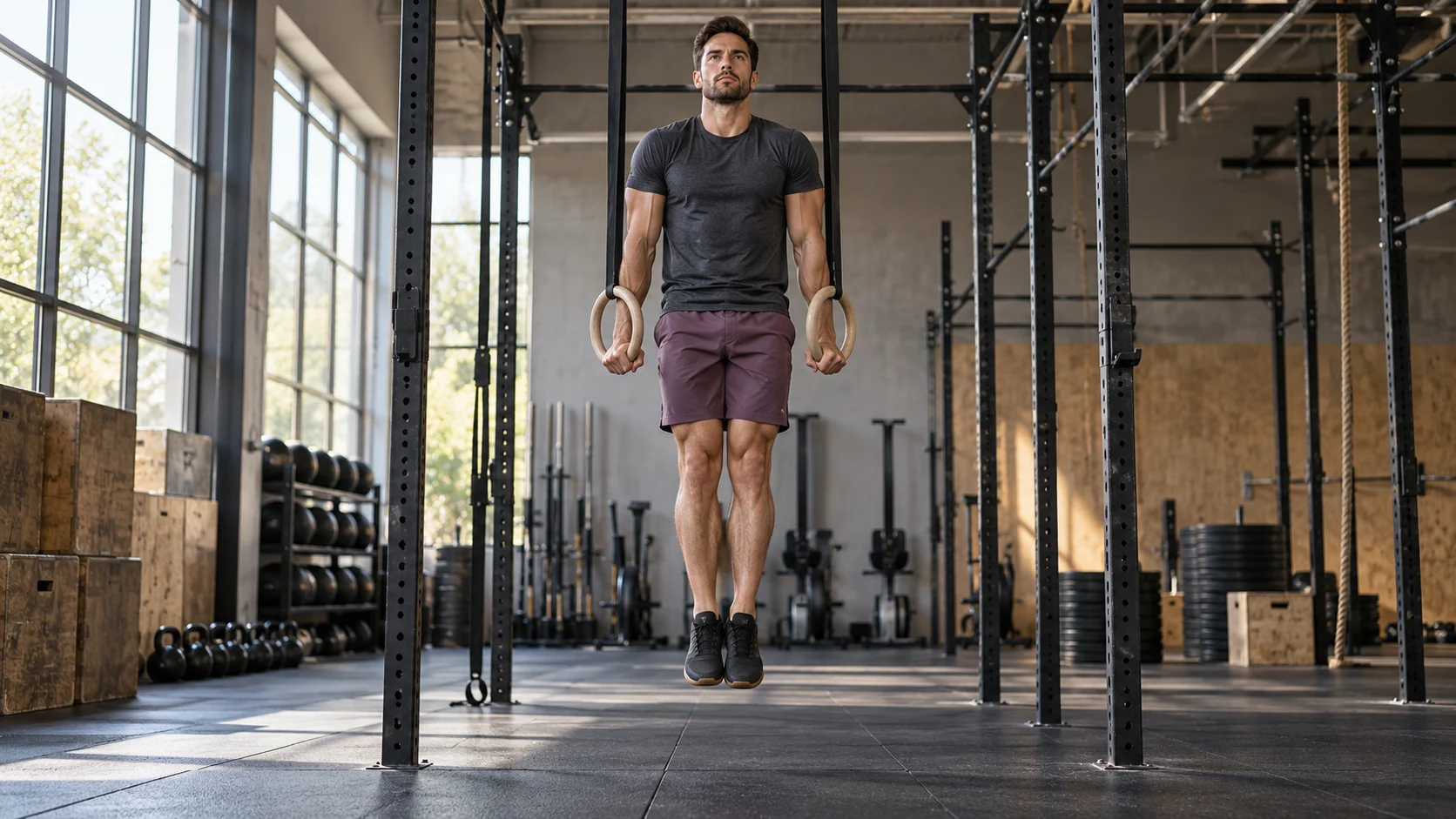
A muscle-up moves from hanging below a bar or rings to supporting the body above them. Pulling strength is only one part: connect the pull to the transition, then finish the press. Fixed bars and moving rings require different grips and paths.
Trunk control: hollow, arch and toes-to-bar
Trunk control helps maintain or change body shape under load. Hollow and arch positions provide reference points on the floor and while hanging. Toes-to-bar adds raising the feet to the bar and controlling the return. Grip, shoulders and coordination matter alongside the trunk.
Pushing: push-ups and dips
Push-ups can be performed on the floor or with hands elevated to adjust difficulty. Dips lower and raise the body between bars or rings. Rings add the task of stabilising the support. Choose a range you can control in both directions.
Climbing: rope climbs
Rope climbing combines grip, pulling and leg use, depending on the variant. Foot locking and descending should be learned before pursuing height or speed. Initial attempts need suitable coaching and an installation designed for the task.
Gymnastics across different sports
In CrossFit
Gymnastics movements can be combined with weights and endurance work. The challenge is to keep execution consistent throughout the session. The movement variant, set size and rest depend on the workout’s purpose.
Learning a skill and using it under fatigue are different tasks. A calm assisted transition and repeated timed muscle-ups do not serve the same learning situation. Scaling can preserve the intended work without imposing a movement that stops the whole session.
In calisthenics and street workout
Bodyweight training is central to these practices, including pull-ups, dips, balances and muscle-ups. Depending on your aims, work may focus on strength, holds, combinations or a specific skill.
Shared movements do not make all sessions or standards identical. Define your goal: a first controlled repetition, a strict variant or a particular sequence.
In physical preparation
A pulling exercise, support position or trunk-control task can be part of a broader programme without aiming for advanced skills or competition. Select exercises according to your sport, starting point and other training. You do not need every movement family in every programme.
How to start and make progress
Choose a clear starting point
Can you hold the position, complete a repetition or return to the start with control? That observation helps select assistance, range of motion or a more accessible exercise.
| Your goal | Starting point to explore |
|---|---|
| Discover inversion | Supported positions and controlled entry and exit |
| Work towards a pull-up | Assisted pulling and controlled hanging |
| Move above the rings | Pulling, support and assisted transitions |
| Link bar movements | Body shape, grip and a controlled return |
Build strength and control before complexity
Kipping adds coordination with momentum; it does not replace a strict foundation. CrossFit recommends mastering a strict pull-up before kipping pull-ups. Choose a progression that develops the missing component rather than repeating unsuccessful full attempts.
For inversions, entry and exit are part of the skill. A long hold is not enough if you cannot return to the starting position with control.
Observe quality and organise practice
Record the variant, assistance, range and quality of your final attempts. Change one parameter at a time to understand what is improving. Less assistance with the same control is progress; more repetitions through a different range changes the task.
Allow recovery and account for the rest of your week. Pull-ups, muscle-ups and toes-to-bar all involve the hands and shoulders. Short, observed practice can be more useful than repeated attempts under fatigue.
Equipment and practice conditions
A fixed bar supports hanging and pulling; adjustable rings let you vary height and assistance. Hand support requires a stable surface and clear space. A climbing rope needs an installation intended for that use.
Check fixings, adjustments, access to the apparatus and how to get down. Have a competent coach prepare initial attempts at height or in inversion, including the exit.
Grips may change how the bar feels, but do not replace hanging control. Bands, boxes and elevated supports can provide assistance when stable and used for a defined purpose.
Frequently asked questions
Do I need to be strong or flexible already?
Start with variants suited to your abilities and gradually develop what the task requires.
Can I practise without doing CrossFit?
Yes. Support, pulling and body-control skills also feature in calisthenics, physical preparation and dedicated skill practice.
Do I have to learn every movement?
No. Choose a priority that fits your goals and equipment. The movement families provide direction rather than a compulsory checklist.
 Handstands: balance, walking and handstand push-ups
 Pull-ups: technique, variations and progression
 Muscle-ups: bar, rings and progression