
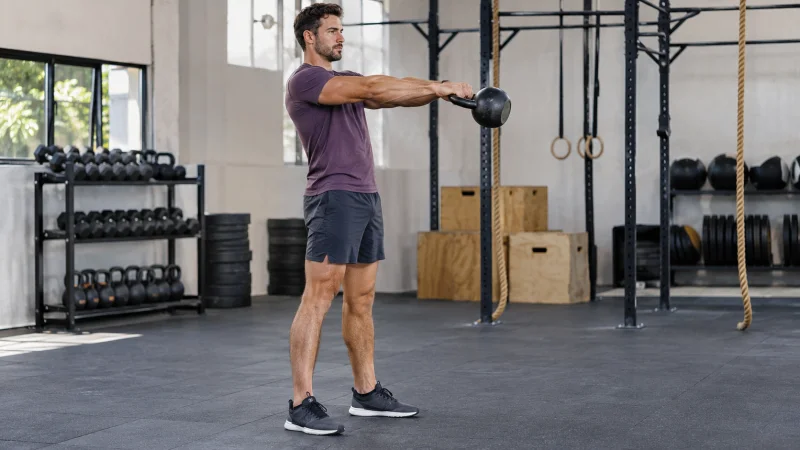
Where does the movement come from?
The swing uses hip extension to set the kettlebell in motion. The arms transfer momentum while the trunk stays stable. Before repeating swings, distinguish sending your hips backwards from squatting down. Practise the hinge without weight first, then a light deadlift checked by your coach.
Prepare the grip and space
Use a kettlebell with a handle you can grip securely in both hands. Place it in front of you on a stable floor, with space ahead and behind. Set your feet comfortably, reach the handle by moving your hips back and brace before starting. Ask for a demonstration of the start and finish if you are learning.
Repeat a two-handed swing
Bring the kettlebell between your thighs, then push through the floor to extend hips and knees. Let the weight travel forward while you stand tall without leaning backwards. Wait for its return before moving your hips back and guiding it between your legs. To finish, control the final return and place it on the floor in front of you.
Russian or American swing?
The Russian swing usually finishes around chest or shoulder height. The American swing continues overhead and requires control of that position. The programme should state the range. Start with the range you can control with your coach, then learn the overhead variation separately. A chest-height set does not automatically meet an overhead prescription.
Load, sets and common errors
Choose a weight you can start, repeat and set down cleanly. If your arms do most of the pulling, revisit hip drive. If you arch your back at the top, reduce range or load and regain a stable standing position. Stop the set if your grip slips. Begin with short sets and retain the same criteria when pace increases.
Use the swing in a WOD
Read the required range and load before the timer starts. For Helen or a chipper, plan sets you can repeat after running or other movements. Record the weight and adaptations. Agree another variation with your coach if overhead work is unsuitable. An adjustable kettlebell must be locked and approved by its manufacturer for ballistic movements.
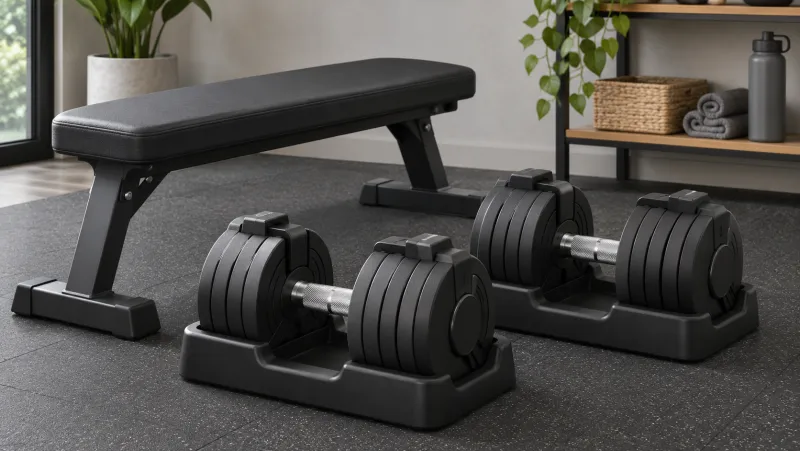 Adjustable dumbbells: three options for home training
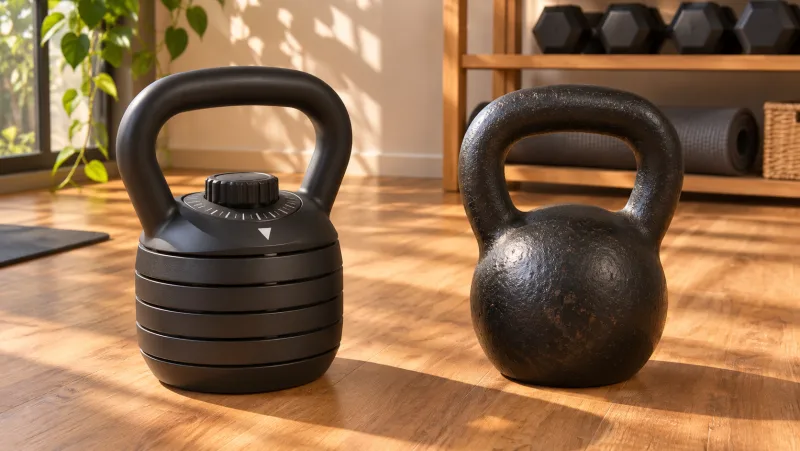 Adjustable vs fixed kettlebell: which should you choose for home?
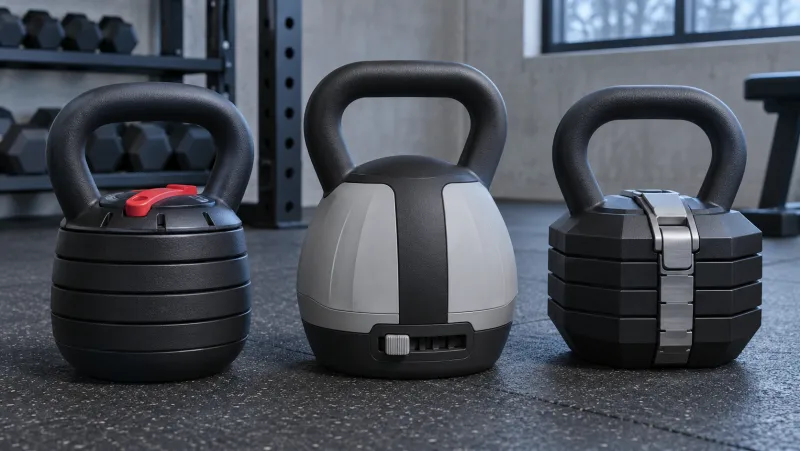 Adjustable kettlebells: three options for home training