
Start with the session constraints
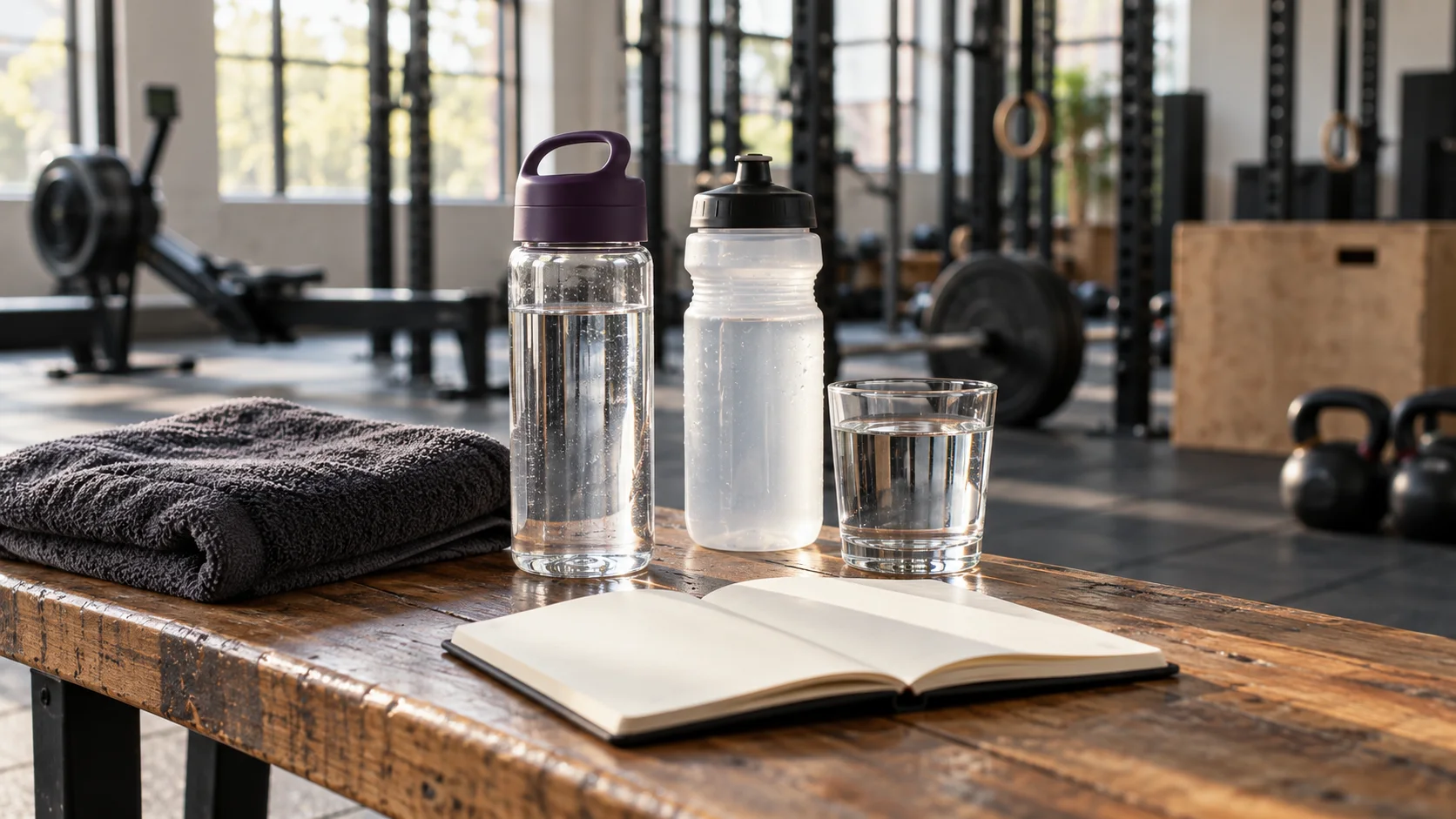
Write down expected duration, conditions, intensity and real chances to drink. A short session in a cool gym and a long HYROX simulation in heat need different preparation. Owning a bottle is not enough if it is inaccessible: decide where to place it, refill it and pause.
Observe comparable sessions
Record the drink prepared, how much you actually consumed and comfort. Thirst is useful feedback; urine colour or body mass alone does not diagnose hydration. For prolonged efforts or substantial losses, a professional can help assess sweat loss with repeated before-and-after measures accounting for fluid intake and urine. One estimate is not an automatic drinking target.
Separate water, fuel and electrolytes
Water can suit many shorter sessions. A carbohydrate drink may be useful when you also need fuel; a low- or no-carbohydrate tablet does not perform that energy role. Consider sodium in relation to circumstances and losses rather than the number of minerals advertised on a box. Test dilution and taste during training.
Adjust without overdrinking
After each trial, retain what was practical and change one factor: access, container or drink. More is not always better, and electrolytes do not make excessive water intake safe. Avoid forcing an arbitrary volume. If you have medical restrictions on fluid or salt, agree the strategy with your treating professional.
Continue planning
Hydration before training: how should you prepare? · Hydration during training: what should you drink and when? · Hydration after training: replace fluids gradually
Sources