
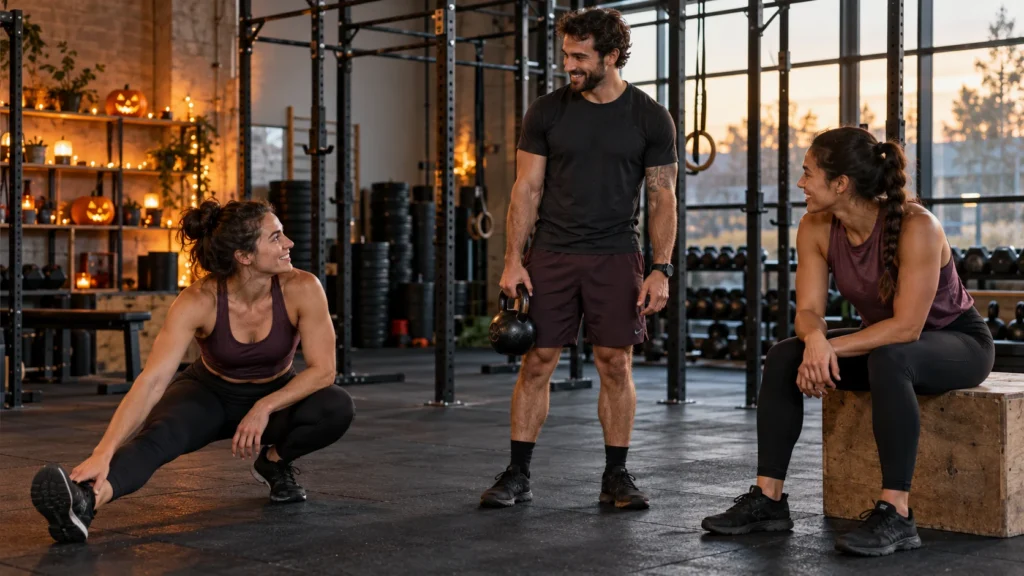
Choose your Halloween workout
Choose one session. Durations refer to the main workout or its cap, excluding warm-up. Open each workout for rules and adaptations; the Wodball sessions below are not official benchmarks.
| Workout | Solo / team | Duration | Equipment | Details |
|---|---|---|---|---|
| Ghost Circuit | Solo | 12 min | None | View → |
| Little Monsters | Solo | 8 min | Stable wall | View → |
| Pumpkin Relay | 2 | 16 min | None | View → |
| Zombie Run | Solo | 3 rounds; no fixed cap | 400 m route | View → |
| Trick or Treat Tabata | Solo | 16 min | Kettlebell | View → |
| Haunted House Challenge | Solo | 3 rounds; no fixed cap | Barbell, pull-up station, wall ball | View → |
| Witches’ Battle | Solo | 5 rounds; no fixed cap | Kettlebell | View → |
| The Zombie Apocalypse | 4 | 20 min | 2 kettlebells + route | View → |
| The Pumpkin Patch Challenge | 2–3 | 15 min cap | Weights, box, wall ball | View → |
| Haunted House AMRAP | 3 | 18 min | Deadlift load | View → |
At home, starting out or with a partner
Prepare a practical festive session
Start with participant numbers, available time and accessible equipment. Read the workout, check total volume and choose variations beforehand. Circuit time excludes warming up: build gradually, rehearse movements and practise transitions.
Keep normal lighting, a grippy floor and clear movement routes. Decorative pumpkins stay outside lifting, running and landing areas. Darkness and improvised obstacles are unnecessary for the theme.
Costumes should preserve movement
Clothing should not act as a handicap. Remove masks, capes, gloves or accessories if they interfere with vision, grip, breathing or foot placement. Test a few repetitions in your chosen outfit. Music, station names and decorations outside the working area can carry the theme.
Clear team rules
Specify who works, when to change, how to count and what happens at the cap. Our three suggested versions define alternating pairs for four, a shared chipper for two or three, and a one-round relay for three. Partners can use different variations if declared and recorded.
Read the three team sessions →
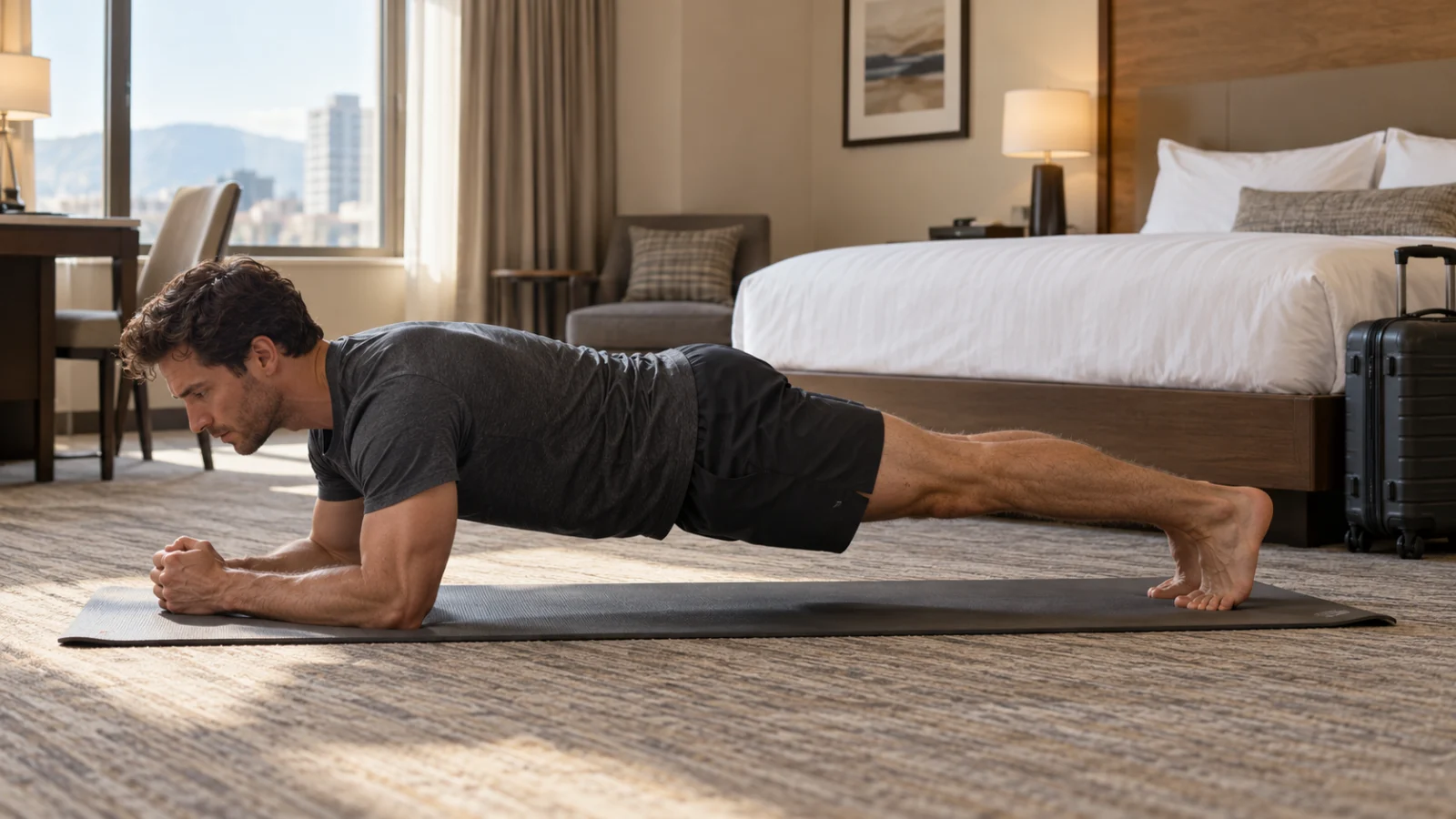 Hotel WODs: three short workouts for travelling
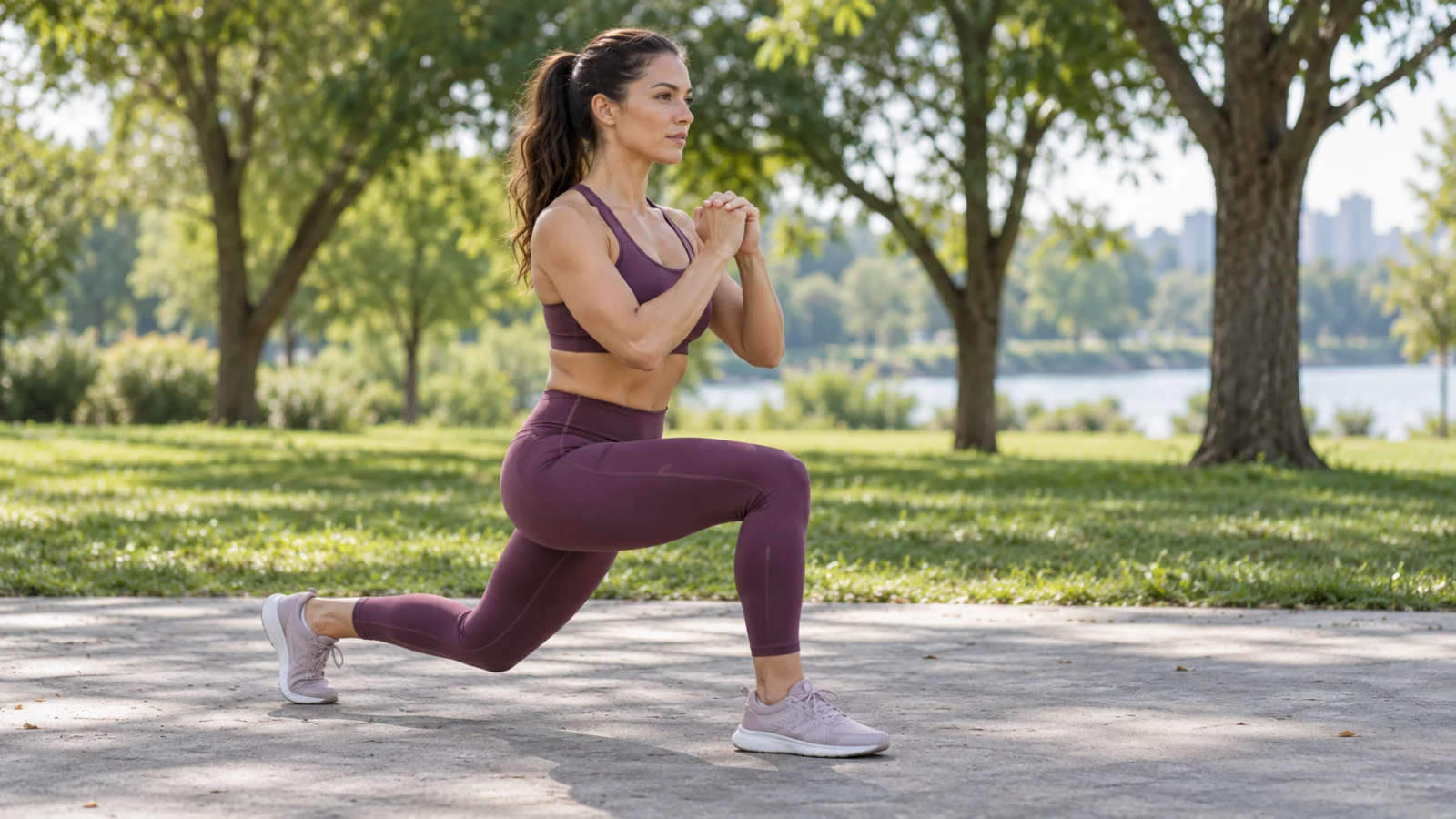 No-equipment WODs: Cooper, Bert and a Riley variation
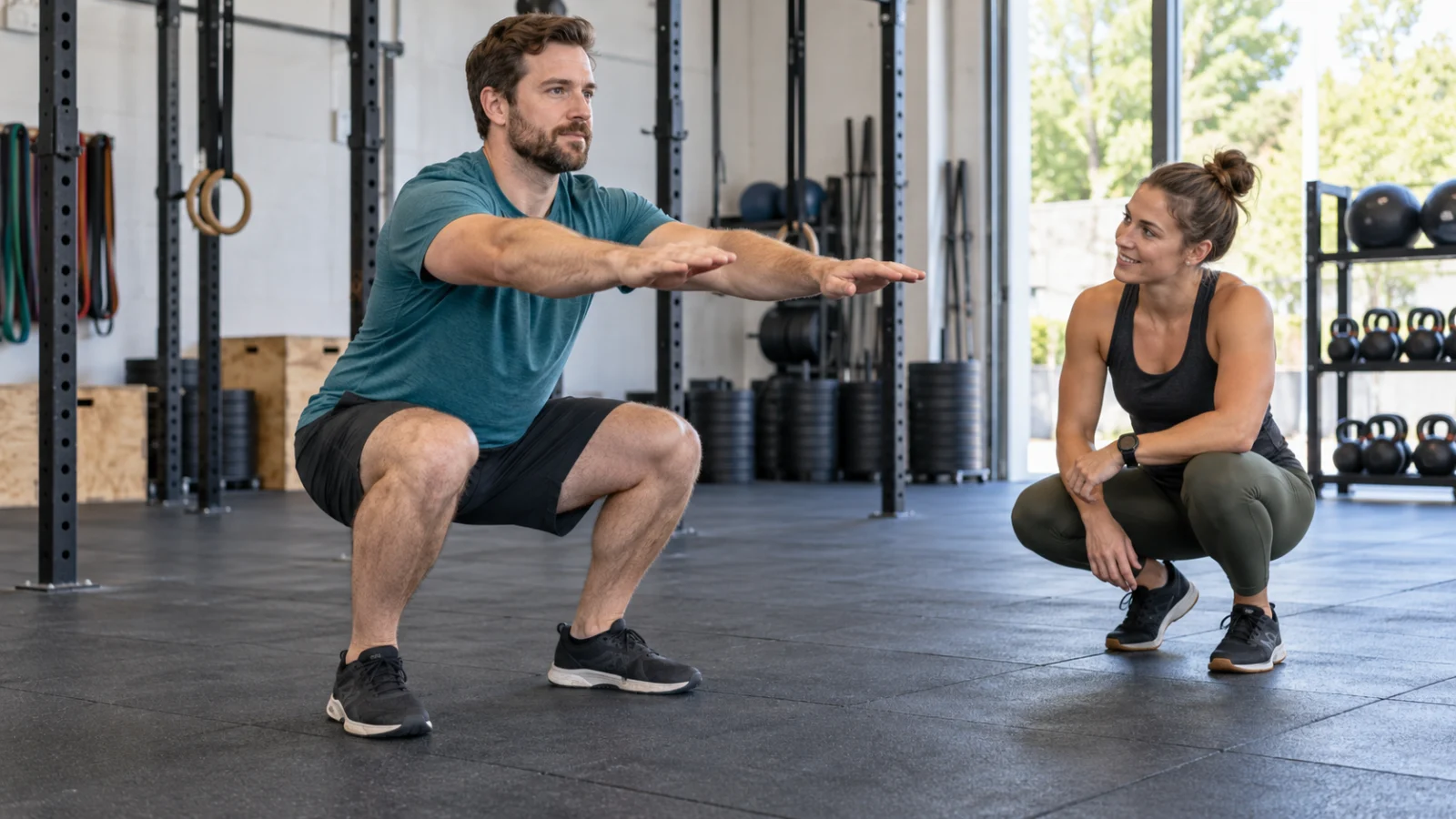 Beginner WODs: five workouts and ways to scale them