
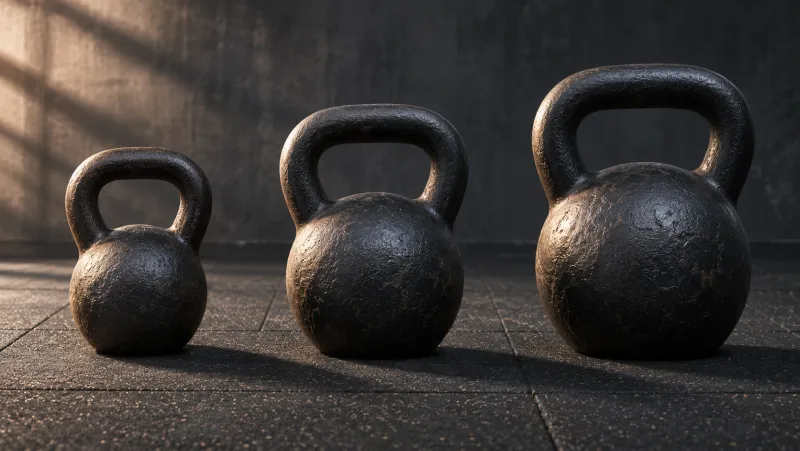
Find your starting weight
Do a few bodyweight squats to find a comfortable depth. Then try a light kettlebell or dumbbell for 6 to 8 reps. Aim to finish with about two or three clean reps in reserve. If your heels lift or the weight drifts away from your chest, go lighter and try again.
When to go heavier
For strength training, try a rep range such as 6 to 10. Move up by the smallest available increment once you reach the top of the range on every set with consistent depth and a little room to spare. Start near the bottom of the range with the new weight.
When the next weight is too heavy
Keep your current weight while you build repeatable reps. A pause at the bottom or a slower descent gives you more time to practise control. If the next jump breaks your form, look for an intermediate weight or an adjustable dumbbell.
Choosing a weight for a WOD
Test the load after some light activity and consider the other movements in the workout. A weight you can handle for one set while fresh may be too heavy across repeated sets under fatigue.
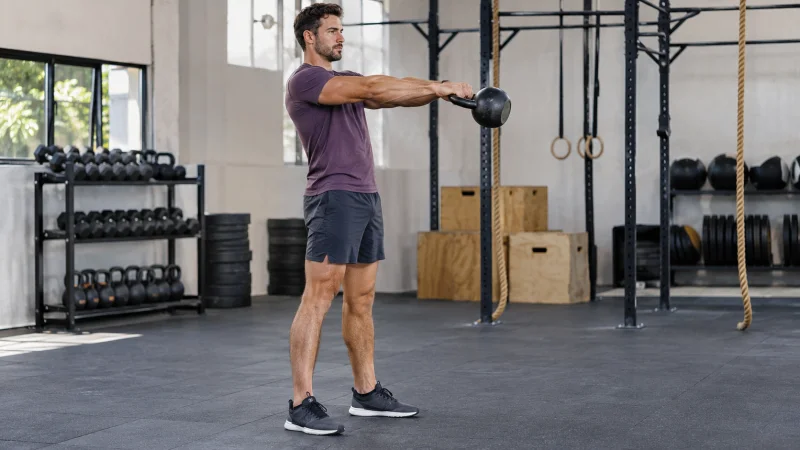 Kettlebell swing: technique, Russian and American variations
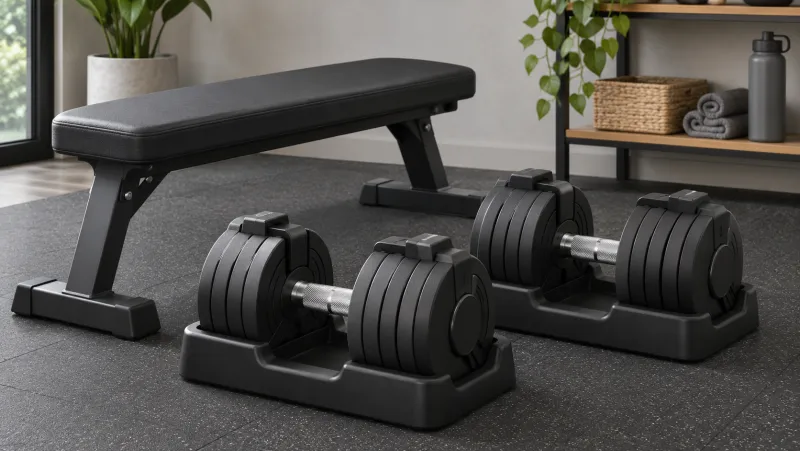 Adjustable dumbbells: three options for home training
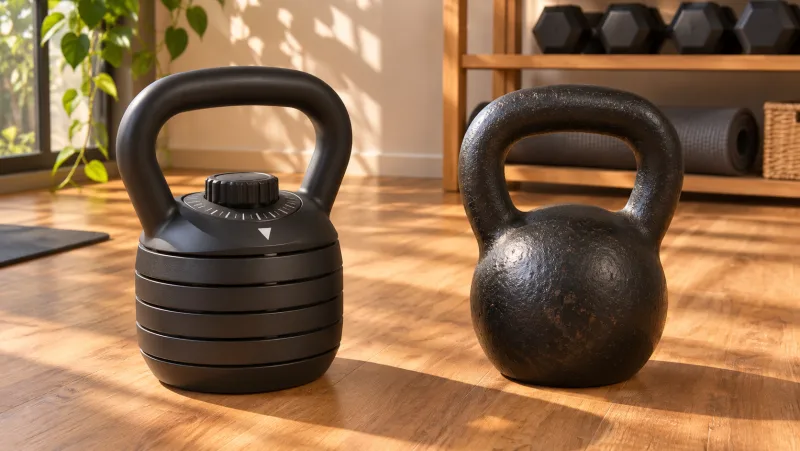 Adjustable vs fixed kettlebell: which should you choose for home?