
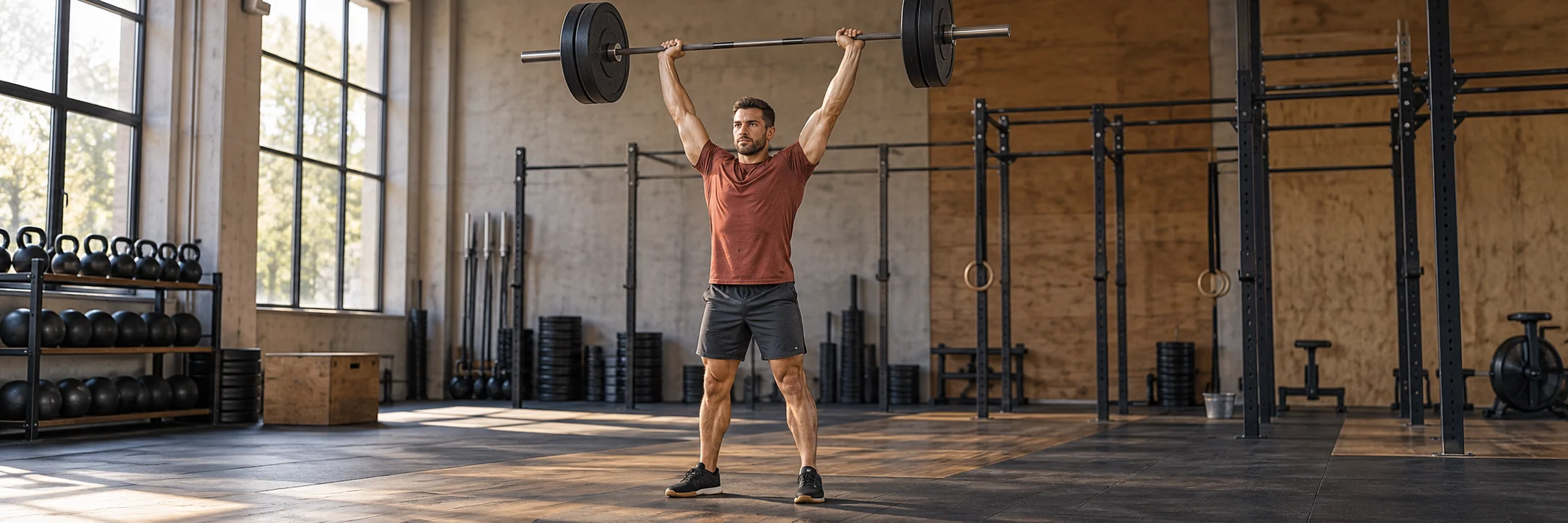
What is a thruster?
A thruster links a front squat into an overhead press using the momentum of the ascent. It is a functional training movement, not a third Olympic competition lift. Barbell, dumbbell and kettlebell versions involve different support and grip demands.
Start with a stable front position
Support the bar on the shoulders and organise the hands, elbows and trunk for both the squat and overhead phase. With dumbbells, establish a controlled shoulder position rather than letting the weights drift.
Link the squat to the press
Descend into the prescribed squat range with balance. Drive up through the legs and transfer the upward momentum into the overhead phase. Avoid treating it as a completed squat followed by an unrelated strict press.
Finish with controlled overhead support, then return the load to the shoulders and coordinate the next descent. Read the workout standard before deciding what counts as a repetition.
Distinguish related movements
A push press uses a shorter dip rather than a full front squat. A jerk includes movement back under the load. A clean brings the bar from below to the shoulders. These are different tasks even when they finish overhead.
Choose sets before fatigue takes over
Breathing, leg fatigue and overhead control interact. Start with manageable sets and planned transitions. A load suitable for one repetition may be inappropriate for the total volume. Record load, implement, range and repetitions.
Develop the positions
Practise the front squat and controlled overhead support separately when needed. Explore mobility and positions rather than assuming every difficulty comes from the wrists or shoulders.
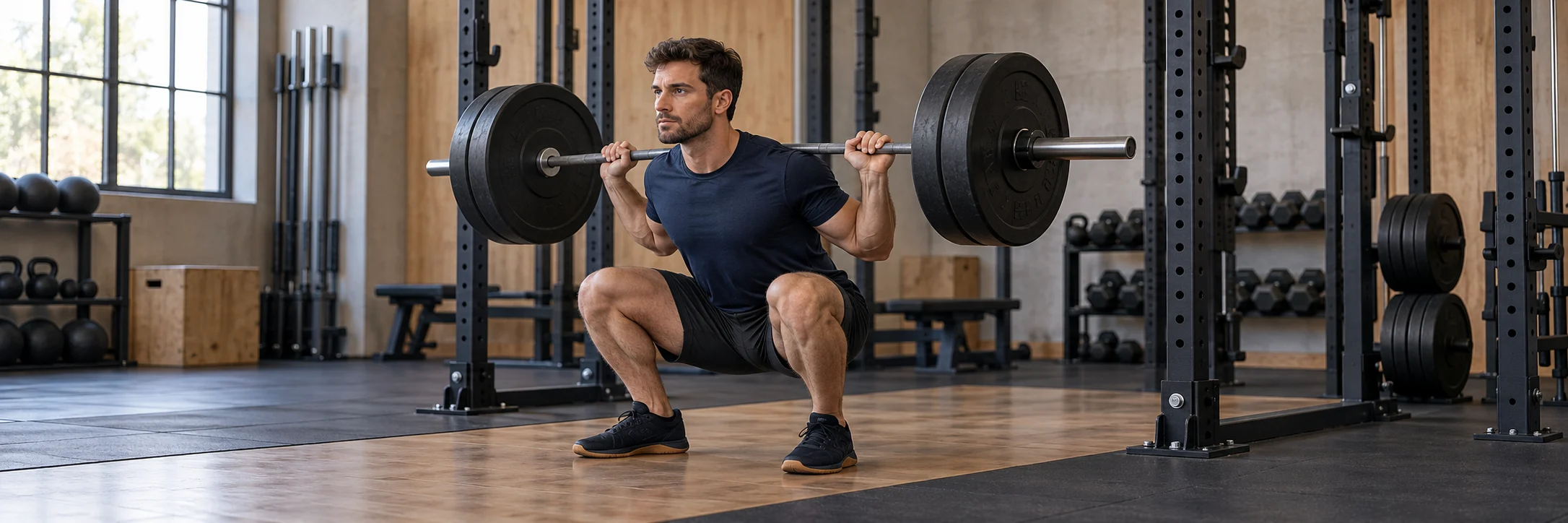 Squat: technique, variations and progression
 Shoulder-to-overhead: strict press, push press and jerk options
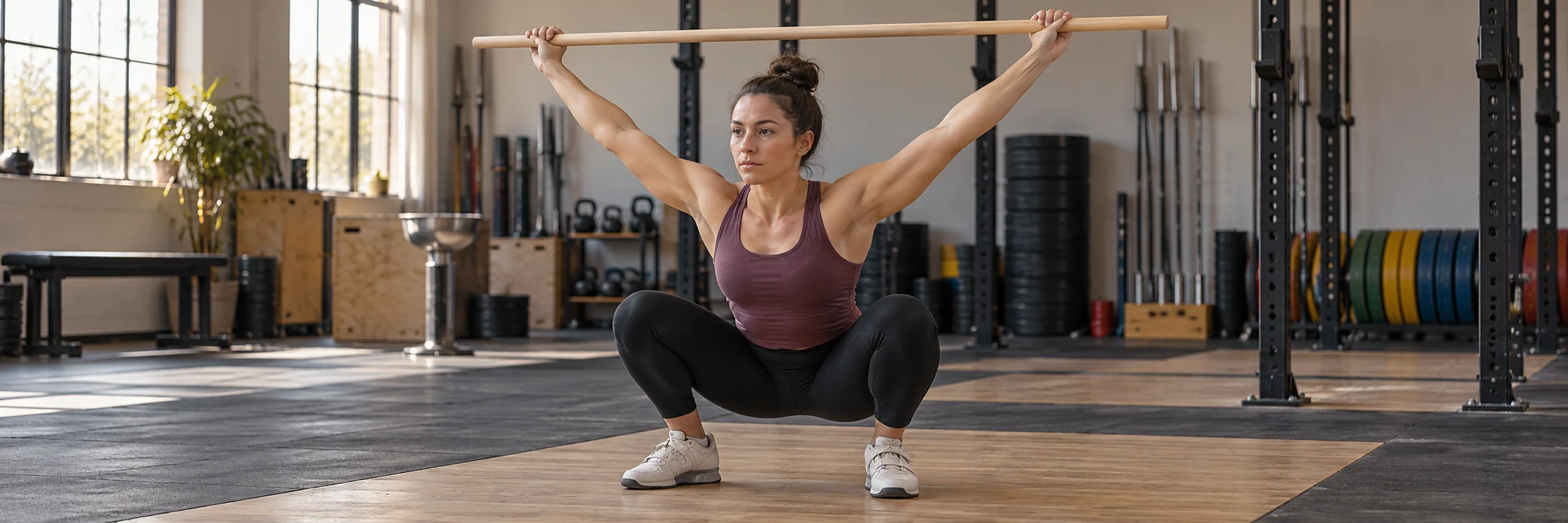 Weightlifting mobility: squat, front rack and overhead