
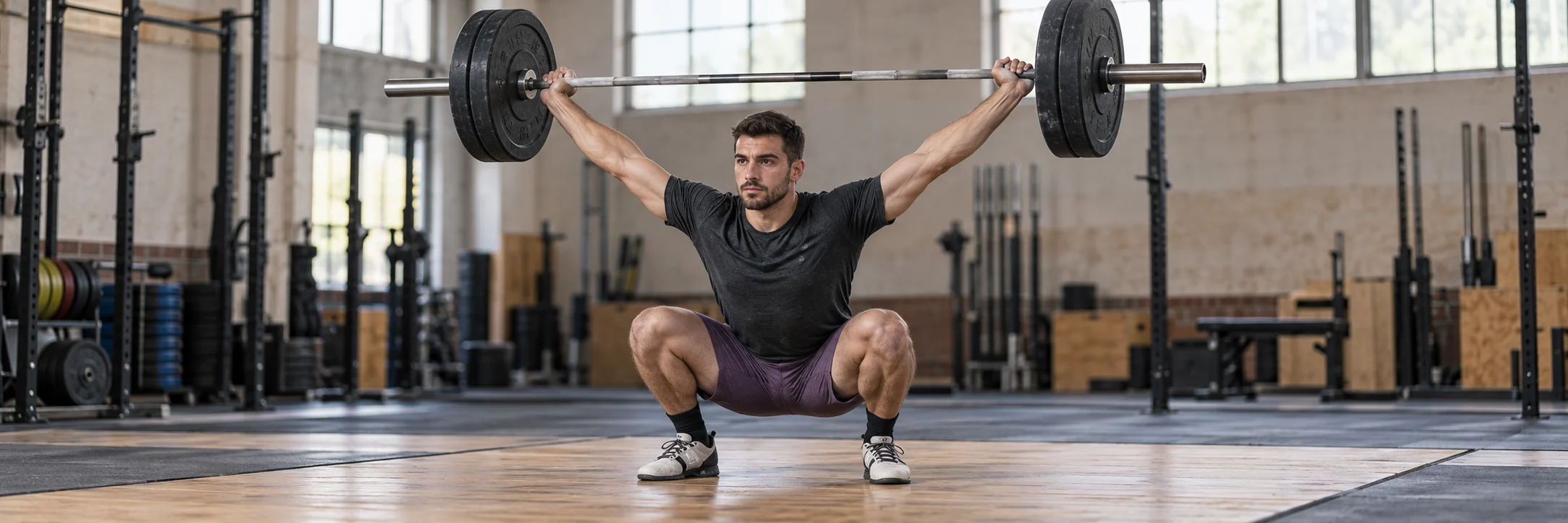
One continuous lift to overhead
The snatch moves a barbell from the floor to overhead in one continuous movement, finishing standing with the bar stable and arms extended. Alongside the clean & jerk, it is an Olympic weightlifting competition lift.
Set up and lift from the floor
Start close to the bar with a wide grip, straight arms and an engaged trunk. Grip width depends on your proportions; have the setup checked rather than copying another lifter’s silhouette.
Push through the floor while keeping balance across the foot and the bar close. A rushed first pull can disturb the positions needed for the acceleration.
Accelerate, move under and receive
Continue extending the legs and hips as the bar passes the knees. Keep it close rather than striking it forward with the hips. Move actively under the bar, extend the arms and receive in balance.
Control the reception before standing. Finish stable overhead, then lower the bar according to the facility’s procedures. Competition attempts also require the specified final position and referee signal.
Understand the variations
Power and squat describe receiving height. Hang describes a suspended starting position, whose height should be specified. A hang power snatch combines both ideas. Muscle and tall snatches isolate different aspects and are not interchangeable names for the full lift.
Mobility, balance and common difficulties
Prepare both squat and overhead positions. A bar moving forward does not automatically prove a shoulder mobility problem: starting balance, bar path and timing also contribute. Identify when the lift changes before choosing a correction.
Learning and WODs
Use a technique bar or suitable light load to build repeatable positions with coaching. Learn how to end a missed attempt in an appropriate clear space. In WODs, check the precise variation and choose a load compatible with the repetition count and fatigue.
Explore mobility, technical progression and the clean & jerk.
Sources and further reading
- iwf.sport — the two lifts
- www.catalystathletics.com — Snatch
- www.catalystathletics.com — Dial in the Phases of the Snatch Clean
- www.catalystathletics.com — Power Snatch
- www.catalystathletics.com — Muscle Snatch
- www.catalystathletics.com — Tall Snatch
- www.catalystathletics.com — Hierarchy for Learning the Snatch and Clean Jerk
 Snatch flexibility: explore the start and receiving positions
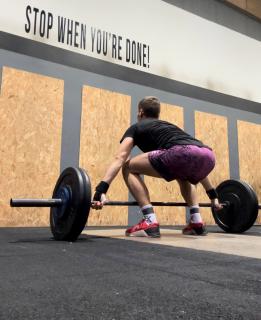 Snatch bar path: observe balance, closeness and timing
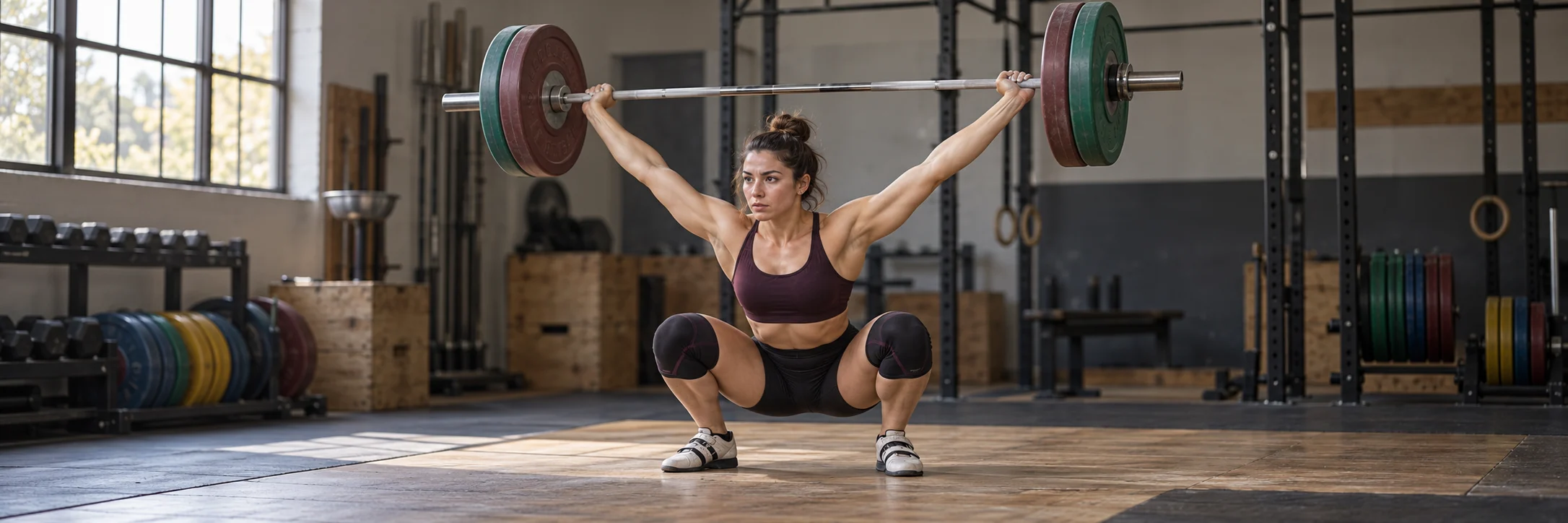 Squat snatch: connect the pull, reception and recovery