
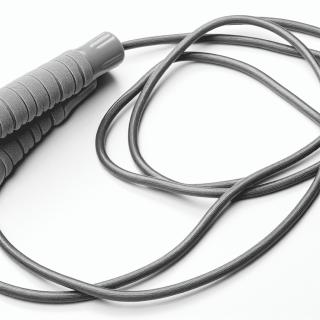
Why rope length matters
A rope that is difficult to control can interrupt your rhythm even when your jumping technique is improving. Too much spare cable may strike the floor heavily; too little clearance can catch your feet or encourage you to change your hand position. Length is one variable alongside timing, posture and the rope's weight.
There is no single measurement that suits every athlete and model. Handle length, skill and arm position affect the fit. Use a static measurement as a starting point, then confirm it while jumping.
Find a starting length
Stand on the middle of the cord with one foot and bring the handles upwards evenly. Chest-to-armpit handle height is a common introductory check, but follow the specific manufacturer's sizing method. Some charts measure cord only; others use a different reference.
For example, Rx Smart Gear's sizing guide recommends measuring a rope that already works for you or testing gym ropes before ordering, and distinguishes the cord measurement from the handles. Its method is specific to its products rather than a universal rule for all ropes.
Adjust according to the mechanism
- Read the instructions and identify the cable stops, screws, clips or internal knot.
- Make a small, reversible adjustment and keep both sides even where the design allows it.
- Secure the mechanism before testing.
- Perform a short set of relaxed single-unders.
- Repeat small adjustments before making any permanent cut.
Do not tie knots in a wire speed cable unless the manufacturer explicitly supports that approach. For a beaded rope, adjustment may involve removing beads and repositioning the cord inside a handle. Keep spare material until you have tested the result. See our beaded-rope guide.
Test the fit in motion
Keep the test consistent: use the same shoes, surface and relaxed hand position. Notice whether the rope clears your feet without exaggerated jumps and whether you can repeat a steady rhythm. Repeated misses do not automatically mean the cable is too short; wide hands or inconsistent timing can also reduce clearance.
Ask a coach to observe a short set before shortening further. Change one variable at a time so that you can identify what helped.
Single-unders and double-unders
A beginner may appreciate a little more clearance while learning. An experienced athlete may prefer a tighter setup, but shortening the rope is not a shortcut to double-unders. Establish repeatable single jumps and hand positioning first.
If you use several ropes, record the cord length and model rather than assuming that identical overall measurements will feel identical. Cable weight and handle design can change the experience.
Care for the rope
Inspect the cord, attachments and handles regularly. Use a surface compatible with the manufacturer's recommendations; rough concrete can wear a coated cable quickly. Replace damaged parts, store the rope dry and avoid tight bends that kink a wire cable.
Use the jump-rope training guide for technique and session ideas. A well-tested setup should help you practise consistently, without needing to readjust the rope after every missed jump.
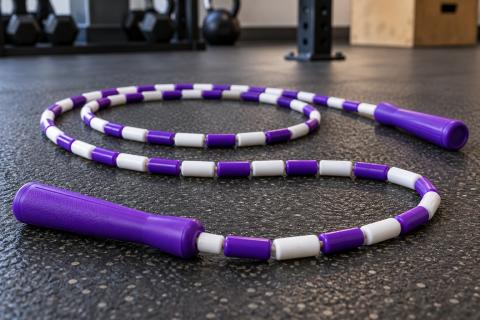 Beaded jump ropes: what they are and why to use one
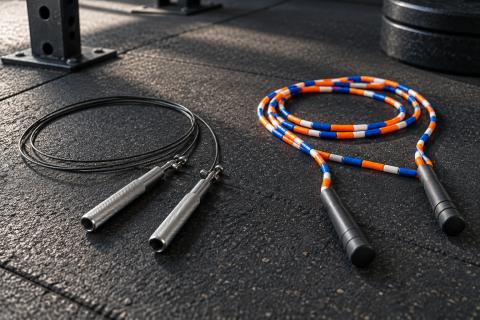 Which jump rope should you choose for CrossFit and cardio?
 Double-under workouts: ladders, Annie and mixed circuits