
What makes it a muscle snatch?
The muscle snatch moves a bar overhead with a snatch grip, finishing without rebending the knees to receive it. It retains an upright finish rather than dropping into a power or squat reception.
The exercise can begin from the floor or a specified hang position. State the starting version when practising or recording a result; the name alone does not resolve every setup detail.
Prepare the starting position
Choose a suitable grip and balanced stance, with the bar close. For a floor start, establish the pulling position before moving. For a hang start, prepare that position deliberately rather than swinging into the attempt.
Use a light load while learning the connection between the pull, turnover and finish. Set up enough clear space to lower or return the bar as taught.
Connect the pull and turnover
Coordinate the legs and hips with the upper-body action to guide the bar overhead. Keep it close enough to avoid a large forward loop. Finish with a controlled overhead position rather than compensating with a new dip underneath.
A deliberate re-bend to catch the bar changes the task. Reduce the load if preserving the muscle-snatch action becomes difficult.
Use the variation for a purpose
The exercise is useful for examining the upper-body turnover and overhead finish. A coach may place it in technical preparation or use it as a defined exercise within a programme.
It does not replace practising the move under the bar in a tall snatch or the complete reception in a squat snatch.
Common errors and adjustments
Check whether the bar drifts away, the starting position changes between repetitions or the knees rebend to rescue the load. A side view can help distinguish the point where the intended action changes.
Work on one observation at a time and repeat the same version to compare. Adding several cues or more weight at once makes it harder to identify useful progress.
Warm up and choose the workload
Begin with general preparation, then rehearse the relevant pulling and overhead positions using a manageable implement. Choose repetitions that let the turnover remain deliberate.
Record load, starting height and any pauses. Technical practice and a high-repetition workout create different demands; do not assume the same loading choice suits both.
Other equipment and related lifts
A dumbbell or kettlebell has a different grip and mass distribution from a barbell. A single-arm snatch variation therefore needs its own explanation rather than being treated as an identical barbell drill.
Explore snatch technique and the clean and jerk for the broader lifting context.
Source
CrossFit Journal: snatch strategies discusses snatch variations and skill-transfer work. The Catalyst Athletics power-position variation provides a related demonstration.
 Tall snatch: practise the turnover and movement under the bar
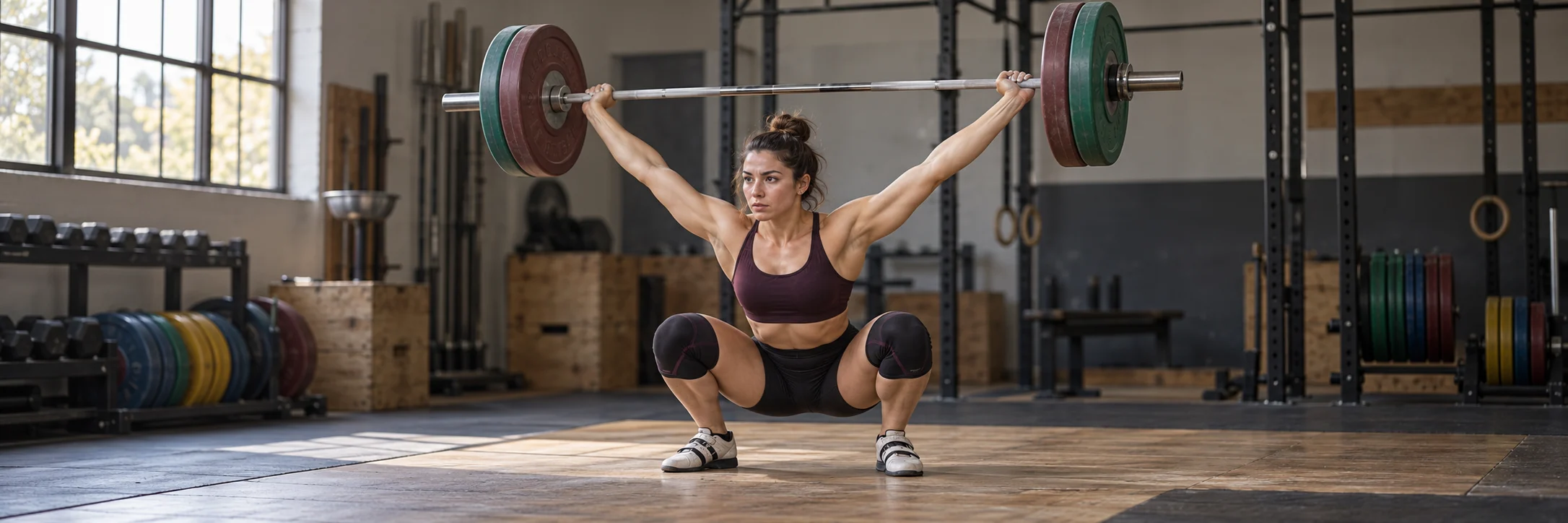 Squat snatch: connect the pull, reception and recovery
 Kettlebell snatch: technique and supporting exercises