

What flexibility contributes
The snatch connects a floor start, pull and overhead reception. Reaching those positions and using them during a moving lift are related but different abilities. Flexibility, active control and timing should not be treated as one interchangeable quality.
More range does not automatically mean a heavier lift or guarantee freedom from injury. Begin with the positions required by your current version of the movement.
Observe three reference positions
Check the starting position with a suitable light bar, a controlled squat and an overhead hold. Where helpful, compare a standing overhead position with a partial overhead squat.
Use the same grip and stance when comparing attempts. A position changing during a fast lift does not by itself prove a shoulder, hip or ankle limitation.
Prepare progressively
Begin with easy general movement and controlled arm and leg actions relevant to the session. Then rehearse the specific positions rather than moving straight from a stretch into a demanding attempt.
The source guide includes gentle shoulder movements, lunges, hip movements and calf work. Select an exercise because it addresses the position being explored, not because every joint must receive every drill before each session.
Explore squat and overhead range
Use an unloaded or lightly loaded squat to observe balance and foot contact. A controlled pause can make a position easier to examine, provided you can leave it deliberately.
If changing footwear, heel elevation or grip, record that setup change. It alters the task and should not automatically be interpreted as an improvement in flexibility. See the overhead squat guide.
Return to the snatch
After working on one position, repeat the same light reference and then reconnect it with the selected snatch variation. If a slow position is manageable but the reception changes under speed, technical practice may be more relevant than adding another stretch.
Use squat-snatch practice and bar-path observation to examine the complete lift.
Compare over time
Keep notes on the exercise, range, load and setup. Repeatable positions across sessions are more informative than the deepest position reached once after an aggressive stretch.
Adapt the preparation to the day’s lift and current control. Do not force a joint or stretch through persistent discomfort. Seek individual guidance for a new or painful limitation.
Sources and further reading
Catalyst Athletics: flexibility for the overhead squat · Weightlifting mobility · Snatch guide
 Tall snatch: practise the turnover and movement under the bar
 Muscle snatch: turnover, overhead finish and technical practice
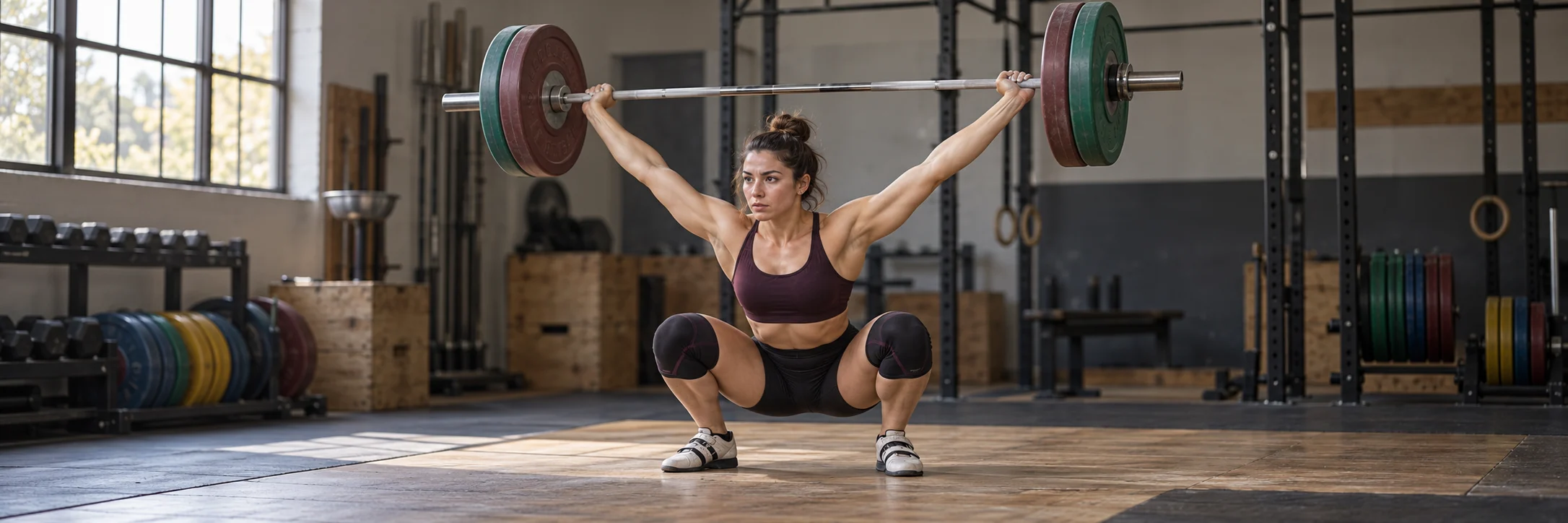 Squat snatch: connect the pull, reception and recovery